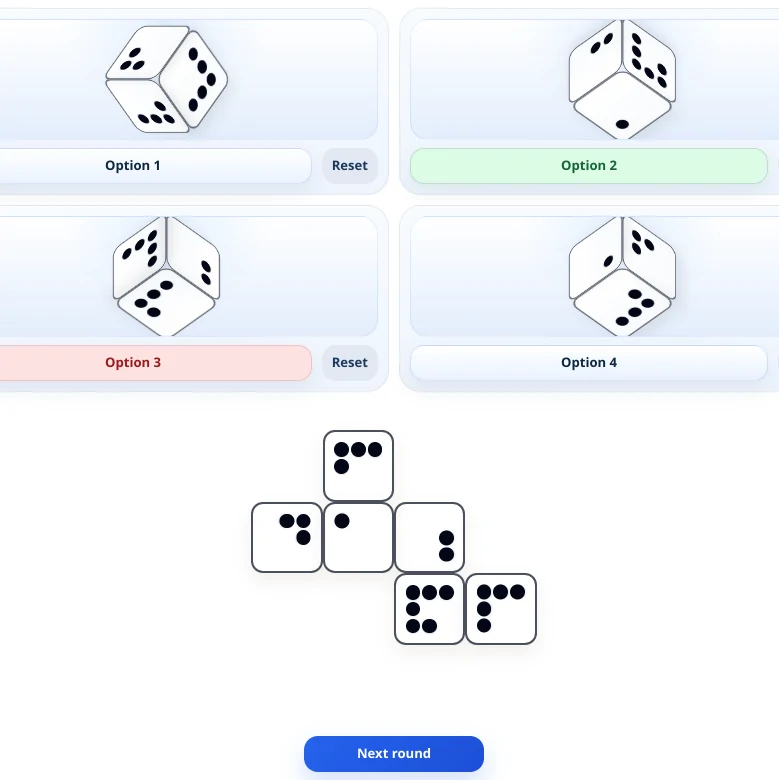
Spatial Reasoning
Study an unfolded cube net and decide which 3D cube can be folded from it.
Learn more about Spatial ReasoningSureSelect is used as part of ATC selection in Australia, New Zealand, Ghana, Vietnam, Azerbaijan, and other countries. The assessment measures a range of skills relevant to air traffic control, including spatial reasoning, memory, accuracy, and the ability to make decisions and stay effective under time pressure.
Our preparation suite includes nine modules designed around these areas. Each session gives you detailed performance results, while the leaderboard lets you see how your scores compare with other candidates. You can also track your progress over time and see which areas still need more practice.
30 Days Subscription Plan
I think you have a great product, and I appreciate the quality of the preparation materials. After going through the platform, I could see the care that went into building it.
I had about five weeks before my Airservices assessment and didn't want to walk in cold. Detail accuracy and the coded reasoning tasks ended up being what I drilled the most. They're quick and brutal if you haven't practised the format. Radar sim frustrated me at first but got easier once I stopped overthinking every conflict. Great product overall and it definitely helped me get through it.
Found this while looking for SureSelect-specific prep rather than generic aptitude tests. Used it mostly for traffic management and spatial reasoning in the evenings after work. Behavioural traits section was useful too once I got into the rhythm of it. Good module variety and it helped me feel much more prepared going in.
Honestly this saved my life before the Airservices assessment. I had no idea where to start with SureSelect prep and this gave me something to work through every day. Great product and the support team was quick whenever I had a question. Thank you!
Receive your access details and credentials immediately via email after receiving your payment.
Log in to your atcpreparation.com account.
All 9 modules are available as soon as you log in.
Disclaimer: SureSelect Preparation Suite is an independent training tool designed to support candidates preparing for air traffic controller assessments. This product is not affiliated with, endorsed by, or officially connected to Airways International or any aviation authority or assessment organization. SureSelect is a trademark of Airways International. All training modules are original and independently developed.
Study an unfolded cube net and decide which 3D cube can be folded from it.
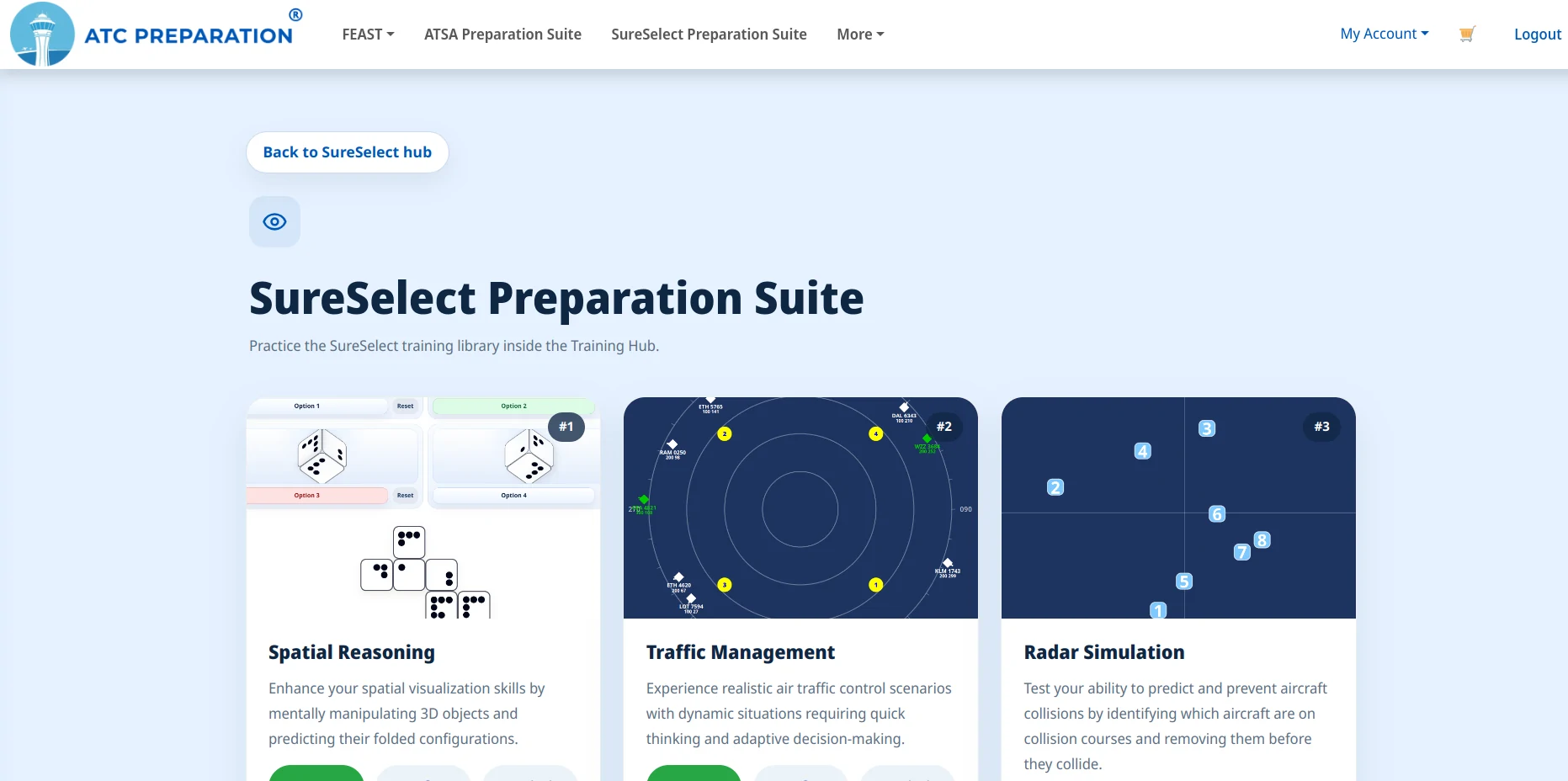
Learn more about Spatial Reasoning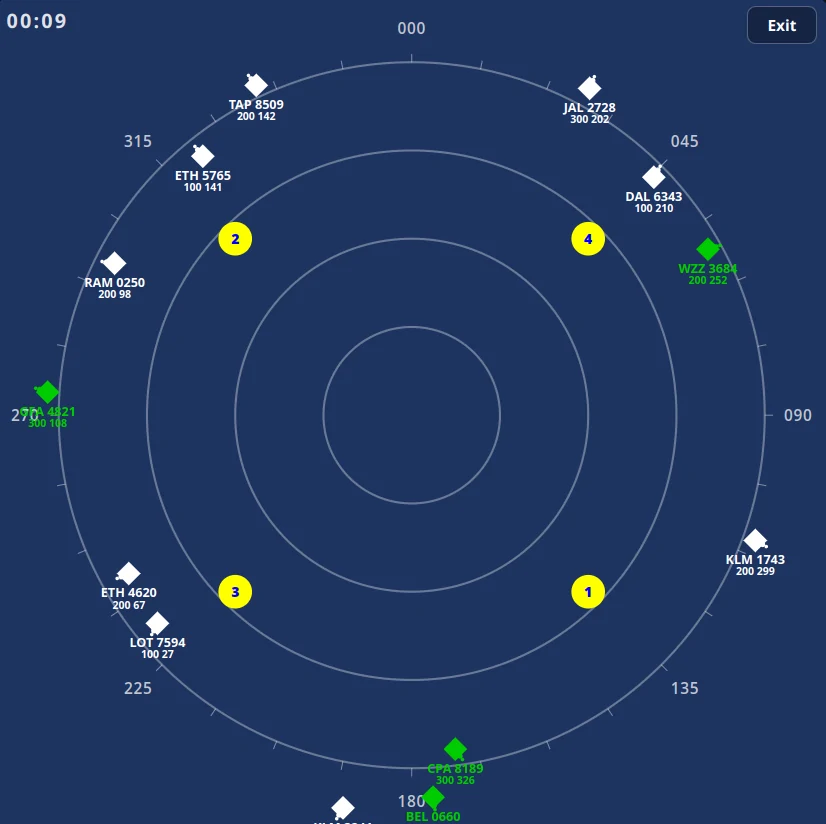
Control multiple aircraft across waypoints on a live radar, manage altitudes and headings, avoid collisions, and respond to audio prompts, all at the same time.
Learn more about Traffic Management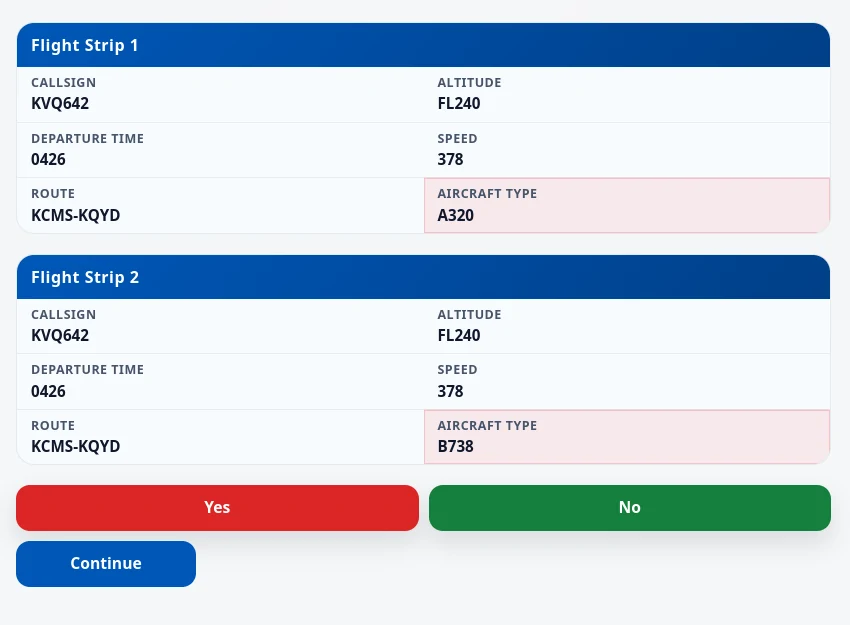
Compare two flight strips side-by-side and decide whether they are identical or differ in exactly one field.
Learn more about Detail Accuracy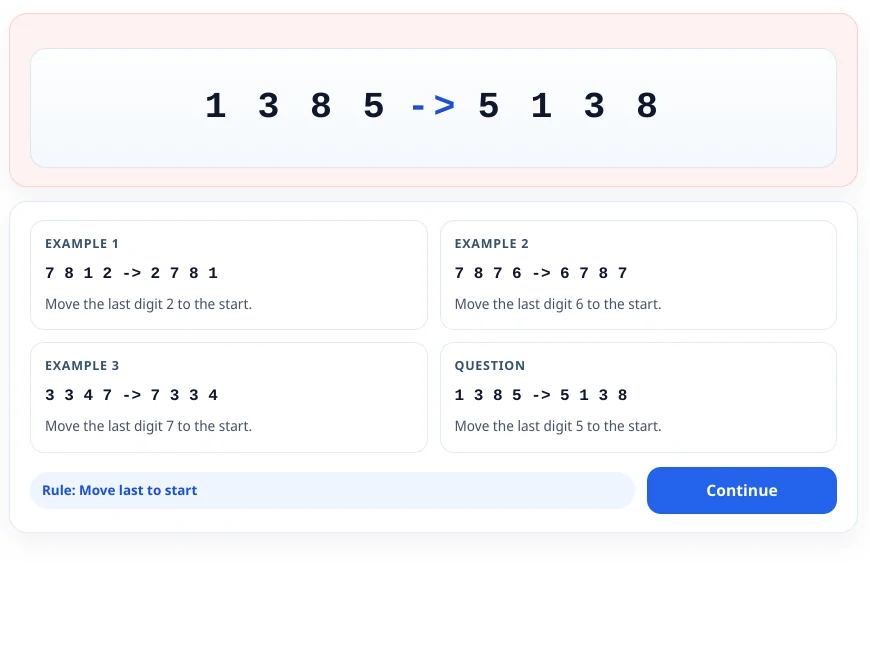
Infer the transformation rule from example digit sequences and type the correct output for the question.
Learn more about Coded Reasoning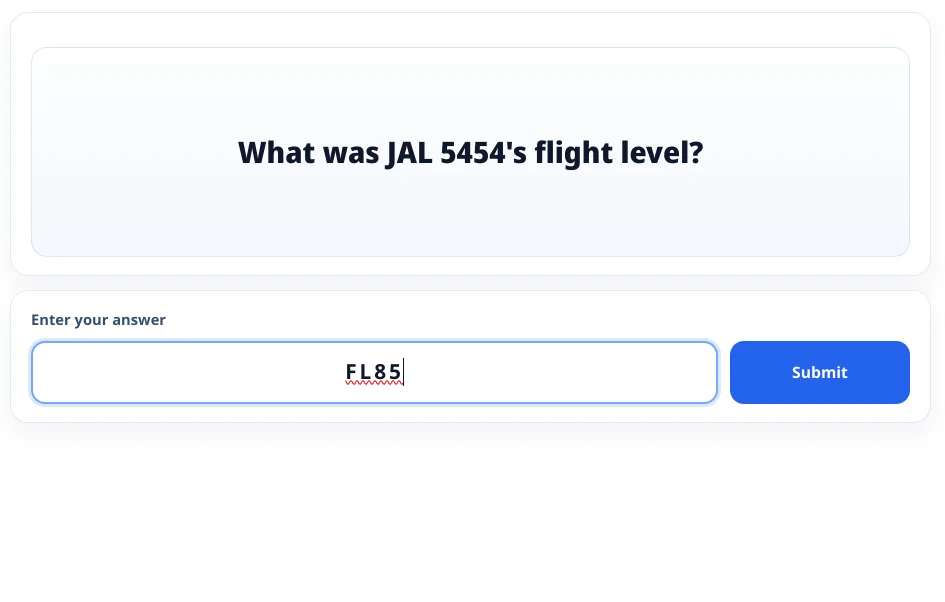
Memorize sequences or aircraft information, then recall the requested detail under time pressure.
Learn more about Short-term Memory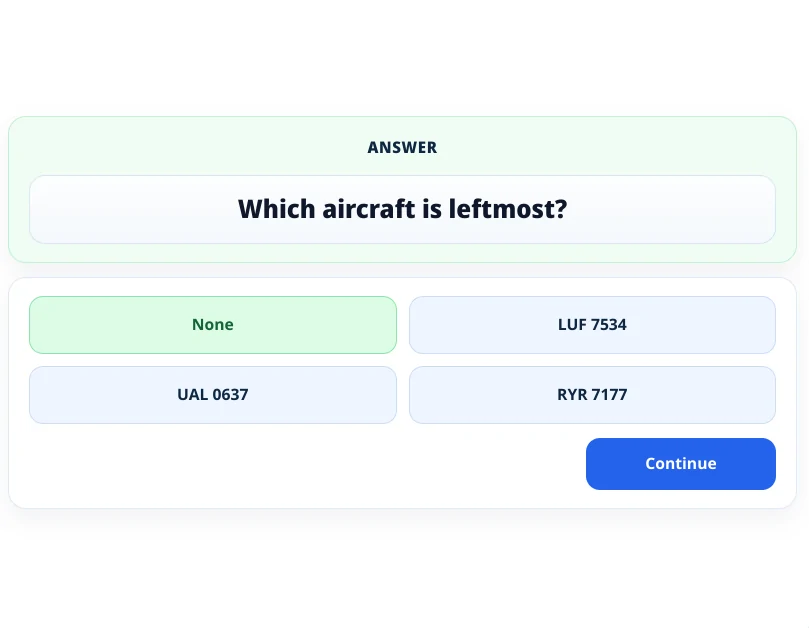
Memorize relationships between aircraft, then answer multiple-choice questions about positions, altitudes, headings, and combined attributes.
Learn more about Remembering Relationships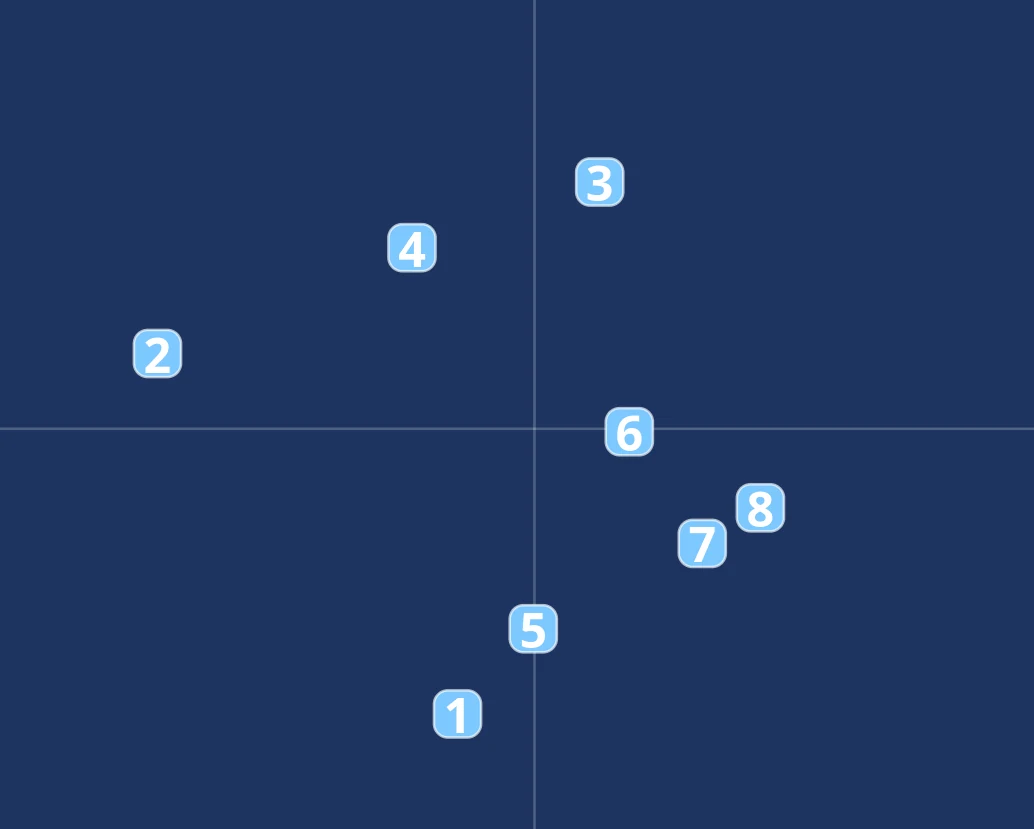
Spot aircraft on a collision course and remove them before they hit.
Learn more about Radar Simulation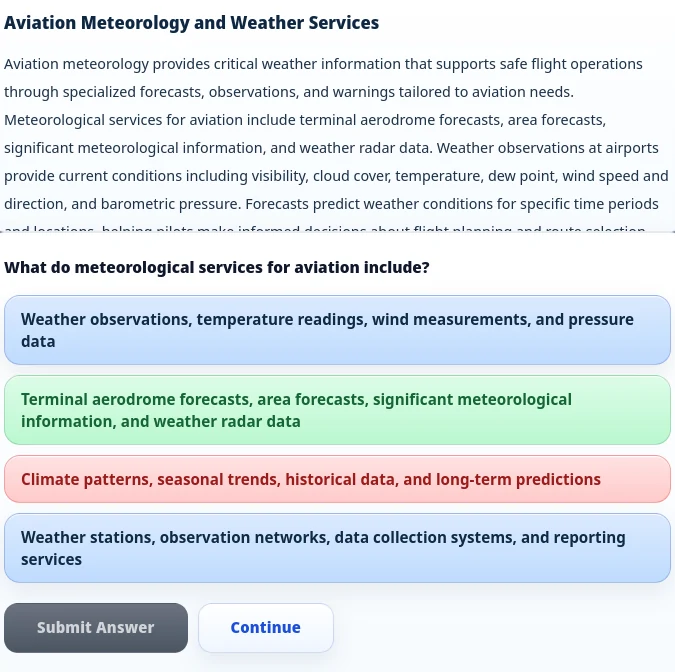
Read a passage and answer questions about it.
Learn more about Reading Comprehension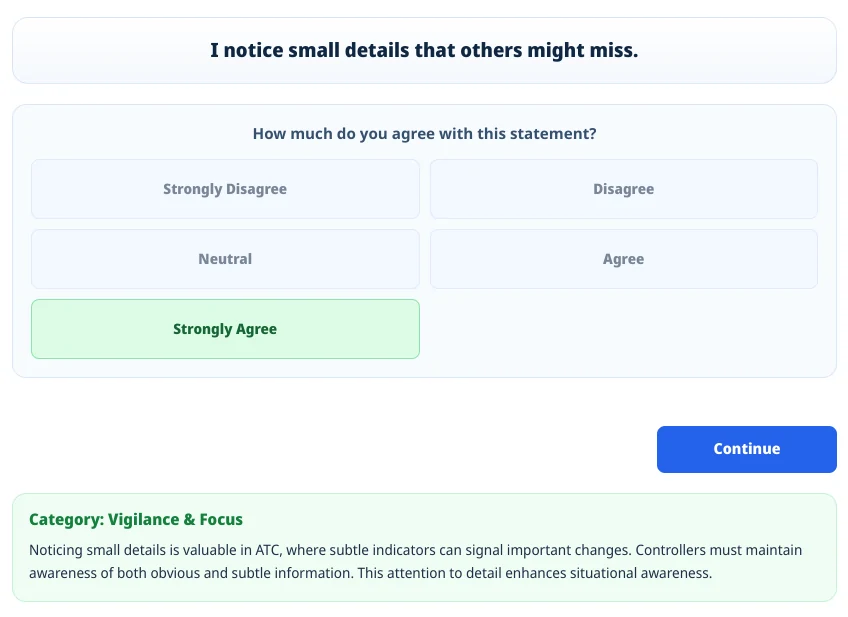
Rate statements about how you work, similar to ATC personality questionnaires.
Learn more about Behavioural TraitsTry free SureSelect training with Level 1 practice in your browser, then upgrade to the full preparation suite for every difficulty level and the Training Hub.
SureSelect is Airways International's computer-based test battery for ATC selection. It pushes spatial skills, working memory, speed, rule-following, switching between tasks, and accuracy under time. Screens may look aviation-flavored; the items are still psychometric drills, not an operational radar shift. Fast, correct answers matter more than sounding like a controller.
Most people find it hard. The tough parts stack attention, memory, and spatial work in one sitting. You get better by repeating until your usual mistakes (rushing, fixation, losing track) show up less often, not by hunting for leaked questions. A few steady weeks usually beats one panic night before the slot.
We do not know a real SureSelect-wide pass rate, and neither does that guy on Reddit. Anything like 'about X%' without a named report is basically vibes. The number that matters is whatever your employer actually uses, and they do not publish it in a form you can audit from here.
Yes. Timed reasoning, memory, and spatial drills in the browser help if the product is upfront that it is training, not a copy of confidential items. Keep a routine you can sustain, review errors, and sometimes practice when you are already tired. Your invitation and HR instructions beat anything you read here.
Scoring is not public. Employers may use per-area floors, weighted totals, partial compensation, or something else; you will not know from outside. A very weak block is still a bad bet. Train the full set instead of hoping one strong area erases a disaster elsewhere. Confirm details only from official documentation.
Often after the first application sift, before interviews and long before academy. Order differs by country and agency. Check your own recruitment steps; do not rely on a generic timeline.
Expect a mix of:
Depends who administers it and which battery they run. Many people are in the venue for a few hours, sometimes with breaks; others see shorter or split days. Plan for a long, focused block, read the invite for time and breaks, and ask the test center if anything is unclear.
Policy is employer-specific. Common pattern: mandatory months between tries and a cap on attempts. Read the retake rules for your vacancy before you pay for travel or time off.
Where it is used, failing stops you there; passing unlocks the next recruitment gates ahead of academy. Practice will not rewrite your whole profile in a month, but it can raise scores on the kinds of timed items you will actually meet and reduce stupid errors on the day.
Internals are not published. Expect speed and accuracy to feed some norm-based outcome, but how modules combine and what labels you get back is decided by the organization. Treat vendor scores as feedback for your own practice, not a forecast of their decision.
Typically more hiring steps: interviews, medical, clearances, then training if you keep passing. Sequence and timing are employer-specific; months to over a year from test to academy is not unusual.
Rotate timed blocks across spatial, memory, multitask, and reasoning work. Fix weak spots until your error log stops growing there. Occasionally run a longer session or practice on little sleep if your invite warns of a long day. Skip leaked-item hunts; they waste time and may breach rules. Sleep before the real session.
Depends where you start. Rough guide: several weeks of near-daily sessions beat one overloaded weekend. Stop when your timed runs look stable on mistakes you care about, not when you feel lucky.