Understanding the FEAST Test: What to Expect

You've found yourself here, which means you're either already registered for the FEAST test, or you're still exploring what the selection process entails. Either way, you're in the right place. This article will guide you through everything you need to know about FEAST - from what to expect on test day to how to prepare effectively. Let's dive in!
What is FEAST?
FEAST (First European Air traffic controller Selection Test) is a battery of tests that helps Air Navigation Service Providers (ANSPs) to identify the most suitable candidates for the job of an air traffic controller. Developed by EUROCONTROL, FEAST has become the standard selection tool used by air navigation service providers across Europe and beyond to assess candidates' cognitive abilities, English language proficiency, and personality traits.
What makes FEAST unique is its standardized approach. Unlike custom selection processes that vary from one organization to another, FEAST provides a consistent, scientifically validated method for evaluating potential air traffic controllers. This standardization ensures that candidates are assessed fairly and objectively, while ANSPs can confidently identify individuals who have the right combination of skills and attributes needed for this demanding profession.
The test battery is designed to measure the core competencies required for air traffic control, including multi-tasking abilities, spatial reasoning, decision-making under pressure, and effective communication in English. By using FEAST, ANSPs can make more informed hiring decisions and reduce the risk of selecting candidates who may not be suited for the rigorous training and high-stakes nature of air traffic control work.
Organisations worldwide use FEAST
Candidates tested
Where is FEAST Used?
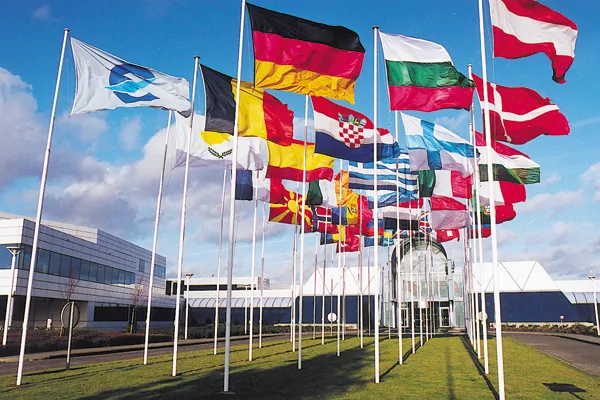
FEAST is used by Air Navigation Service Providers (ANSPs) in countries around the world. The map below shows some of the countries where FEAST is actively used for air traffic controller selection. As FEAST continues to gain recognition for its effectiveness and reliability, more countries are adopting this standardized selection process, making it an increasingly global standard for air traffic controller recruitment.
What should I expect as a candidate?
The FEAST test battery comprises: FEAST I, consisting of a set of cognitive ability tests and an English Language test, and FEAST II, with two more complex multi-tasking tests that generally follow the successful completion of FEAST I. In addition, in FEAST III, a personality questionnaire is available and is used by many of the FEAST user organisations.
FEAST TEST BATTERY
FEAST III
PERSONALITY
- Personality QuestionnaireFPQ - FEAST Personality Questionnaire
- Assessment Centre
Not ready to buy yet?
Try the stripped-down free training for FEAST first and get a feel for selected tasks before upgrading to the full professional software.
| FREE | FULL VERSION | |
|---|---|---|
| TEST mode | X | ✓ |
| Candidate comparison | X | ✓ |
| Full training library including DART, Multi Pass, Radar Control, and more | X | ✓ |
| FEAST-like test environment | X | ✓ |
| Real test difficulty and progression | X | ✓ |
| Advanced statistics and performance tracking | X | ✓ |
Test administration
The tests and the accompanying administrative procedures have been designed with a great deal of professional care. They are administered and scored by a computer, thus further adding to the objectivity of the process.
On the day of the testing you will be welcomed by a test administrator who will guide you through the day and explain to you everything you need to know before you actually start the tests. Each test will be preceded by an introduction which explains the principles of the test and which gives example items and solutions. You will be given the opportunity to answer a sample question to make sure that you know what is being asked of you.
Introduction
Learn about the test principles and see example items
Practice
Answer sample questions to understand what is expected
Test
Take the actual test under standardized conditions
Each candidate sits the tests under the same conditions and subject to the same instruction. You may therefore rest assured that all applicants are treated equally and fairly.
Can you prepare for FEAST?
You may have heard that FEAST cannot be prepared for, and that it's designed to test your natural abilities. While it's true that FEAST assesses your inherent cognitive capabilities, this doesn't mean you cannot prepare effectively.
The reality is that preparation can make a significant difference. When you're familiar with the test format and know what to expect, you're less likely to feel anxious and more likely to perform at your best. Each test has specific instructions and formats, and understanding these beforehand means you can focus on the actual tasks rather than trying to figure out what's being asked of you.
FEAST tests are timed, which adds another layer of pressure. Practicing similar tasks helps you develop a sense of timing and learn to work efficiently under time constraints. This doesn't mean you're trying to "game" the system - rather, you're learning to demonstrate your natural abilities more effectively. Think of it like learning to drive: you have the natural ability to see, react, and coordinate, but you still need practice to pass your driving test. Similarly, FEAST tests your natural abilities, but preparation helps you show what you're truly capable of.
While you can't fundamentally change your cognitive abilities, you can improve how you perform on these specific types of tests through practice. Areas like multi-tasking, spatial reasoning, and English language proficiency can all be enhanced with focused preparation, even if the underlying abilities are natural.

Tips for Test Day
Being well-prepared for your FEAST test day can significantly impact your performance. Here are some essential tips:
- Get a good night's sleep: Arrive well-rested. Cognitive tests require mental alertness, and fatigue can significantly affect your performance.
- Eat a healthy meal: Have a balanced breakfast or lunch before the test. Avoid heavy meals that might make you feel sluggish.
- Arrive early: Plan to arrive at least 15-20 minutes early to allow time for check-in and to settle in before the tests begin.
- Bring required documents: Check with your ANSP about what identification or documents you need to bring.
- Stay calm and focused: If you feel nervous, take deep breaths. Remember that you've prepared, and the test administrator will guide you through everything.
- Read instructions carefully: Pay close attention to the instructions and practice examples. Don't rush through them.
- Manage your time: Keep an eye on the time, but don't panic. Work steadily and efficiently.
What Usually Happens After FEAST?
After FEAST I
Once you complete FEAST I, you won't have to wait long to find out your results. Typically, participants are called into a room one by one to meet with examiners who will provide you with detailed feedback about your performance.
During this feedback session, the examiners will:
- Inform you of your results and whether you've passed to the next stage
- Tell you what you did well and highlight your strengths
- Provide specific guidance on areas where you need to work and improve
- Explain how your performance compares to the requirements
This personalized feedback is valuable whether you pass or not. If you pass, it's always good to know what you did well and what you need to work on. If you don't pass, you'll have clear guidance on what aspects of your English skills to work on before reapplying.
After FEAST II
The process after FEAST II follows a similar pattern. You'll be called in individually to meet with examiners who will provide comprehensive feedback on your performance across all the cognitive ability tests.
During this session, the examiners will discuss:
- Your overall performance and whether you've successfully passed
- Specific test results, such as how well you handled multi-tasking, radar simulations, or other components
- Your strengths - areas where you excelled and demonstrated strong capabilities
- Your weaknesses - areas that need improvement or where you struggled
- Detailed breakdown of your performance in each test component
This feedback helps you understand your profile as a potential air traffic controller. If you pass, you'll know your strengths going into training. If you don't pass, you'll have a clear picture of what to work on for future attempts.
Next Steps
If you pass both FEAST I and FEAST II, you'll typically proceed to the next stage of the selection process, which may include:
- Additional interviews or assessments
- Medical examinations
- Background checks
- Training program enrollment
Common Mistakes to Avoid
Being aware of common pitfalls can help you avoid them on test day. One frequent mistake is focusing too much on one task in multi-tasking tests - it's important to balance your attention across all tasks rather than perfecting one at the expense of others. Another common error is underestimating the importance of preparation, as familiarity with the test format is crucial for success. Remember to avoid these pitfalls and follow the tips outlined above for the best chance of success.
What to Do If You Don't Pass
Not passing FEAST on your first attempt can be disappointing, but it's important to remember that this is not the end of your journey. Many successful air traffic controllers didn't pass on their first try, and the experience you gain from taking the test is valuable regardless of the outcome.
First and foremost, use the feedback you receive from the examiners. They will tell you specifically where you struggled and what areas need improvement. This feedback is your roadmap for what to work on before your next attempt. Whether it's English language skills, multi-tasking abilities, or spatial reasoning, you now have clear guidance on where to focus your preparation efforts.
Take some time to reflect on your experience. What felt challenging? Where did you feel confident? Understanding your own performance can help you identify patterns and areas that need more attention. Don't be too hard on yourself -FEAST is designed to be challenging, and not passing doesn't mean you don't have the potential to become an air traffic controller.
Check the retake policy of the ANSP you're applying to. Many organizations allow candidates to retake FEAST after a waiting period, typically 6-12 months. Use this time wisely to prepare more thoroughly. Focus on the specific areas identified in your feedback, and consider additional preparation materials or practice opportunities.
Remember that this is just one step in a longer process. Many candidates who don't pass initially go on to have successful careers in air traffic control after retaking the test with better preparation. The key is to learn from the experience, use the feedback constructively, and come back better prepared for your next attempt.
Frequently Asked Questions
How long does FEAST take?
FEAST I typically takes 3-4 hours, depending on which tests are included. FEAST II usually takes 2-3 hours. The entire process, including breaks and instructions, may take a full day.
Can I retake FEAST if I don't pass?
Retake policies vary by ANSP. Some organizations allow retakes after a waiting period (often 6-12 months), while others may have stricter policies. Check with the specific organization you're applying to.
Do I need prior aviation knowledge?
No, FEAST tests cognitive abilities and English proficiency, not aviation knowledge. The tests are designed to assess your potential to become an air traffic controller, not your current knowledge of aviation.
What if I have a disability or need accommodations?
Most ANSPs provide reasonable accommodations for candidates with disabilities. Contact the organization you're applying to well in advance to discuss your needs and ensure appropriate arrangements can be made.
How are FEAST results scored?
FEAST uses standardized scoring methods. Your results are compared against a norm group, and passing scores are determined by each ANSP based on their specific requirements and the number of available training positions.
Mental Preparation and Managing Test Anxiety
Test anxiety is common, especially for high-stakes assessments like FEAST. The key to managing anxiety is preparation and the right mindset. Start by familiarizing yourself with the test format through practice materials - the more you know what to expect, the less anxious you'll feel. On test day, practice deep breathing exercises if you feel nervous. Remember that some level of stress is normal and can even enhance performance, but excessive anxiety can be counterproductive. Visualize yourself successfully completing the tests, and remind yourself that you've prepared as well as you can. If you find yourself becoming overwhelmed during a test, take a moment to pause, breathe, and refocus. The test administrators are there to help, so don't hesitate to ask questions if you're unsure about anything.
Final Thoughts
At the end of the day, to successfully pass the FEAST test, you'll need a bit of luck on your side. So don't stress yourself out too much - go in there, do your best, and try to enjoy the experience. You've prepared, you know what to expect, and now it's time to show what you can do. Remember, this is just one step on your journey, and whether you pass or not, you'll gain valuable experience. On behalf of our entire team, we wish you the very best of luck!
Related Blog Posts
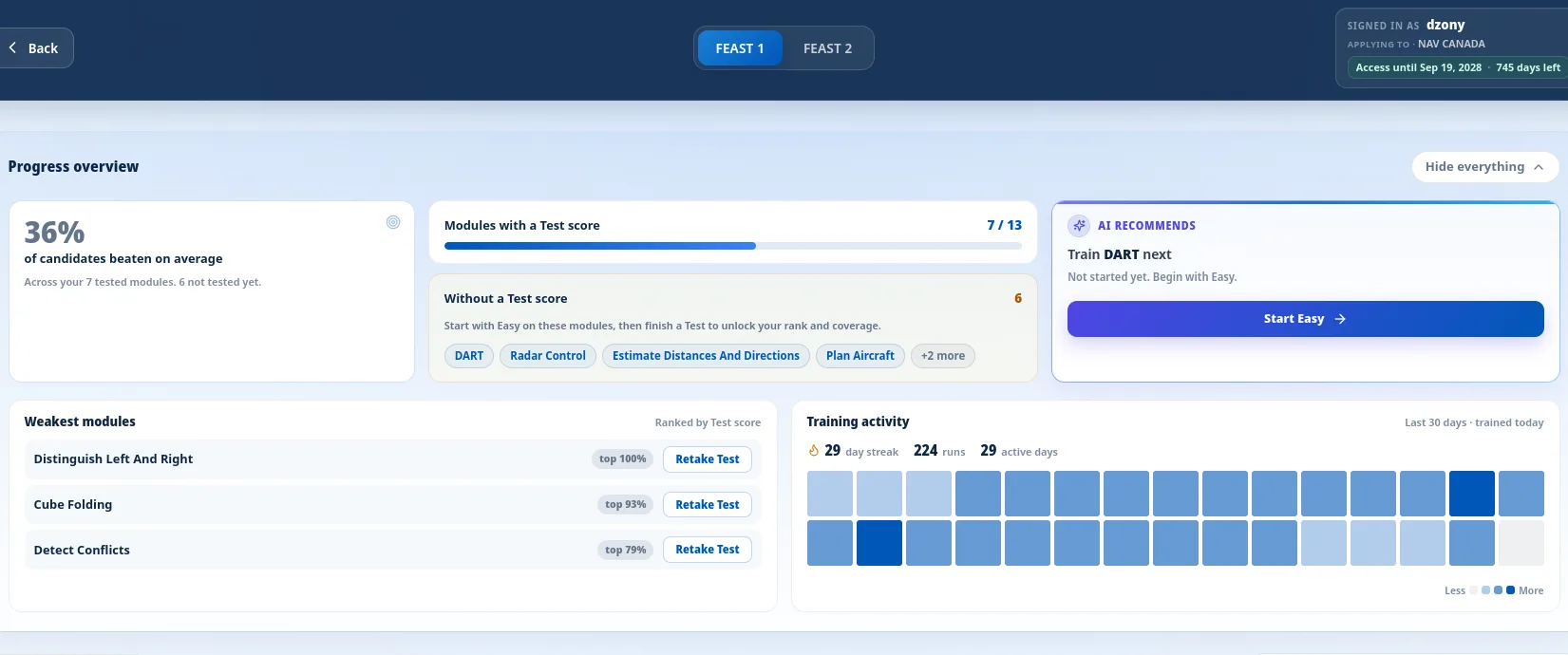
Advanced Statistics and AI Recommendations in the FEAST Preparation Suite: Track Progress, Spot Weak Areas, and Train Smarter
We shipped advanced statistics in the FEAST Preparation Suite: progress overview, per-module score t...
Read More
How to Pass the SureSelect Test (2026 Guide): Preparation, Tips & Strategies
Practical 2026 SureSelect prep: what Airways International publishes about the stage-gate process, w...
Read MoreFEAST Pass Rate in 2026: What We Actually Know
EUROCONTROL does not publish a FEAST pass rate. This guide separates official facts from community e...
Read More