
Emirates Suspends All Airbus A380 Flights To This Major Destination
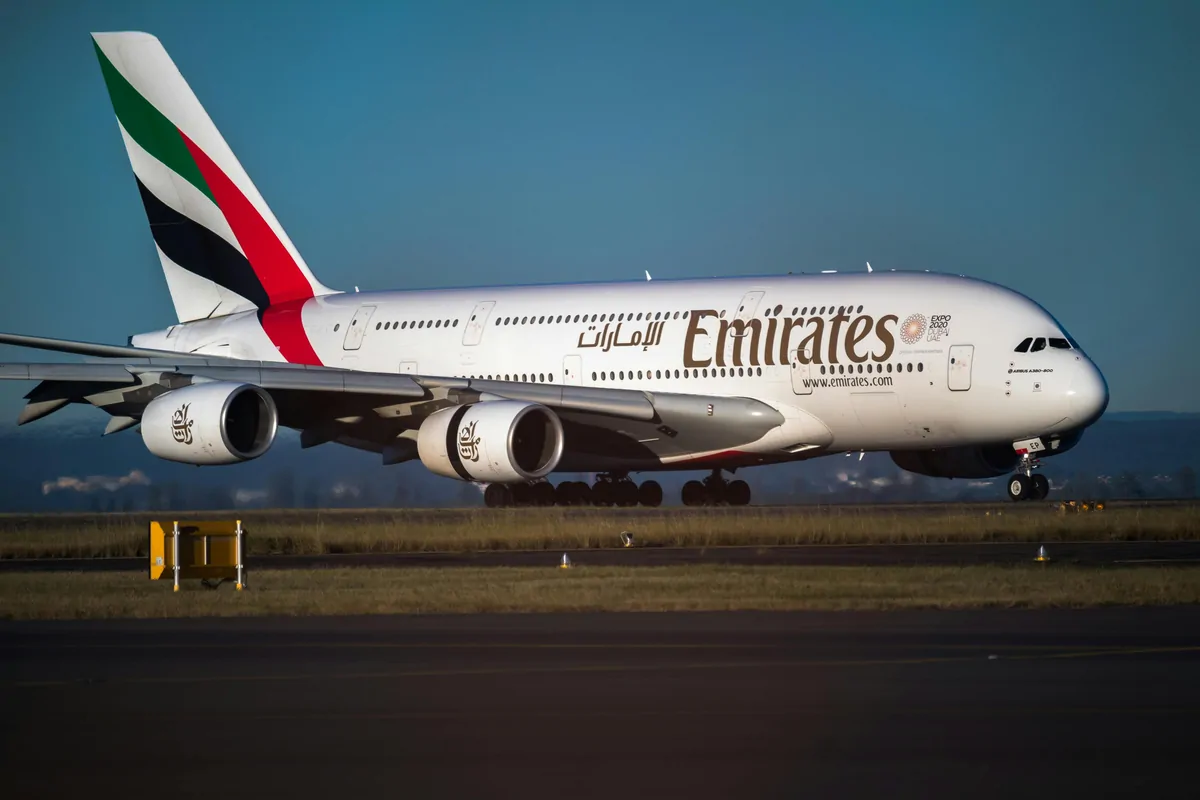
Emirates has discontinued its Airbus A380 service to Bali, replacing the superjumbo with Boeing 777-300ER aircraft following regulatory discussions with Indonesian authorities.
Emirates has suspended operations of its Airbus A380 aircraft to Bali's Denpasar Airport, marking a significant change in the carrier's service to one of Southeast Asia's most popular tourist destinations. The airline has replaced the double-deck superjumbo with Boeing 777-300ER aircraft, resulting in a substantial reduction in available seating capacity on the route.
The Gulf carrier first introduced the A380 to Bali in June 2023, operating the route with near-daily frequency since that time. During peak travel periods in September and October 2024, the airline increased service to twice-daily operations. Throughout this period, Emirates utilized its unique two-class configuration A380, which accommodates 615 passengers without first-class cabins, a configuration well-suited to the predominantly leisure-focused demand on the route.
Flight tracking data indicates that the A380 last operated to Bali on January 16. According to current schedule filings, the superjumbo is tentatively scheduled to return on February 25, though this date remains subject to change. In the interim, Emirates is operating Boeing 777-300ER aircraft on the route, primarily using the 421-seat two-class configuration, though the 354-seat first-class variant appears on some flights.
Regulatory Requirements
The suspension appears to be connected to discussions between Emirates and Indonesian aviation authorities. Lukman Laisa, Indonesia's Director General of Civil Aviation, recently outlined three conditions that would need to be met for Emirates to continue operating A380 aircraft to Bali.
First, the establishment of a maintenance, repair, and overhaul facility within Indonesia. Second, increased employment of Indonesian pilots and cabin crew members on routes serving Indonesia, which could present operational scheduling challenges. Third, the addition of new Indonesian destinations beyond the current services to Bali and Jakarta.
This type of regulatory approach is uncommon in international aviation, as countries rarely restrict specific aircraft types from operating to their airports unless safety concerns exist, which is not the case here. The situation represents an unusual example of aviation policy intersecting with broader economic development objectives.
Conflicting Explanations
However, airport officials have provided a different perspective on the aircraft change. Gede Eka Sandi Asmadi, Communication and Legal Division Head of Denpasar Airport, suggests that Emirates was not prohibited from using the A380. Instead, he indicates that the airline reduced capacity due to seasonal demand patterns, with the lower-capacity 777-300ER reflecting decreased passenger numbers during the low season.
This explanation raises questions about whether the capacity reduction is temporary or represents a longer-term operational change. The conflicting narratives from regulatory authorities and airport management highlight the complexity of understanding the true nature of the service modification.
Capacity Impact
The transition from the 615-seat A380 to the 421-seat 777-300ER represents a reduction of approximately 32 percent in available seats per flight. This capacity decrease could have economic implications for Bali's tourism industry, which relies heavily on international visitors arriving via air transportation. The full impact will depend on how long the smaller aircraft remain in service and whether demand can be accommodated through increased flight frequency.
Route Performance and Connectivity
Emirates' service to Bali serves as a critical connection point for travelers from around the world. Booking data covering the 12 months through November 2025 reveals that more than 550,000 passengers transferred through Dubai to reach Bali during that period. European markets accounted for approximately 80 percent of this traffic, with North America representing 7 percent, followed by the Middle East at 6 percent and Africa at 5 percent.
The United Kingdom emerged as the largest country market, with Emirates carrying more UK-Bali passengers than any competing airline. Germany ranked second, followed by the Netherlands, France, the United States, Russia, Poland, Saudi Arabia, Italy, and Spain.
At the airport level, Amsterdam-Bali generated the highest passenger volumes, followed by Paris Charles de Gaulle, Frankfurt, Moscow Domodedovo, London Heathrow, Warsaw, London Gatwick, Manchester, Düsseldorf, and Jeddah. When analyzed by city pairs, London-Bali ranked as the top market.
Current Schedule
Emirates continues to operate daily service between Dubai and Bali, though with reduced capacity. The current schedule includes EK368 departing Dubai at 3:25 AM and arriving in Bali at 4:30 PM, and EK369 departing Bali at 7:50 PM and arriving in Dubai at 1:10 AM the following day. An additional daily service operates as EK398 from Bali to Dubai and EK399 from Dubai to Bali, maintaining the airline's commitment to serving the market despite the aircraft change.
The situation demonstrates the complex relationships between airlines, regulatory authorities, and destination markets in international aviation. Whether the A380 returns to Bali as scheduled or the 777-300ER becomes the permanent aircraft type for the route remains to be seen, but the change represents a notable development in Emirates' network operations.