
Turkish Airlines Flight Diverted to Barcelona Following In-Flight Security Alert
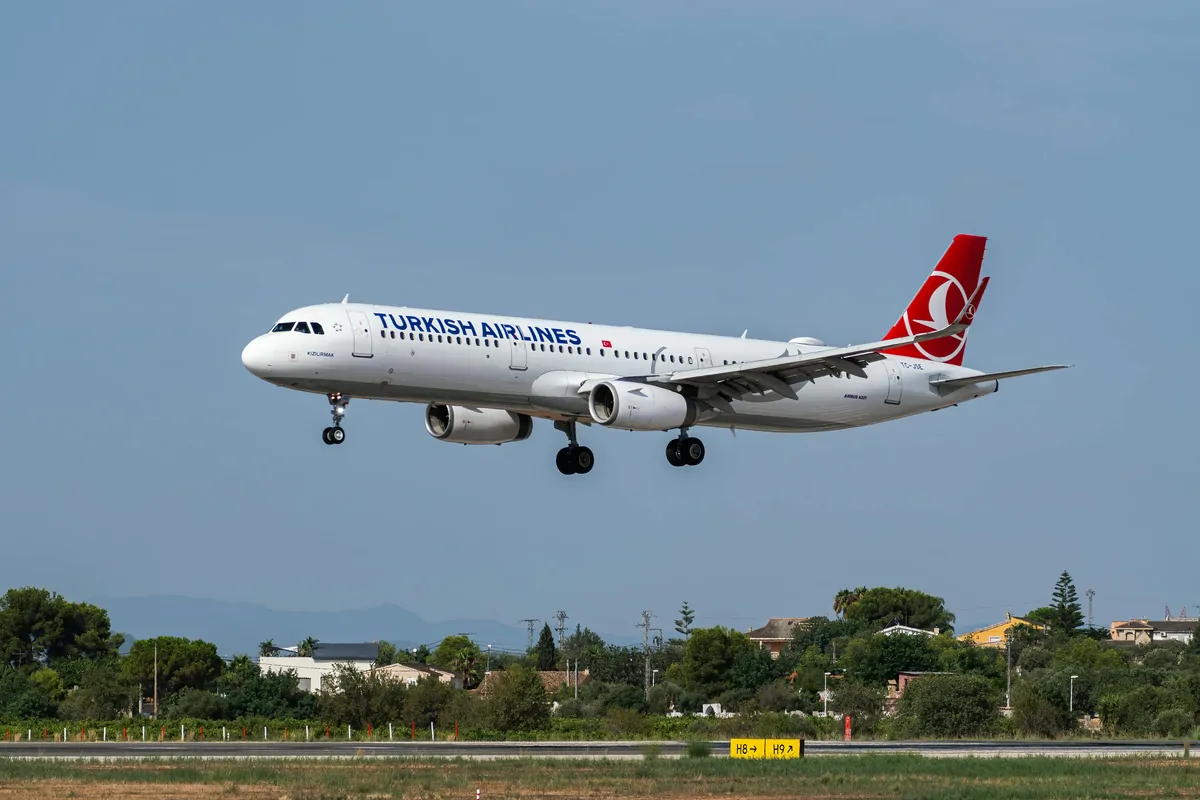
An Istanbul-bound flight was redirected to Barcelona-El Prat Airport after crew members detected a suspicious Wi-Fi network name containing threatening language.
A Turkish Airlines Airbus A321 operating as Flight TK1853 was compelled to execute an emergency landing at Barcelona-El Prat Airport on Thursday morning following the discovery of a potentially threatening message transmitted via an onboard wireless network. The aircraft, carrying 148 passengers and seven crew members, was en route from Istanbul Airport when flight attendants identified that a passenger had established a personal Wi-Fi hotspot displaying a network name that included threatening language.
Authorities confirmed that the security alert ultimately proved to be false, and normal operations at Barcelona-El Prat resumed shortly thereafter. This incident represents another example in a growing pattern of false security threats affecting commercial aviation operations worldwide. Although these alerts typically result in no actual danger, each response requires substantial resources from airlines and security agencies, while creating significant disruption for travelers.
Military Escort and Emergency Procedures
Flight TK1853 represents one of four daily services Turkish Airlines operates connecting Istanbul with Barcelona. While the aircraft was traveling over Mediterranean waters, a crew member observed that a passenger had configured a mobile Wi-Fi access point with a network identifier containing threatening text. The flight deck immediately declared an emergency situation, which activated NATO's Quick Reaction Alert protocol.
French military aircraft were dispatched to intercept the Turkish Airlines flight, with sonic booms reported across southern France as fighter jets accelerated to meet the aircraft. As the A321 entered Spanish territorial airspace, Spanish Eurofighter Typhoon aircraft assumed escort duties. The aircraft executed three holding pattern maneuvers off the Catalan coastline, a standard tactical procedure designed to separate the aircraft from other civilian traffic while maintaining a controlled approach under military supervision. The flight landed safely at approximately 11:00 AM local time, approximately 30 minutes behind schedule.
Turkish Airlines released a statement confirming the incident, explaining that crew members detected a passenger had established an in-flight internet access point and configured the network name to include threatening language. The airline emphasized that flight operations were conducted safely, and local security personnel conducted a thorough inspection of the aircraft after landing.
Growing Trend of Aviation Security Hoaxes
Commercial aviation has experienced a notable increase in reported security threats in recent years. Data from the United States Bomb Data Center indicates that bomb threat reports rose by 26% during 2023, while India's Bureau of Civil Aviation Security documented nearly 1,000 aircraft bomb threat incidents during 2024. Although these threats consistently prove to be false alarms, aviation authorities must treat each report seriously, resulting in considerable operational costs for airlines and airports, as well as substantial inconvenience for passengers.
Legal consequences for making false security threats against commercial flights can be severe. Recent cases demonstrate that individuals who create false alarms face substantial penalties, including lengthy prison sentences and significant financial restitution. One passenger who made a threat during an Alaska Airlines flight in 2023 was recently sentenced to 22 months in federal prison, three years of supervised release, and ordered to pay $80,000 in restitution to the airline and affected airport.
Security Response and Investigation
Following established emergency protocols, the Turkish Airlines aircraft was directed to a remote, isolated section of Barcelona-El Prat Airport upon landing to minimize potential risk to other airport operations. A substantial security response team met the aircraft and immediately began the process of safely disembarking passengers and conducting a comprehensive search of the aircraft and luggage.
Airport officials confirmed that operations at El Prat were temporarily suspended, with both arriving and departing flights placed in holding patterns until the aircraft could be safely escorted to an isolated area by emergency services. After all passengers and crew were safely removed from the aircraft, specialized explosive detection teams and trained canine units conducted thorough inspections of the aircraft and all checked and carry-on baggage.
The Spanish Interior Ministry later confirmed that no explosive materials or devices were discovered during the security sweep. However, the passenger responsible for creating the Wi-Fi hotspot with the threatening network name was identified and taken into custody for questioning. The individual may face serious legal consequences, as the costs associated with military aircraft deployment and emergency response procedures are substantial and not covered by standard travel insurance policies.