
British Airways A380 Turbulence Incident Results in Passenger and Crew Injuries
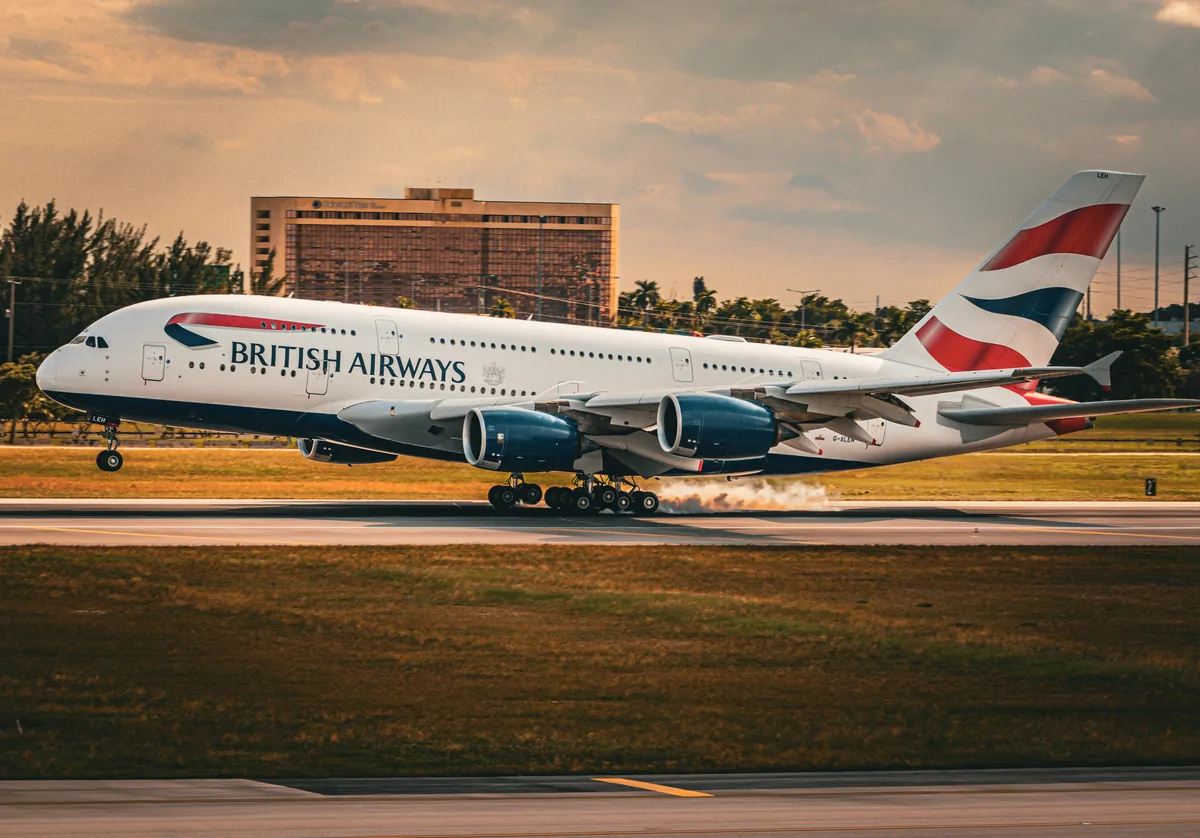
A transatlantic flight experienced severe clear-air turbulence over the North Atlantic, causing ankle fractures to one passenger and one crew member despite seatbelt signs being illuminated.
A British Airways Airbus A380 operating a scheduled transatlantic service encountered unexpected severe turbulence during cruise flight, resulting in serious injuries to both a passenger and a cabin crew member. The incident occurred on December 6, 2024, while aircraft G-XLEI was operating Flight BA268 from Los Angeles International Airport to London Heathrow Airport. The aircraft was cruising at approximately 39,000 feet over the North Atlantic Ocean, south of Greenland, when it encountered sudden atmospheric disturbances.
Despite the seatbelt signs being illuminated and flight crew awareness of potential rough air conditions, a sudden vertical movement of the aircraft caused occupants to be thrown from their positions. One passenger and one cabin crew member sustained serious ankle fractures as a result of the incident. The aircraft was carrying 277 passengers and 24 crew members at the time of the turbulence encounter.
In-Flight Medical Response
Medical assistance was provided immediately following the incident by both cabin crew members and medically qualified passengers who were traveling on the flight. Ground-based medical consultation services were also utilized to support the in-flight medical response. After assessing the situation, the flight crew determined that the aircraft could safely continue to London Heathrow without requiring a diversion to an alternate airport.
Upon arrival at London Heathrow, emergency medical services were standing by to meet the aircraft. The two injured individuals were transported to local hospitals for further treatment. The UK Air Accidents Investigation Branch (AAIB) subsequently launched an investigation into the incident, focusing on operational procedures, weather forecasting capabilities, and cabin safety measures.
Clear-Air Turbulence Challenges
The AAIB investigation report highlighted the persistent challenges associated with predicting clear-air turbulence, which occurs without visible weather indicators such as clouds or storms. In this particular case, the flight crew had utilized real-time weather applications in addition to standard meteorological forecasts, yet the turbulence encountered was more severe than anticipated for the area.
The investigation noted that had the seatbelt signs been turned off at the time of the incident, significantly more passengers and crew members might have been affected. This observation underscores the critical importance of maintaining seatbelt compliance even when flight conditions appear smooth, as clear-air turbulence often provides minimal or no advance warning.
The AAIB report emphasized that modern forecasting tools, cockpit procedures, and cabin safety protocols were all properly utilized during the encounter. The investigation's primary objective was to share safety lessons with the aviation industry rather than to assign blame, as the incident resulted from unpredictable atmospheric conditions rather than operational errors.
Large Aircraft and Turbulence
Even large aircraft such as the Airbus A380, which entered commercial service in 2007, are not immune to sudden atmospheric disturbances. The investigation noted that even brief periods of turbulence can generate significant forces due to the aircraft's substantial size and the high altitudes at which long-haul flights operate. Cabin crew members are particularly vulnerable during such events, as they must move throughout the cabin to perform service duties, making them more exposed to sudden aircraft movements than seated passengers.
The Airbus A380 maintains an excellent overall safety record since its introduction, with incidents involving passenger or crew injuries being relatively rare. When such incidents do occur, they are typically associated with atmospheric conditions rather than aircraft performance issues or mechanical problems. The aircraft's size and advanced flight control systems generally help mitigate the effects of turbulence, but they cannot completely eliminate the risk of sudden atmospheric disturbances.
Industry Implications and Future Considerations
Turbulence-related injuries represent one of the most common causes of in-flight harm to passengers and crew members worldwide, particularly during cruise flight when cabin movement is most frequent. Aviation authorities continue to emphasize the importance of seatbelt use even when conditions appear calm, noting that clear-air turbulence often provides little to no warning.
Airlines increasingly rely on satellite-based weather data, pilot reports from other aircraft, and real-time forecasting applications to improve turbulence prediction and route planning. However, sudden turbulence events can still occur despite these advanced technological tools, reinforcing the need for constant vigilance and strict adherence to cabin safety procedures.
As global air traffic volumes increase and climate variability potentially affects atmospheric conditions, researchers are studying whether turbulence frequency and intensity may be increasing, particularly on heavily traveled transatlantic routes. These findings could influence future flight planning practices, altitude selection strategies, and cabin safety procedures.
The AAIB investigation did not identify any mechanical issues with the aircraft or operational errors by the flight crew. Instead, the report focused on operational decision-making processes, weather awareness tools, and cabin safety outcomes. No formal safety recommendations were issued, but the investigation highlighted important lessons for operators and flight crews regarding the unpredictable nature of high-altitude atmospheric conditions.
This incident serves as a reminder that even modern long-haul aircraft operating with advanced technology cannot completely eliminate the risks associated with atmospheric turbulence. Both passengers and crew members benefit from strict adherence to safety procedures, particularly remaining seated with seatbelts fastened when advised to do so. For cabin crew members, balancing service duties with personal safety remains an ongoing operational challenge that requires constant attention and situational awareness.