
Jeju Air Flight 2216 Crash: Investigation Finds Wrong Engine Shut Down
Preliminary investigation indicates pilots shut down the less-damaged engine after a bird strike, worsening the emergency landing.
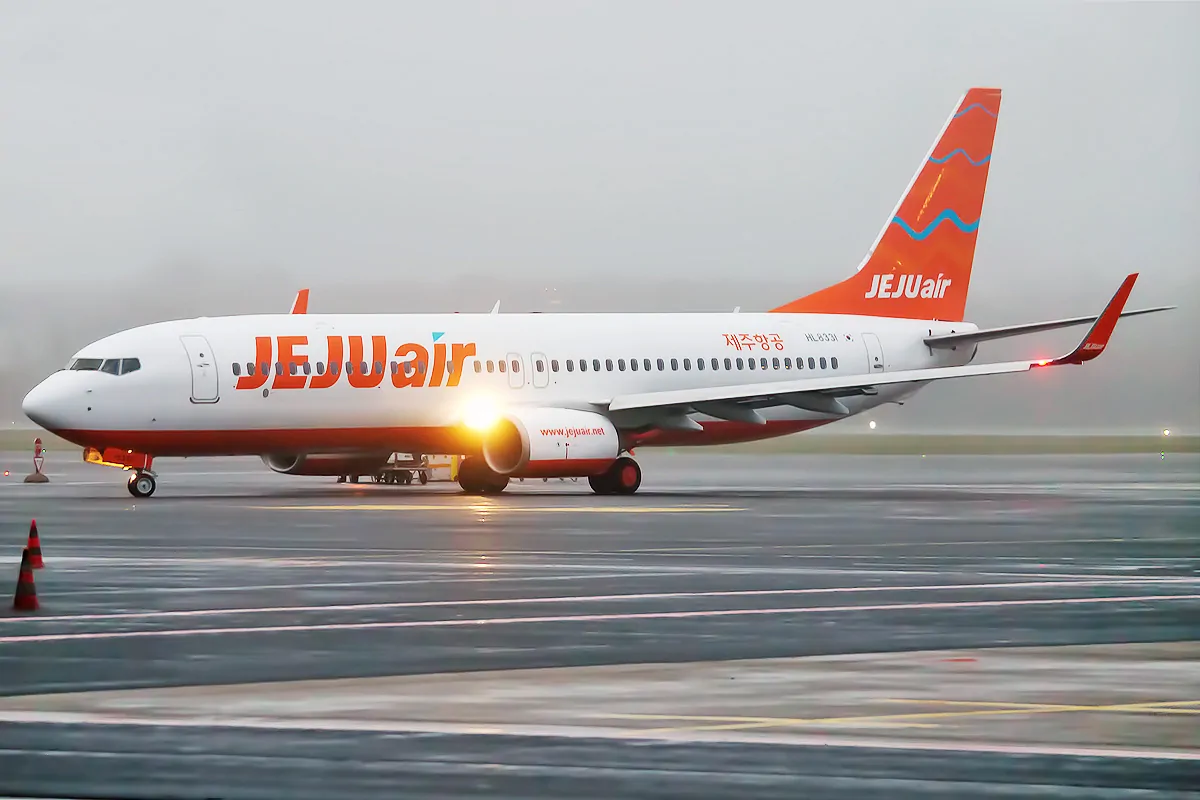
South Korea's Aviation and Railway Accident Investigation Board (ARAIB) revealed significant conclusions on July 21, 2025, regarding the December 29, 2024 accident involving Jeju Air Flight 2216, a Boeing 737-800. The plane, arriving from Bangkok, encountered a bird strike that caused observable damage to both engines, with the right engine sustaining more severe impact. Throughout the subsequent crisis, investigators established through substantial evidence that the flight crew erroneously deactivated the less-affected left engine rather than the severely compromised right engine, intensifying the aircraft's controllability problems and leading to a catastrophic belly landing followed by collision with a concrete installation at Muan International Airport, resulting in 179 fatalities among 181 occupants. Information retrieved from cockpit voice recorders, flight data recorders, and physical examination of engine control mechanisms in the debris substantiated these findings. Investigators observed that the functioning right engine generated sufficient power to potentially sustain flight if it had remained active. Bereaved families and aviation labor organizations have expressed significant opposition, criticizing officials for hastily assigning responsibility to the pilots and demanding greater openness in the investigation, while questioning whether infrastructure elements, including the reinforced concrete localizer embankment positioned at the runway terminus, contributed substantially to the tragedy. ARAIB had originally intended to publicly present its discoveries but withdrew a scheduled media presentation following criticism from victims' relatives. South Korea's transportation department is evaluating airport facilities and has committed to substituting impact-prone concrete installations with enhanced safety alternatives. A complete detailed report is anticipated by June 2026, as the extensive investigation proceeds, examining flight crew actions, emergency response training, infrastructure safety standards, and communication procedures.
Content Attribution
Photo Credit: Anna Zvereva
License: CC BY-SA 2.0
Original source: https://commons.wikimedia.org/wiki/File:Jeju_Air,_HL8331,_Boeing_737-8JP_(44888063935).jpg
Created: November 7, 2018
Uploaded: November 26, 2018