Airservices Australia ATC Trainee Selection: Online Tests, Assessment Centre and Training

Airservices Australia provides air navigation services across 11 percent of the world's airspace, by its own count, and its Air Traffic Controller in Training Program is the entry route for people with no controller experience. After an online application, selection moves to ability tests taken at home and ends with medical and security checks. Trainees are paid from the day they start.
The details below come from the Air Traffic Control careers page and the ATC FAQ on the Airservices website, checked on 21 November 2026. Airservices does not print an application deadline on those pages; roles are advertised and applied for through its online recruitment system. Where the two pages give different figures, both are shown.
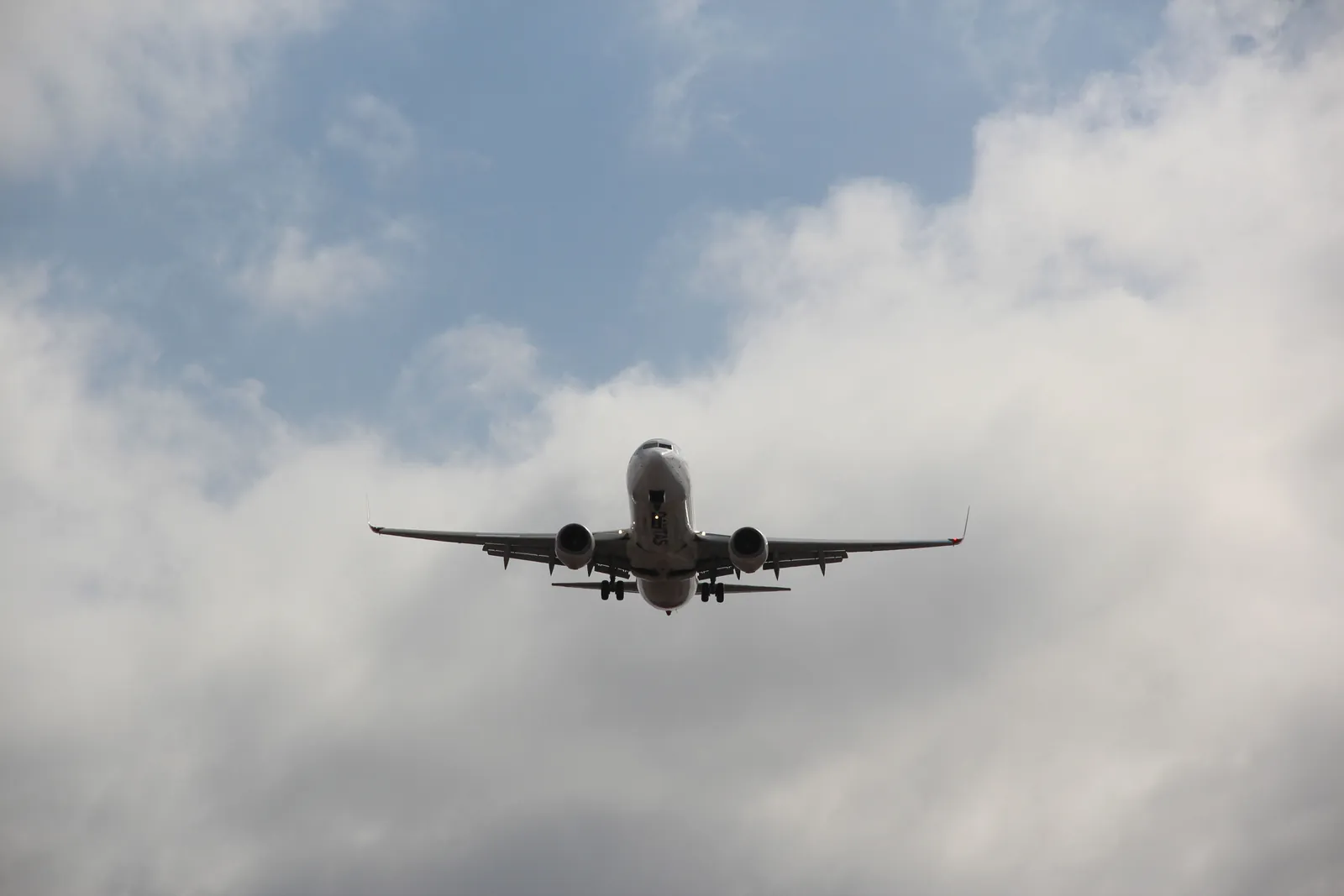
Photo: Mr Ozturk / Pexels. An aircraft landing at Melbourne Airport, used here as an illustration.
Who can apply to Airservices
Two sets of rules apply, and you must meet both. On residency, you need to be an Australian or New Zealand citizen, or an Australian permanent resident. On education, you need a Senior Secondary Certificate of Education (a Year 12 certificate or equivalent), or tertiary study at Diploma level or above. The FAQ says applicants only count as having finished high school once all Year 12 exams are complete, and that there are no exceptions for people still working towards a qualification.
The age rule is worded differently on the two pages. The careers page lists a minimum of 18. The FAQ says you must be at least 17 when you submit the application and must have turned 18 before you finish Initial Training. Neither page sets an upper limit. The FAQ adds that the course is intensive and that Airservices looks for evidence of recent, successful study at a suitable level.
Before you apply, the eligibility questionnaire asks whether you can:
- hold an Aviation Security Identification Card (ASIC), which involves a background check
- pass a CASA Class 3 medical examination, plus drug and alcohol screening
- work rotating shifts, including nights, weekends and public holidays
- accept either training stream and any location you are offered before Initial Training starts
Airservices says it cannot give medical advice, and suggests contacting CASA, the Civil Aviation Safety Authority, before applying if you are unsure about a condition. If CASA has ever refused, suspended or cancelled a licence or certificate you held, you must disclose it in the application.
The Airservices online ability tests
If your application meets the requirements, the next step is a set of ability assessments taken online at home. The careers page lists five:
- Verbal reasoning
- Inductive reasoning
- Numerical calculations
- A checking test
- A spatial test
Further online testing may be given at the same stage. The FAQ describes what the tests are meant to show: whether you can follow written instructions, your numerical and verbal reasoning, your spatial awareness, and whether you can work with complicated patterns and check data. Airservices does not name the test publisher on these pages, so treat any claim about the exact provider with caution.
These are general aptitude formats rather than a controller simulation, and the list overlaps with the abilities Airservices says it looks for in trainees: good spatial awareness, strong mathematical skills, quick and accurate decisions under pressure, and the ability to plan ahead and adapt. Our cognitive test guide for ATC candidates covers how verbal, numerical and inductive reasoning items are usually built.
The one-day assessment centre
Selected candidates are invited to a one-day Assessment Centre in a capital city chosen by Airservices. You travel there at your own cost. The day includes further cognitive and technical assessment, and candidates may also face behavioural assessments and a group exercise. Airservices does not publish a timetable or the content of these exercises.
Paperwork matters before this stage. The FAQ says supporting documents are not mandatory when you first apply, but must be provided before you attend an assessment centre. If you were born in Australia after 20 August 1986, a birth certificate alone may not prove citizenship, and the FAQ explains which extra documents can be used.
References, offer and pre-employment checks
After the assessment centre, Airservices asks for two recent supervisors or managers as referees and tells you before it contacts them. If you meet the medical and security requirements, you receive an official offer to become an ATC trainee. The pre-employment medical and security checks must be completed before you can be enrolled on a course. The careers page warns that the process is thorough and takes some months.
Training in Melbourne
Training takes place at the Airservices training facilities in Melbourne. It is delivered face to face, with theory and practical work in air traffic control simulators, and the careers page puts the programme at approximately 12 months, with on-the-job training times varying. Trainees work towards the AVI50115 Diploma of Aviation (Air Traffic Control), a nationally recognised qualification.
Airservices recognises three streams: Enroute, Tower and Approach. Enroute trainees are based at the Melbourne or Brisbane centre after training. Tower trainees can be posted to any Airservices tower for final field training and ongoing employment, with the posting notified towards the end of the course; the FAQ says about three months before completion. The tower count is not consistent: the pages mention 28, 29 and 31 towers in different places. Once trainees have consolidated, which the FAQ puts at about three to five years, they can apply to move to another location or stream, usually with additional training.
Pay, costs and the five-year bond
The training itself costs nothing, and you become a paid Airservices employee when you start. Pay follows the Airservices Australia Air Traffic Control Classification Base Salary 2024-2027; the pages do not quote a figure. While training in Melbourne you arrange your own accommodation, and the FAQ notes there is no public transport to the Initial Training Facility, so you need private transport. Parking is free.
New recruits sign a Training Bond Agreement committing to Airservices for five years after successfully completing training. If the bond is broken, Airservices asks for a proportion of the training fees back. Controllers, including trainees, are subject to random drug and alcohol testing, and the FAQ says average hours across a fortnight are 72.
Not everyone who starts passes. The FAQ says each training module must be passed before the next one, and all modules must be completed to pass the course.
Official sources and related guides
Apply only through the Airservices recruitment system, which the FAQ says is the only accepted route. For a wider view of the job, read what skills you need to be an air traffic controller and our air traffic controller age limits comparison.
Pages checked on 21 November 2026.
Related Blog Posts
Qantas Group Pilot Academy Selection: Moodle Exam, Aon Cut-e Test and Interview
Flight Training Adelaide selects Qantas Group Pilot Academy students with a theory exam, a nine-module Aon cut-e assessment and a 90-minute interview in Toowoomba. Pass marks, fees and wait times from the 2026 guide.
IndiGo Cadet Pilot Program Selection: ADAPT Test, Group Task and Interview
IndiGo selects cadets through partner flight schools, starting with the Symbiotics ADAPT aptitude test and ending with an IndiGo group task and interview. Eligibility, the eight ADAPT tests and the attempt rules, by source.
Emirates Flight Training Academy Assessment: HireVue, Compass Test and Dubai Selection Days
Emirates Flight Training Academy screens international cadets online, then tests maths, physics and the Compass pilot aptitude battery in Dubai. Requirements, steps and fees as the academy published them.