

FAA Academy Basics for ATC Course: What New Controllers Study and Must Pass

A new FAA air traffic control hire can lose the job before touching a simulator. Basics for ATC, the first course most trainees take at the FAA Academy in Oklahoma City, ends with an exam that requires 70 percent. Trainees who fail it do not continue to the next course and are no longer employed by the FAA.
This guide is based on the FAA's Basics for ATC information sheet for new-hire Air Traffic Control Specialists, updated in April 2026, together with the FAA Academy's new-hire FAQ and the FAA's controller hiring page. The sheet says its rules apply to people selected under an Air Traffic Control Specialist-Trainee job announcement and may not apply to other hiring initiatives. Pages were checked on 19 November 2026.

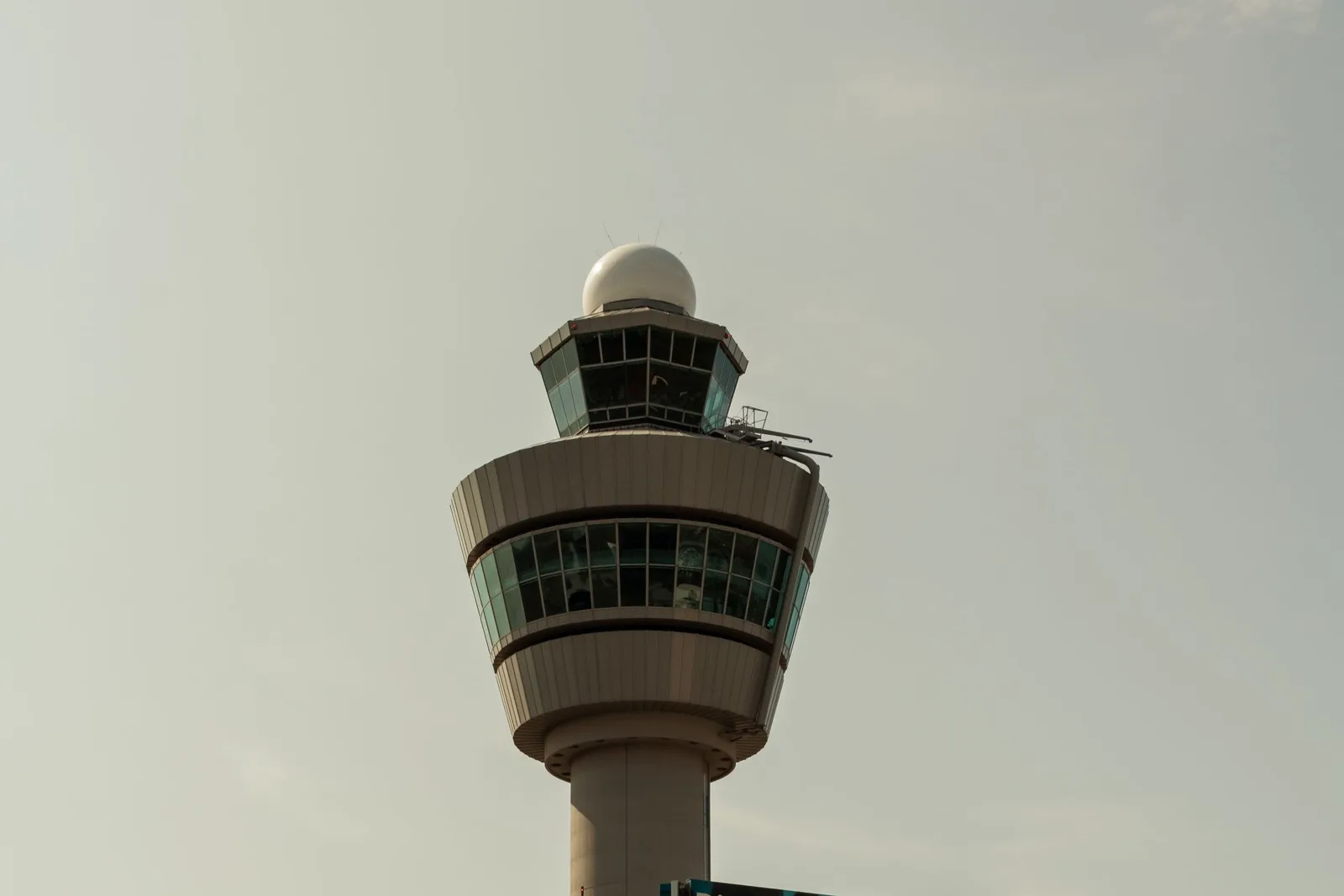
Photo: Clément Proust / Pexels. The control tower at San Francisco International Airport. The FAA Academy is in Oklahoma City.
Where Basics fits in the FAA hiring process
The FAA's hiring page describes five steps: apply on USAJOBS, pass the Air Traffic Skills Assessment (ATSA), a 3.5-hour computer-based test, clear medical and security checks, train at the FAA Academy, and then gain one to three years of on-the-job experience to become a Certified Professional Controller. The page lists a starting rate of $22.61 an hour during training. On 19 November 2026 it showed the announcement as closed.
Basics comes at the start of the Academy step. The information sheet says most people hired as Air Traffic Control Specialist-Trainees must attend it immediately before initial qualification training in one of three tracks: En Route, Terminal Tower or Terminal Radar. Facility assignment comes only after that track training and depends partly on class rank.
What the Basics for ATC course is
Basics is 19 days long and held in person at the FAA Academy. Air traffic instructors teach it through classroom instruction, guided discussion and interactive exercises. The FAA lists separate course numbers for the three tracks: 50043002 for Terminal Radar, 50045001 for Terminal Tower and 50147001 for En Route. There are no prerequisites.
The FAA pays for the course. New hires attend on temporary assignment and receive their salary plus lodging and per diem. The Academy FAQ gives a long-term per diem rate of $119.60 a day from 1 October 2025, made up of $69.60 for lodging and $50.00 for meals and incidental expenses.
What Basics for ATC teaches
The objectives attached to the information sheet cover the knowledge every later track assumes. Grouped by subject, they include:
- The air traffic control system and the National Airspace System, including VFR and IFR
- Airports: areas, markings, signs and lighting
- Separation: vertical, non-radar and radar minimums
- NOTAMs, surveillance sources, FAA orders and manuals, letters of agreement and SOPs
- Principles of flight, wake turbulence, aircraft characteristics and recognition
- Airspace, Title 14 of the Code of Federal Regulations and Part 91
- Navigation: time, speed and distance, radio and satellite navigation aids, charts, SIDs, STARs and approaches
- Weather: METAR and SPECI, forecasts and advisories such as SIGMETs and AIRMETs, hazardous weather and pilot reports
- Emergencies and search and rescue
- Basic communications, stripmarking and ATC clearances
Most objectives are written as "identify" or "decode" tasks: decoding a SIGMET, identifying the items of a clearance and their order, or identifying the abbreviations used on flight progress strips. That gives a clear idea of the kind of recall the end-of-course exam rewards.
The 70 percent end-of-course exam
Everyone who attends Basics must score 70 percent or better on the end-of-course examination. A pass moves you into option-specific training for your track. A fail ends both training and FAA employment, according to the information sheet. That applies even to people who could have skipped the course but chose to attend.
Who can choose to skip Basics
Every selectee returns an election form with the job offer decision letter. You may skip Basics if you have completed courses that cover its objectives, or if you hold or have held an FAA-recognised air traffic certification, such as a Control Tower Operator certificate or a facility rating at a military air traffic control facility.
The choice has consequences. You certify your own eligibility, the FAA will not review your credentials to check it, and the decision cannot be changed. If you skip, you are still responsible for knowing everything Basics teaches, because the track courses assume it. The FAA warns that prior certification or an Air Traffic Collegiate Training Initiative (AT-CTI) background does not guarantee full understanding of the Basics objectives. Skipping does not change your starting salary.
Practical details for arriving in Oklahoma City
The Academy FAQ sets out a few logistics new hires often ask about:
- The information packet should arrive one to two weeks before the class start date.
- Plan to arrive in Oklahoma City one day before the class starts. All air traffic courses begin at 0700 on the first day.
- Instructors assign shifts, and you may have to work a night shift at some point during Academy training.
- Airfare to Oklahoma City is booked at no cost to you. Rental cars are not reimbursed.
- You pay meals and incidental expenses yourself at first and can claim reimbursement 15 days after arrival, then monthly.
Before the Academy: the ATSA
Nobody reaches Basics without first passing the ATSA. Our ATSA test guide explains the format and scoring, and what happens if you fail the ATSA covers the next steps after a weak result. If you want timed practice, the ATSA preparation software offers original practice tasks, not the official FAA test. Passing practice tasks or the ATSA is not a job offer.
Official sources
- FAA: Basics for ATC information sheet for new-hire Air Traffic Control Specialists (PDF, updated April 2026)
- FAA Academy: Air Traffic Control Specialist new hire information
- FAA: Air traffic controller hiring
All pages checked on 19 November 2026.
Related Blog Posts

Generation easyJet Pilot Assessment: ADAPT Test, Group Exercise and Interview
CAE and easyJet select Generation easyJet cadets in three stages: an application check, the ADAPT pilot aptitude test, and a group exercise with an interview. This guide covers each stage, the entry rules and the re-assessment policy CAE publishes.
ELPAC Test for Air Traffic Controllers: Format, Scoring and ICAO Levels
ELPAC is EUROCONTROL's English language proficiency test for air traffic controllers and pilots. This guide explains the listening and speaking papers, how the ICAO level is decided, and how long an EASA language endorsement stays valid.
British Airways Speedbird Pilot Academy Assessment: Online Tests and Selection Stages
The British Airways Speedbird Pilot Academy selects cadets in three stages, starting with online tests and a verbal speaking activity. This guide covers each stage, the 2026 eligibility rules and how to prepare.