

Transavia Pilot Aptitude Test: Compass and CPP Guide

Train with Compass preparation
Practise Slalom, memory, spatial orientation and the rest of the battery. Start with the free Compass practice, or open the full set. The tasks are original practice, not EPST's assessment.
Transavia uses two assessments during pilot selection: Compass, a pilot aptitude test battery developed by European Pilot Selection & Training (EPST), and CPP, the Checklist Professional Profile, a personality questionnaire developed for pilot selection and training. Together, these assessments help evaluate whether candidates have the aptitude and personal characteristics required for a career as an airline pilot.
Transavia has two distinct recruitment routes relevant to aspiring first officers. Experienced and suitably qualified pilots can apply for direct-entry first officer vacancies, while candidates without a pilot licence can apply for the Airline Pilot Program, Transavia's ab initio training route.
Both routes use aptitude and personality assessments, but their entry requirements and subsequent selection stages differ.
Current recruitment status: As checked on 23 October 2026, Transavia's published recruitment pages indicated that applications for the Airline Pilot Program and the relevant first officer vacancy were closed. Applicants should consult the Airline Pilot Program page and the first officer requirements page for the latest information.
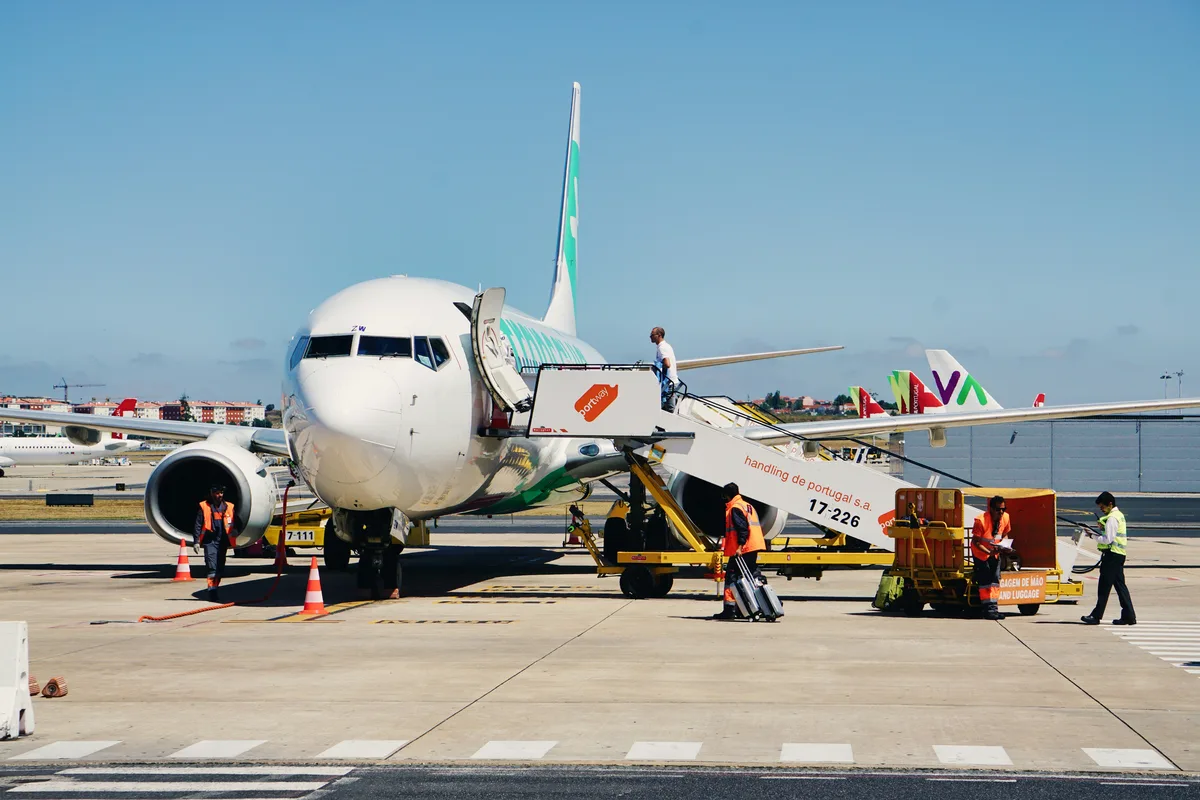
Compass and CPP come before the on-site selection.
Direct-entry first officer selection
Transavia's direct-entry vacancies are intended for pilots who already hold the licences, ratings and certificates specified in the relevant job advertisement.
The published minimum requirements include a valid EASA frozen ATPL, a valid multi-engine instrument rating with PBN privileges, a valid Class 1 medical certificate, ICAO English Language Proficiency Level 6, an MCC certificate and, where applicable, an Advanced UPRT certificate. Candidates must also satisfy the experience requirements for the relevant recruitment category.
The exact requirements depend on the vacancy and the candidate's experience. Applicants should therefore check the official Minimum Requirements First Officer page before applying.
The direct-entry process includes an online application and the assessments specified by Transavia for that recruitment campaign. The published English-language recruitment information describes a two-day on-site selection at EPST for candidates progressing through the process.
Candidates who successfully complete the selection process may receive an employment offer, subject to the applicable recruitment conditions.
As recruitment availability changes, interested pilots should monitor Transavia's job alerts. Questions about direct-entry recruitment can be directed to [email protected].
The Airline Pilot Program
Transavia's Airline Pilot Program is an ab initio training route for candidates who want to become airline pilots but do not yet hold a professional pilot licence. Previous flying experience is not required.
The programme takes approximately two years. It combines theoretical instruction, practical flight training and training on Airbus aircraft systems and simulators. The programme leads to a multi-crew pilot licence (MPL), with the aim of qualifying successful candidates to work as first officers at Transavia.
Transavia's published programme information states that the training costs €65,000, excluding accommodation, travel, food and other living expenses. Transavia covers the type rating and aircraft training described in its programme arrangements.
Entry requirements
Applicants must meet the programme's educational, language, medical, physical and other eligibility requirements. The main published requirements include the following.
Age and language
- Candidates must be at least 18 years old when the course begins.
- There is no published maximum age limit.
- Candidates must have a good command of Dutch and English.
Height and medical suitability
- The published height range is 158–205 cm.
- For candidates taller than 195 cm, the maximum upper-body length measured from the seat is 95 cm.
- Candidates must meet the applicable medical requirements. Wearing glasses or contact lenses does not automatically disqualify an applicant; Transavia publishes a permitted refractive range of −6 to +5, subject to the medical assessment.
Educational qualifications
Transavia publishes several routes to educational eligibility.
- HAVO diploma: Applicants need a full HAVO diploma with Mathematics B, Physics, English and Dutch. An additional pilot-specific Physics Take-off course through Boswell-Bèta or WisMon is required. This course may be completed during the selection process but must be passed before training begins.
- VWO diploma: Applicants with Mathematics A or B, Physics, English and Dutch in their subject package can qualify directly without the additional course.
- HAVO or VWO diploma with a different subject package: Applicants may qualify with up to two supplementary subject certificates from Boswell-Bèta or WisMon, subject to Transavia's detailed conditions. Applicants using a HAVO-level Physics certificate must also complete the Take-off course.
- Four-year technical higher-education qualification: Transavia lists specific eligible technical HBO and WO qualifications, including Maritime Officer, Automotive Engineering, Aerospace Technology, Mechanical Engineering, Aviation Engineering, Aviation Logistics, Civil Engineering and Aerospace Engineering. Additional Physics requirements can apply to certain qualifications.
Candidates who are still in their final school year may be permitted to participate in selection if they meet the specified subject requirements, but they must obtain their diploma before starting the programme.
Transavia also publishes separate conditions for Belgian diplomas and other eligibility requirements, including a valid EU passport, swimming ability and the absence of a criminal record.
Because educational eligibility depends on the precise diploma and subjects completed, applicants should consult the current official selection criteria rather than rely on this summary alone.
How the selection process works
Transavia describes the Airline Pilot Program selection process in the following stages.
1. Online application
Candidates submit an application and demonstrate that they meet the published entry requirements. Transavia may consider applicants who are still completing their final school year, subject to its conditions.
2. Online selection: Compass and CPP
Candidates complete the assessments used to evaluate pilot-related aptitudes and relevant personality characteristics. The precise arrangements are provided by Transavia during the recruitment process.
3. Competency interview
Candidates who progress take part in a competency-based interview with Transavia's selection committee. This provides an opportunity to discuss their motivation, behaviour, experience and suitability for pilot training.
4. Simulator grading and group assignment
The simulator assessment evaluates flying aptitude and trainability. Candidates also participate in a group assignment, followed by an evaluation interview. Transavia specifies business attire for the selection days.
5. Medical and security checks
Candidates who receive a positive selection result must complete the required medical examination and security screening. Passing the selection assessments alone does not remove these requirements.
6. Course placement
An offer of a training place depends on the availability of an intake and successful completion of the required follow-up steps. Transavia states that classes are limited to a maximum of 15 students.
Applicants should not assume that passing the assessments means training will begin immediately.
Selection costs, retakes and training conditions
Transavia's published FAQ sets out the following financial and procedural conditions.
- Selection contribution: Applicants contribute €400 towards the selection procedure, payable to EPST.
- Potential repayment: Candidates who successfully complete selection but subsequently decide not to start the programme may be required to repay the full €1,200 selection cost. Transavia states that this does not apply if the candidate cannot secure the necessary financing.
- Validity of results: Selection results remain valid for one year.
- Number of attempts: Candidates may participate in the MPL selection process a maximum of twice.
- Waiting period: After an unsuccessful attempt, candidates may reapply after 12 months, calculated from the selection date of the relevant failed stage.
The programme costs €65,000, excluding accommodation, travel, food and other living expenses. Transavia's published FAQ states that there is no salary or other remuneration during training, and that no financial arrangement is currently provided by Transavia for funding the course.
Training takes place at Lelystad Airport, in Utrecht and at Schiphol East, depending on the training phase. Accommodation is the student's responsibility.
Transavia describes a job guarantee for candidates who complete the course to the required standard. Successful graduates can qualify to enter employment as first officers, subject to the programme's conditions and the required training and qualification outcomes. The published employment commitment is at least four years.
Before committing financially, applicants should review the latest programme FAQ and confirm the conditions that apply to their intake.
Understanding Compass and CPP
Compass and CPP assess different aspects of a candidate's suitability for pilot training. Compass evaluates relevant aptitudes and abilities, whereas CPP provides a structured assessment of personality characteristics associated with the pilot role.
Compass: pilot aptitude and cognitive skills
Compass stands for Computerized Pilot Aptitude Screening System. EPST describes it as a battery of tests developed to assess abilities relevant to pilot training and selection. Prior flying experience is not required to perform the tests.
Depending on the assessment version, the battery can cover areas such as:
- Hand, foot and eye coordination.
- Visual tracking and hand-eye coordination.
- Applied mathematics and speed of processing.
- Short-term memory.
- Managing concurrent tasks.
- Instrument interpretation and spatial orientation.
- Technical comprehension.
- Aviation English and verbal reasoning.
The exact tests depend on the version of Compass used. EPST distinguishes its cadet Compass assessment from Advanced Compass, which is intended for licensed and experienced pilots. Candidates should not assume that every airline or recruitment route uses an identical test battery.
Some exercises involve coordinating physical controls with visual information on the screen. Familiarity with timed tasks, following instructions accurately and managing attention can therefore be useful when preparing.
The objective is not simply to respond as quickly as possible. Candidates also need to maintain accuracy, understand the task requirements and manage competing demands.
For the official description of Compass and its test areas, see EPST's pilot selection information.
CPP: the Checklist Professional Profile
CPP stands for Checklist Professional Profile. EPST describes it as a personality questionnaire developed for the selection and training of ab initio pilots.
Unlike Compass, CPP is not a coordination or cognitive aptitude test. It produces a profile based on responses about personality characteristics relevant to the pilot role. These results can help inform subsequent interviews and other parts of the selection or training process.
EPST states that completing the questionnaire usually takes approximately 40 minutes.
There is no single set of answers that all candidates should try to reproduce. The questionnaire is intended to provide information about the individual, so candidates should answer honestly and consistently rather than try to create an artificial personality profile.
For more information, see EPST's official CPP description.
How to approach both assessments
Transavia advises applicants to arrive well rested and be themselves. That is a useful principle for both assessments.
For Compass, preparation can focus on becoming familiar with the types of aptitude tasks described by EPST, practising under time constraints and learning to balance speed with accuracy.
For CPP, the priority is to understand the nature of a personality questionnaire and answer the questions honestly. Memorising supposedly ideal answers is not a reliable substitute for a genuine and consistent response.
How to prepare for Compass and CPP
Once candidates understand the difference between the two assessments, they can prepare in a more targeted way.
Practising Compass-style tasks
Practice can help candidates become more familiar with timed aptitude exercises and identify skills that need further development.
Exercises covering slalom tracking, memory, spatial orientation and task management can provide useful practice. However, the exercises available from independent preparation providers should not be assumed to reproduce the exact content, timings or scoring of the live EPST assessment.
If you use a preparation platform, check whether its exercises are original practice material or official test content. Do not assume that a high practice score guarantees success in the recruitment process.
The free Compass practice covers Slalom, Variable Memory, Short-term Memory and Spatial Orientation. The full Compass preparation adds the rest of the battery, timed and scored. Both are original practice tasks, not EPST's assessment.
Preparing for CPP
CPP calls for a different approach. Since it is a personality questionnaire, candidates should avoid attempting to memorise answers or manufacture a profile that they think an airline wants.
Instead:
- Read each question carefully.
- Answer honestly and consistently.
- Avoid overthinking how every response might be interpreted.
- Arrive rested and allow sufficient time to complete the assessment.
Preparation can improve familiarity with the assessment process, but it cannot guarantee a particular result.
Frequently asked questions
What is the Transavia pilot aptitude test?
Transavia uses Compass and CPP in pilot selection. Compass is an aptitude test battery developed by EPST, while CPP is a personality questionnaire called the Checklist Professional Profile. Together, they help assess abilities and personality characteristics relevant to pilot selection and training.
Where do I take Compass and CPP?
The exact arrangements depend on the recruitment route and instructions provided by Transavia. Candidates should follow the invitation and assessment instructions for their specific selection process rather than assume that all applicants use the same testing location or format.
Is direct-entry selection the same as the Airline Pilot Program selection?
No. Direct-entry recruitment is for pilots who already meet the licence, rating, medical and experience requirements of the relevant vacancy. The Airline Pilot Program is an ab initio training route for candidates who want to qualify as first officers. The two routes have different entry requirements and subsequent selection stages.
How much does selection for the Airline Pilot Program cost?
Transavia's published FAQ states that candidates contribute €400 towards selection, payable to EPST. Candidates who pass but then decide not to start the programme may be required to repay the full €1,200 selection cost, except when the necessary financing has not been secured.
How long are selection results valid?
Transavia states that results remain valid for one year. Candidates may participate in the MPL selection process a maximum of twice. After an unsuccessful attempt, the published waiting period is 12 months from the selection date of the failed stage.
Are the practice exercises the actual Transavia test questions?
Not necessarily. Independent preparation exercises should not be represented as official Compass questions unless that status has been verified. Original practice tasks can help candidates develop relevant skills and become familiar with timed assessments, but their format and scoring may differ from the live test.
Is a job guaranteed after the Airline Pilot Program?
Transavia's published FAQ describes a job guarantee for candidates who achieve the required standard at the end of training. Candidates must still satisfy the programme's training, qualification and employment conditions. Applicants should review the latest official terms before committing to the course.
Where can I check the official requirements?
Use these primary sources:
- Transavia Airline Pilot Program
- Transavia selection criteria
- Transavia pilot training FAQ
- Transavia direct-entry first officer requirements
- EPST Compass and pilot selection information
- EPST Checklist Professional Profile
Before applying, check the latest information for the specific recruitment route. Entry requirements, vacancies, selection arrangements and training conditions may change between recruitment campaigns.
Full preparation access
One subscription covers every pilot assessment we prepare for.
3-month subscription
€24.99 / 3 months
- Continuous updates
- Instant access after receiving payment
- Train from any device with a browser
- Compare your results with other candidates
Related Blog Posts
Ryanair Pilot Aptitude Test: A Guide to Aon and cut-e
Ryanair asks applicants to complete an online Aon aptitude test, still called cut-e, before the simulator. The process depends on whether you apply direct with a Ryanair Group airline or through the Future Flyer Academy.
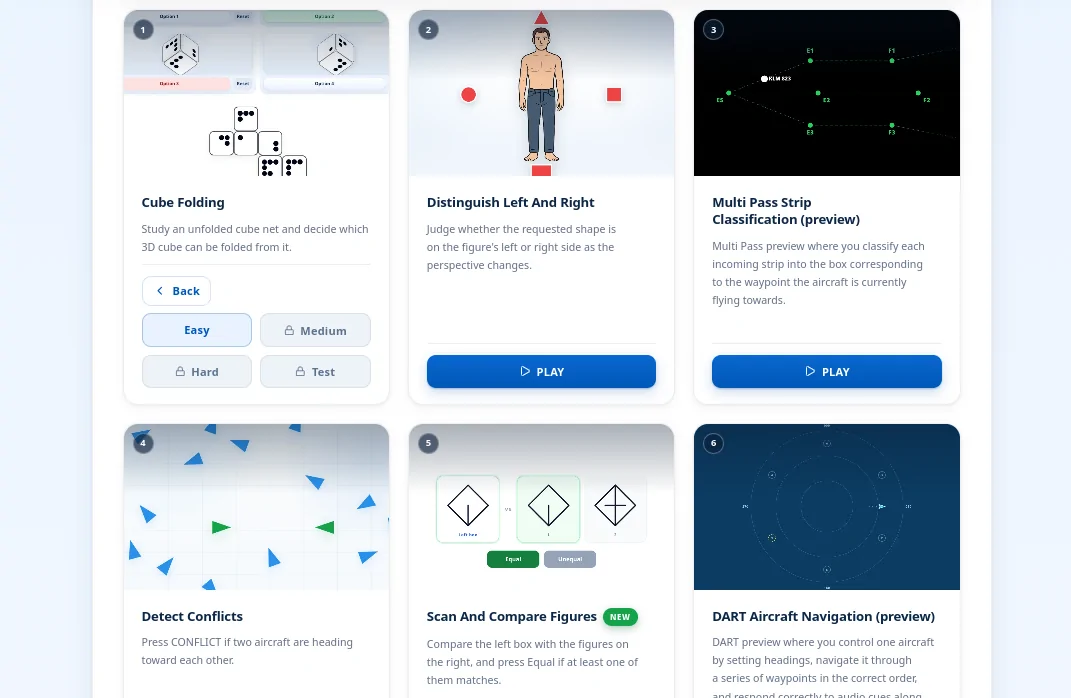
Free FEAST Training: How to Prepare for FEAST I and FEAST II
Free FEAST training for FEAST I and a first look at FEAST II: which modules are included, how to start, and when the Easy level stops being enough.
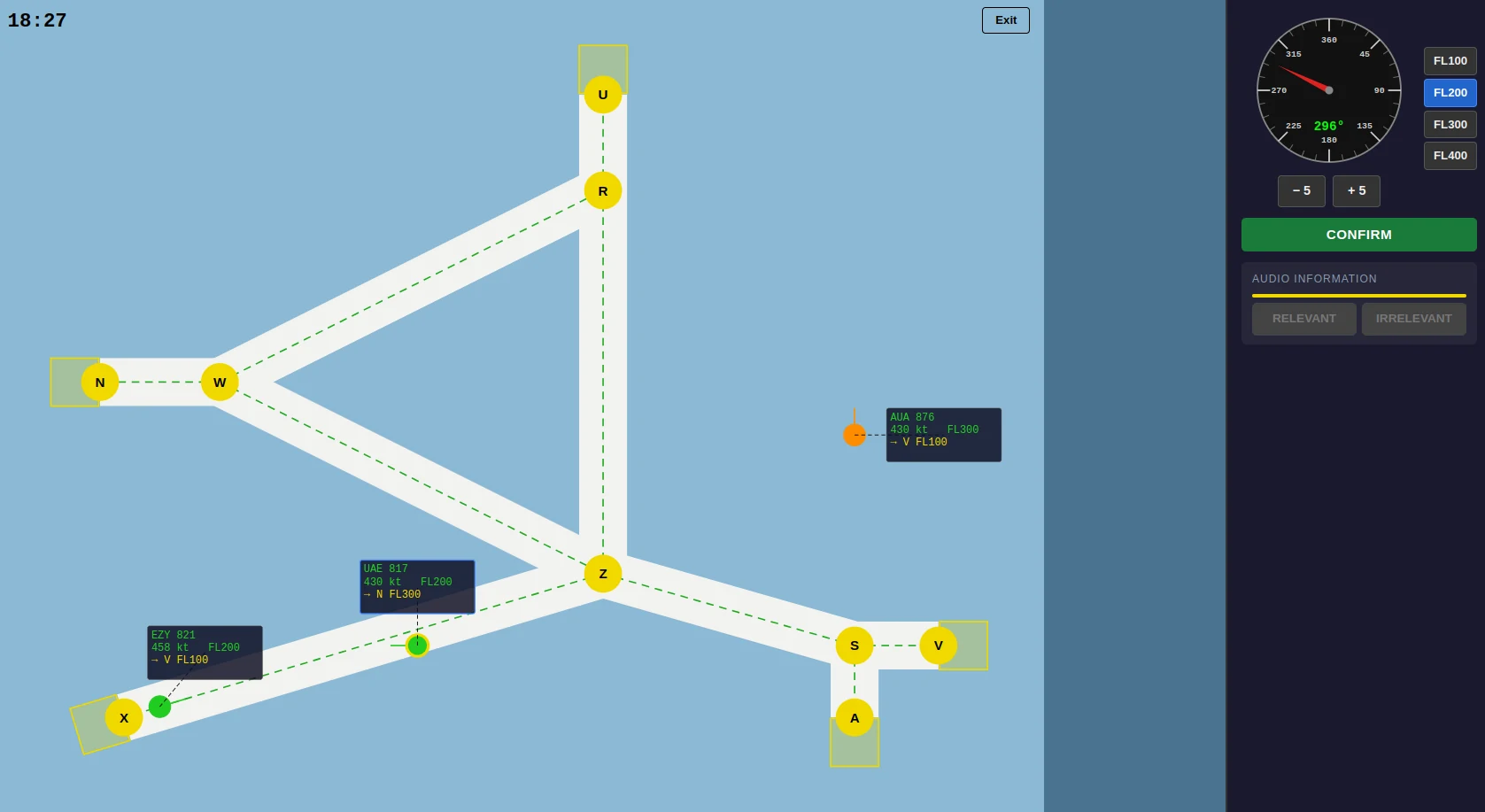
Best FEAST Training Software in 2026: How to Prepare for FEAST I and FEAST II
How to choose FEAST training software in 2026: what EUROCONTROL's free platform covers, what a dedicated suite needs for FEAST I and FEAST II, and where general brain-training apps stop.