

How to Pass the FEAST Test (2026 Guide): Preparation, Tips & Strategies
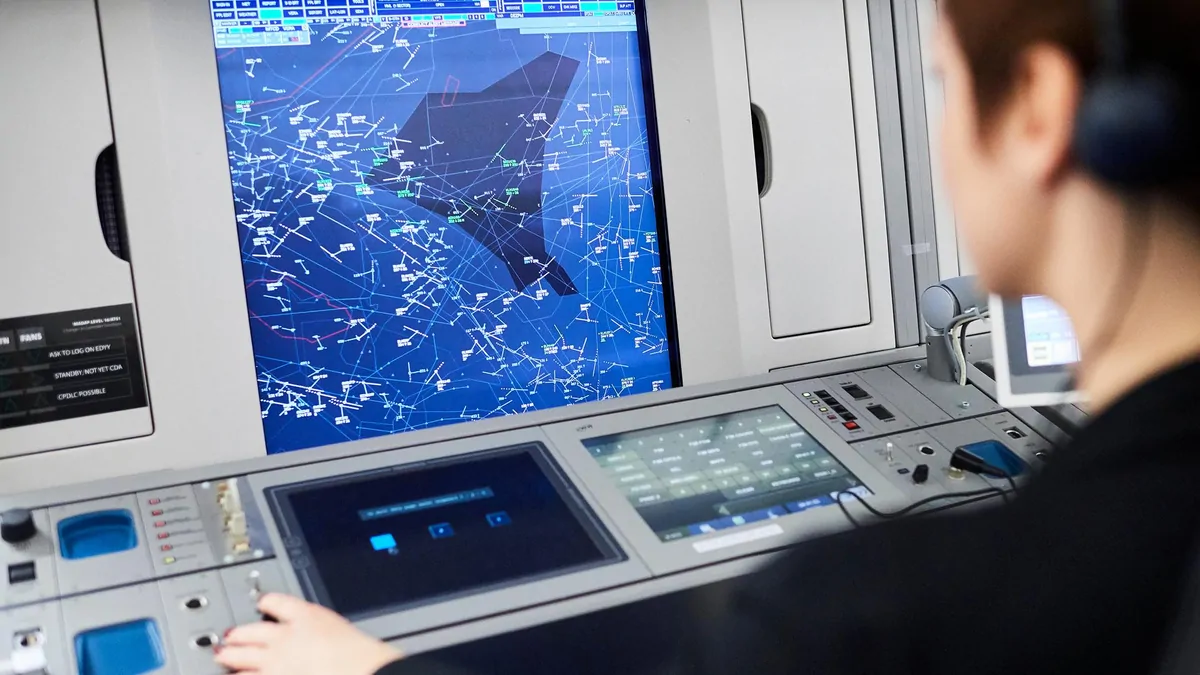
An air traffic controller monitoring live traffic on a radar workstation. Image credit: EUROCONTROL.
Train with Preparation Software for FEAST
Train FEAST I, FEAST II, and FEAST III skills in the FEAST Preparation Suite with all difficulty levels, TEST mode, statistics, and candidate comparison.
The FEAST test is one of the most important steps on the road to becoming an air traffic controller in Europe and beyond. Thousands of candidates take it every year, but only a fraction make it through. This guide is built around the practical strategies and preparation habits that give you the best chance of passing FEAST in 2026.
Contents
- What Is the FEAST Test?
- Why a "Pass Strategy" Matters
- What Does the FEAST Test Actually Consist Of?
- Step 1: Start Your Preparation Early
- Step 2: Master the English Component (FEAST I)
- Step 3: Train Cognitive Skills for FEAST II
- Step 4: Build a Weekly Practice Plan
- Step 5: Get the Personality Section Right (FEAST III)
- Step 6: Simulate Real Test Conditions
- Step 7: Nail the Test Day
- The Most Common Mistakes (and How to Avoid Them)
- Frequently Asked Questions
What Is the FEAST Test?
The FEAST test (First European Air Traffic Controller Selection Test) is a computer-based aptitude assessment developed by EUROCONTROL. It is the standard ATC selection test used by air navigation service providers across Europe and beyond to evaluate candidates applying for air traffic controller training. The EUROCONTROL FEAST assessment measures cognitive abilities, English proficiency, and personality traits that are essential for safe and effective air traffic control. It is one of the most widely used air traffic controller aptitude tests in the world, with over 56 organisations relying on it to select future controllers.
Why a "Pass Strategy" Matters
You've probably heard that the EUROCONTROL FEAST assessment tests your natural abilities and can't really be prepared for. That's only half true. Yes, this air traffic controller aptitude test measures cognitive traits like multi-tasking, spatial reasoning, and decision-making under pressure. But how well you demonstrate those abilities on test day depends heavily on preparation. Candidates who walk in knowing the format, having practiced similar tasks, and with a clear FEAST preparation strategy consistently outperform those who wing it.
Think of it this way: two candidates with the same raw ability can get very different results on this ATC selection test if one of them is familiar with the interface, understands the pacing, and knows how to manage their attention across multiple tasks, while the other is seeing everything for the first time.
What Does the FEAST Test Actually Consist Of?
Before diving into preparation tips, it's important to understand what you're preparing for. FEAST is divided into three main phases:
FEAST I - English & Cognitive Screening
Includes the ELICIT computerised English test plus a speaking examination. Also contains initial cognitive screening tests covering areas like reaction time, mental arithmetic, and basic spatial awareness.
FEAST II - Advanced Cognitive Tests
Multi-tasking simulations, radar-based work samples, conflict detection, and multi-pass exercises. These are the most complex and challenging parts of the test battery.
FEAST III - Personality
Depending on the ANSP, this may include a personality questionnaire (FPQ), an assessment centre with observed group tasks, a personal interview, or a combination. The focus is on teamwork, behaviour, and working style.
Step 1: Start Your Preparation Early
The biggest mistake candidates make is leaving preparation too late. Ideally, you should begin at least 4-8 weeks before your test date. This gives you enough time to familiarise yourself with all the task types, build up your skills gradually, and identify weak areas that need extra work.
A rushed last-minute cram won't help. The cognitive skills the test measures (multi-tasking, spatial reasoning, working memory) improve through consistent, repeated practice, not overnight study sessions. Even 30-45 minutes of focused daily practice is far more effective than a single marathon session.
Step 2: Master the English Component (FEAST I)
The English screening in FEAST I is often underestimated. Many candidates focus heavily on cognitive tests and assume their English is "good enough." But the ELICIT test and the speaking examination assess general English proficiency: grammar, vocabulary, listening comprehension, and the ability to communicate clearly. While no aviation knowledge is required, the level of English expected is high, and candidates who don't prepare specifically for these components can be caught off guard.
How to prepare for the English tests:
- Improve your listening skills: Listen to English podcasts, news broadcasts, and audiobooks. Focus on understanding different accents and varying speech speeds, as this directly helps with the listening comprehension sections.
- Expand your general vocabulary: Read widely in English: news articles, non-fiction, and opinion pieces. A strong vocabulary helps with both the computer-based test and the speaking exam.
- Practice under time pressure: The listening comprehension sections are timed. Practice answering questions about audio clips quickly and accurately.
- Prepare for the speaking exam: Practice describing scenarios, giving opinions, and explaining processes clearly and concisely in English. Examiners want to see that you can communicate effectively, not perfectly.
- Work on grammar and sentence structure: Solid grammar gives you confidence in both written and spoken English. Review common problem areas like tenses, articles, and prepositions.
Step 3: Train Your Cognitive Skills for FEAST II
FEAST II is where most candidates struggle. The cognitive tests are complex, time-pressured, and often require you to handle multiple tasks simultaneously. Here's how to approach each major skill area:
Important: The tasks in FEAST II are designed to push you to your limits. They are supposed to feel overwhelming. Nobody is expected to ace every single task. What the test really measures is how you handle pressure, whether you stay calm, keep working, and maintain your performance even when things get difficult. If you feel like you're falling behind, don't panic. Take a breath, refocus, and keep going. That composure under stress is exactly what they are looking for in a future controller.
Task priorities in radar simulations: In modules like DART, Radar Control, or Multi-Pass, your absolute top priority is to keep aircraft from colliding. That always comes first. But beyond collision avoidance, all other tasks matter equally: managing efficiency, responding to alerts, and handling listening tasks. Listening tasks may feel secondary because they run alongside the radar, but they carry real weight in your score. They test your ability to split attention and process information from multiple sources at once, which is a core ATC skill. Candidates who ignore listening to focus only on the radar screen lose points they could have easily kept. The goal is to manage everything at once, and that balance is what scores well.
Multi-Tasking
Multi-tasking is at the heart of FEAST II. You'll need to manage several tasks at once, for example monitoring a radar display while performing calculations or answering questions. The key is attention distribution, not attention splitting.
These tasks assess whether you can visualise aircraft positions, predict trajectories, and detect conflicts. They're central to what air traffic controllers do every day.
- Think in three dimensions: Aircraft aren't just dots on a screen. They have altitude, speed, and heading. Practice building 3D mental pictures from 2D displays.
- Predict movement: When you see an aircraft on a radar display, ask yourself: where will it be in 30 seconds? One minute? This habit builds the anticipation skills FEAST is looking for.
- Scan systematically: Don't stare at one part of the display. Develop a scanning pattern that covers all areas, just like a real controller.
- Practice switching: Train yourself to move your attention between tasks smoothly rather than fixating on one and ignoring others.
- Prioritise dynamically: Learn to identify which task needs attention right now and which can wait a few seconds. Not all tasks are equally urgent at every moment.
- Accept imperfection: In multi-tasking tests, scoring 80% across all tasks is better than scoring 100% on one and 0% on the others. Spread your effort.
Step 4: Build a Weekly Practice Plan
Having a structured plan keeps you on track and ensures you cover all the skills that FEAST tests. Here's a sample weekly plan that many successful candidates follow:
Sample Weekly Practice Schedule
- Monday: Multi-tasking exercises (40 min)
- Tuesday: English listening + vocabulary (30 min)
- Wednesday: Spatial reasoning & conflict detection (40 min)
- Thursday: Working memory + mental arithmetic (30 min)
- Friday: Combined multi-tasking simulation (45 min)
- Saturday: English speaking practice + review (30 min)
- Sunday: Rest or light review
Adjust the schedule to fit your strengths and weaknesses. Spend more time on areas that feel difficult.
Step 5: Get the Personality Section Right (FEAST III)
FEAST III is about personality and behaviour, but the format depends on the ANSP. Different countries use different approaches. You might face a personality questionnaire (the FPQ), an assessment centre where you're given tasks and observed by instructors, a personal interview, or a combination of these. Check with your ANSP to find out which format they use.
Regardless of the format, the most important thing is: be genuine. If it's a questionnaire, it's designed to detect inconsistency, so trying to game it backfires. If it's an assessment centre, instructors are watching how you handle tasks and interact with other candidates. If it's an interview, they want to see the real you.
One thing that applies across all formats: air traffic control is a team profession. The other candidates are not your enemies. ANSPs are looking for people who cooperate, communicate, and support their peers. In an assessment centre, this is especially visible. Instructors will see how you work with others under pressure, how you share information, and whether you help or compete. Being collaborative and team-oriented is part of what makes a good controller.
Here are some approaches that apply across all FEAST III formats:
- Be cooperative: Whether it's a group task or a questionnaire, show that you're a team player. ATC relies on teamwork. Communicate openly, listen to others, and support your peers. They are your future colleagues, not your competition.
- Be consistent and honest: In questionnaires, similar questions appear in different forms. Answer them the same way. In interviews and assessment centres, be yourself. Trying to act like someone you're not is easy to spot.
- Stay calm under observation: In an assessment centre, you'll be given tasks while instructors observe. Focus on the task, cooperate with your group, and don't let the pressure of being watched change your behaviour.
- Think like a professional: All formats assess traits relevant to ATC work: teamwork, stress tolerance, attention to detail, rule-following. Reflect on how you genuinely handle these situations.
- Don't overthink: Whether answering a questionnaire or talking in an interview, your first instinct is usually the most honest. Overthinking leads to second-guessing.
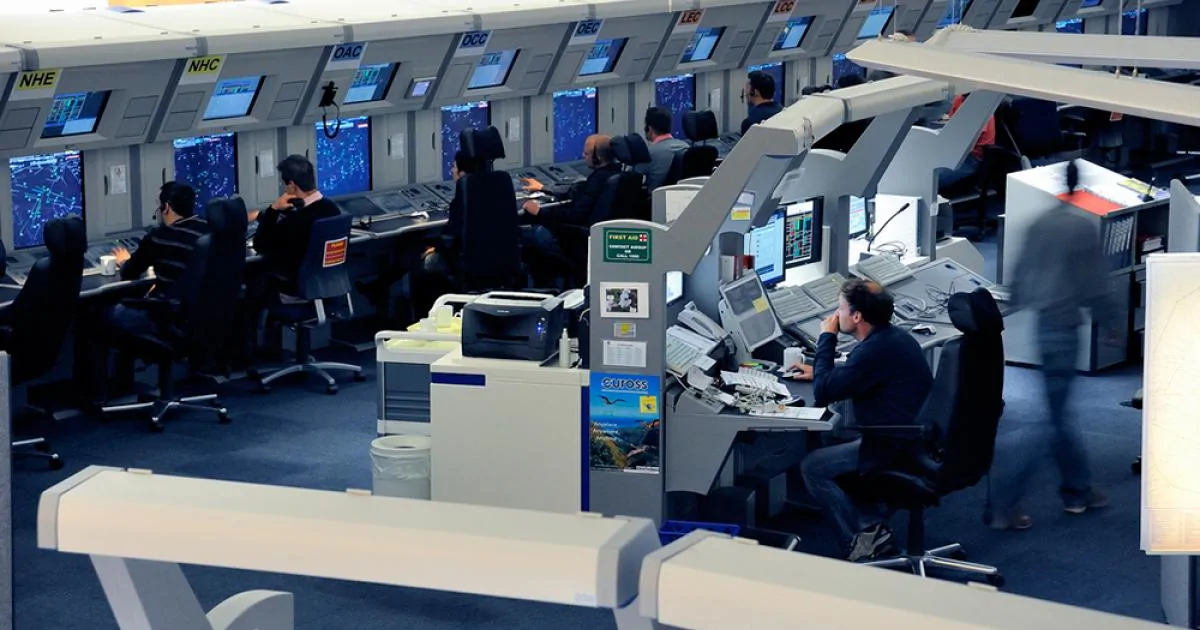
Inside an operations room, where controllers manage live air traffic across multiple radar positions. Image credit: EUROCONTROL.
Step 6: Simulate Real Test Conditions
One of the most effective preparation strategies is to practice under conditions that mirror the real test. This means:
- Time yourself: Every exercise should be timed. Get comfortable working under pressure.
- Remove distractions: When you practice, put your phone away, close other tabs, and focus. The test centre will be quiet and distraction-free, so your practice should be too.
- Take it seriously: Treat practice sessions like the real thing. Don't pause, don't restart, don't check your phone mid-task. Build the discipline of sustained focus.
- Practice in morning hours: Most FEAST sessions happen in the morning. Train your brain to perform at its best during those hours.
Step 7: Nail the Test Day
All your preparation comes down to test day. There is no magic trick or secret formula that will suddenly boost your score. Just follow these simple, common-sense steps that you are surely already familiar with:
The Night Before
- Get 7-8 hours of sleep. Cognitive performance drops sharply with sleep deprivation
- Prepare your bag: ID, any required documents, water, a light snack
- Review your plan and key strategies, but don't cram
- Set two alarms. You cannot be late
On the Day
- Eat a balanced breakfast. Avoid heavy or sugary foods that cause energy crashes
- Arrive 15-20 minutes early for check-in
- Stay calm during the briefing and instructions. Don't let nerves rush you
- Read every instruction carefully and complete all practice items
- During tests: breathe, focus, and manage your attention across all tasks
The Most Common Mistakes (and How to Avoid Them)
After years of working with FEAST candidates, certain patterns emerge. Here are the mistakes that cost people the most:
The biggest trap: Many candidates make a mistake during the test and immediately think it's over. They lose motivation, stop trying, and their performance drops from that point on. This is a huge mistake. The instructors are watching how you handle failure and pressure. Making an error is not the end. What matters is that you put your head down and keep going. Everyone makes mistakes during FEAST. The candidates who pass are the ones who recover quickly and carry on.
- Fixating on one task during multi-tasking: This is the number one mistake. Candidates get absorbed in one sub-task and neglect everything else. Practice distributing your attention evenly.
- Not practicing under timed conditions: Untimed practice builds familiarity but not speed. Always time yourself to build comfort with the pace.
- Underestimating the English section: Candidates who speak English well sometimes skip English preparation entirely. The vocabulary and listening conditions in ELICIT can still catch you off guard if you haven't practiced.
- Starting too late: Cramming the night before doesn't work for cognitive skills. These abilities improve with consistent practice over weeks, not hours.
- Ignoring instructions and practice items: Every test section starts with instructions and practice. Rushing through them is a costly error. Use them to understand exactly what's expected.
- Poor sleep and nutrition: Cognitive performance is highly sensitive to fatigue and blood sugar. Showing up tired or after a heavy meal puts you at a measurable disadvantage.
- Trying to "game" the personality questionnaire: The FPQ is designed to detect inconsistency. Honest, consistent answers create a stronger profile than trying to guess the "right" answer.
What Happens If You Don't Pass?
Not passing FEAST is disappointing, but it's not the end. Many successful controllers didn't pass on their first attempt. Here's what to do:
- Use your feedback: After FEAST, examiners provide personalised feedback. This is your roadmap. It tells you exactly where you were strong and where you need to improve.
- Check the retake policy: Most ANSPs allow a retake after a waiting period, typically 6-12 months. Some also accept applications to other ANSPs.
- Focus your preparation: Use the waiting period to specifically work on the areas identified in your feedback. Targeted practice is far more effective than general practice.
- Don't give up: The selection process is competitive by design. Many people improve significantly on their second attempt because they know exactly what to expect and where to focus.
How Our Preparation Software Helps
Our preparation modules are designed to mirror the types of tasks you'll encounter in FEAST. Practicing with tools that simulate the real test environment helps reduce uncertainty, build confidence, and improve your performance where it matters most.

EUROCONTROL headquarters in Brussels, the organisation behind the FEAST selection test. Image credit: EUROCONTROL.
Frequently Asked Questions
How long should I prepare for FEAST?
We recommend 4-8 weeks of consistent preparation. Daily practice sessions of 30-60 minutes are more effective than occasional long sessions. Start earlier if you're less familiar with the task types.
Is FEAST the same everywhere?
The core FEAST battery is standardised by EUROCONTROL, but individual ANSPs may use different combinations of subtests or add their own assessments on top. Check with the ANSP you're applying to for specific details.
Can I pass FEAST without preparation?
Some candidates do, especially those with strong natural cognitive abilities. But preparation significantly increases your chances. Candidates who are familiar with the format, pacing, and task types consistently perform better than those who go in unprepared.
What's the hardest part of FEAST?
Most candidates find FEAST II the most challenging, particularly the multi-tasking exercises where you need to manage several tasks simultaneously under time pressure. The key is learning to distribute your attention rather than focusing on one task at a time.
How many times can I retake FEAST?
Retake policies vary by ANSP. Most organisations allow retakes after a waiting period of 6-12 months. Some candidates apply to multiple ANSPs in different countries. Check the specific rules of the organisation you're applying to.
Does prior aviation knowledge help?
FEAST does not test aviation knowledge. It tests cognitive abilities and English proficiency. The English section assesses general English skills, not aviation-specific language. Having aviation knowledge won't give you an advantage on the test itself, though it may help you feel more motivated and engaged during preparation.
Final Thoughts
Passing FEAST in 2026 comes down to three things: understanding what the test measures, practicing the right skills consistently, and showing up on test day rested, prepared, and confident. There's no magic shortcut, but there is a clear path, and candidates who follow it give themselves the best possible chance.
Start your preparation early, practice under realistic conditions, cover all the skill areas (including English), and trust the process. Whether this is your first attempt or a retake, the effort you put in now will directly impact your results. Good luck, and remember, every working air traffic controller once sat where you're sitting now.
Related Blog Posts

Transavia Pilot Aptitude Test: Compass and CPP Guide
Transavia uses Compass, the EPST aptitude battery, and CPP, the Checklist Professional Profile. Direct-entry first officers and Airline Pilot Program applicants then follow different selection stages.

Ryanair Pilot Aptitude Test: A Guide to Aon and cut-e
Ryanair asks applicants to complete an online Aon aptitude test, still called cut-e, before the simulator. The process depends on whether you apply direct with a Ryanair Group airline or through the Future Flyer Academy.
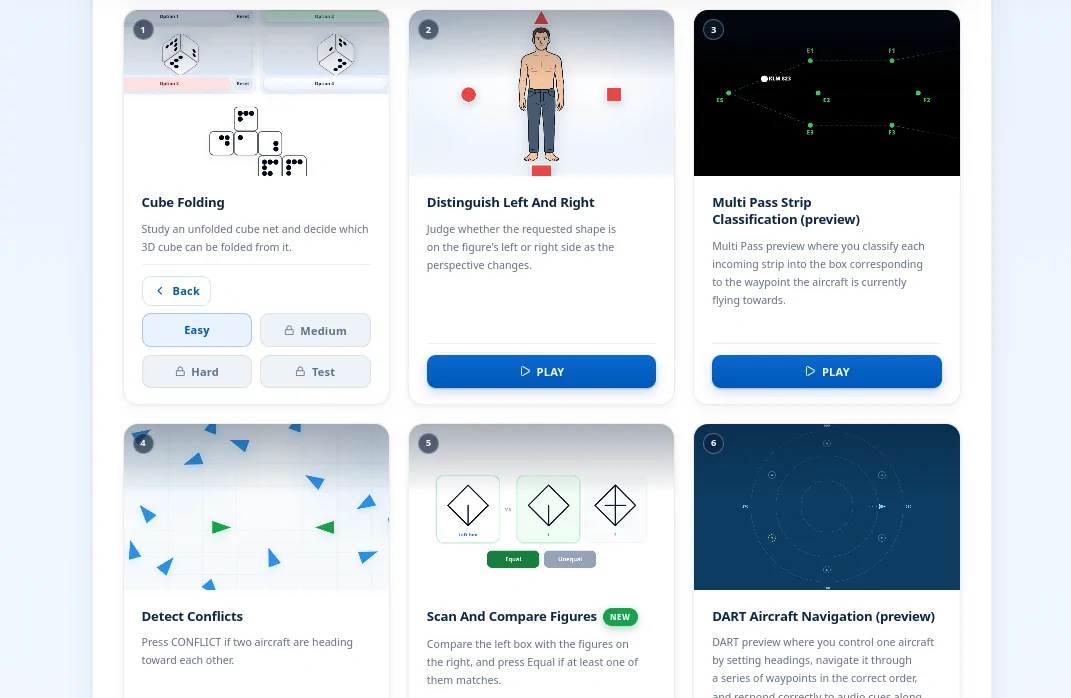
Free FEAST Training: How to Prepare for FEAST I and FEAST II
Free FEAST training for FEAST I and a first look at FEAST II: which modules are included, how to start, and when the Easy level stops being enough.