FEAST Modules Explained (2026): What Each Task Tests + How to Pass

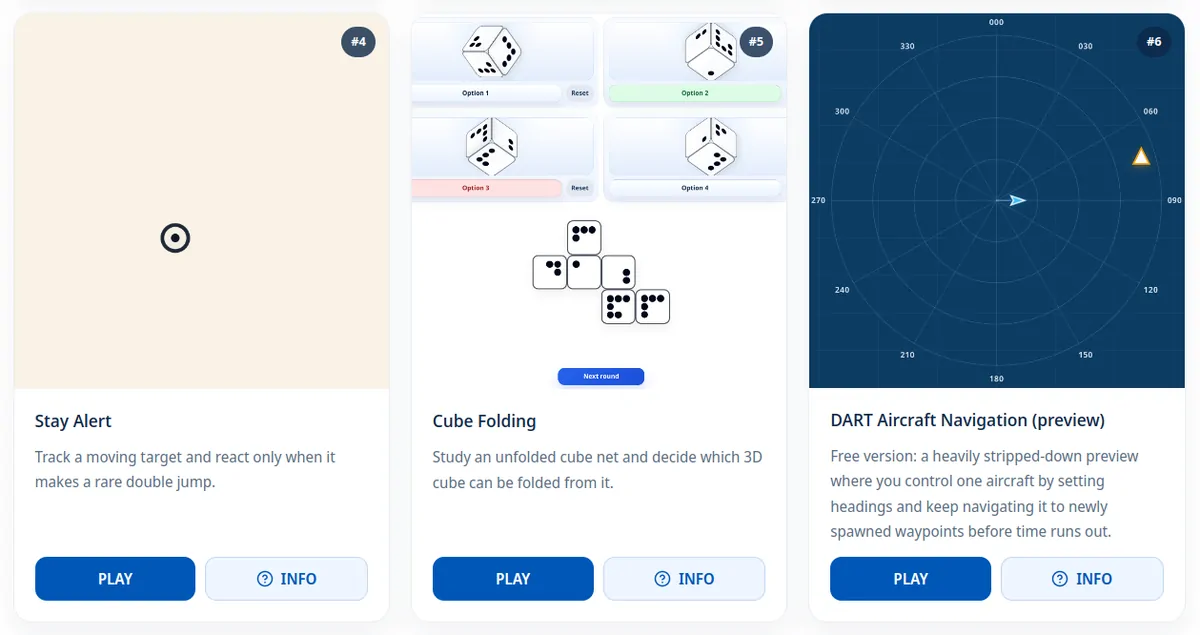
FEAST-style practice works best when you understand what each module is actually testing and train with a clear purpose.
Last updated: March 27, 2026
Train with Simulator Software for FEAST
Train FEAST I, FEAST II, and FEAST III skills in the FEAST Preparation Suite with all difficulty levels, TEST mode, statistics, and candidate comparison.
Most people fail FEAST not because they are not capable, but because they train the wrong way. Random practice feels productive, but it does not build the skills the test is actually measuring.
So this guide is a friendly walkthrough. We will go through the main FEAST modules, explain what each one is really about, and give you practical prep tips without overcomplicating it.
This guide explains FEAST test modules in a simple way, so you know exactly what each task measures and how to prepare.
This guide is based on real FEAST-style practice and common performance patterns observed across candidates.
FEAST was developed by EUROCONTROL, and this guide focuses on practical, module-level preparation for candidates training in an independent environment.
If you are just starting out and want the big picture first, read Understanding the FEAST Test: What to Expect. If you already have a test date, pair this article with How to Pass the FEAST Test for a full prep roadmap.
What are FEAST modules?
FEAST modules are cognitive tasks used to assess skills like attention, spatial awareness, decision-making, and multitasking under pressure. Each module targets a different ability required for air traffic control.
Contents
Why Module-Level Preparation Matters
FEAST is not a test where one trick saves you. Every module pushes a different part of your thinking. One tests scanning, another tests perspective, another tests how you stay calm under load. If you train all of them the same way, progress is slow.
A quick example: if Divided Attention is hard for you, just repeating rounds usually is not enough. You also need a better scan routine and better priority control. That same logic applies to all FEAST modules.
FEAST 1 Core Modules
FEAST 1 is where most people realize this exam is not just about speed. It is about controlled speed. You need to stay accurate while things get faster and busier.
If this is your weak area right now, practice these patterns directly in the FEAST Preparation Suite before moving to long sessions.
Detect Conflicts
Detect Conflicts is about spotting real collision risk early, not panicking and clicking everything. In our training modules, rounds can prioritize different conflict patterns, so the first step is always reading the round instruction properly. A useful habit is to separate true head-on risk from movements that only look dangerous at first glance. Best approach: scan the full board in one routine and react only when the risk is truly valid.
Extra tip: if your accuracy is unstable, slow down for two sessions and prioritize correct reads. Speed usually catches up once your pattern recognition is clean.
Divided Attention
Divided Attention checks if you can watch multiple zones at once while reacting only to true events. In our practice tasks, the trigger is strict, so reacting to near-events usually costs points. The classic mistake is tunnel vision on one area and late reactions elsewhere. A better method is to keep your eyes active across all zones in a loop and answer immediately only when the condition is truly met.
If you feel overloaded, reduce your visual loop to a simple order and keep it consistent. Predictable scanning beats random fast eye movement.
Stay Alert
Stay Alert looks simple, but it catches people hard. The key pattern is that most events should be ignored and only specific rare events require action. That makes this module more about sustained attention plus impulse control than raw speed. The win here is consistency over a longer period, not hero moments in one short burst.
Think of this as discipline training: your main job is saying “no” to most events, then reacting cleanly to the rare true trigger.
FEAST 1 Spatial and Logic Modules
This part of FEAST 1 is all about perspective, direction, and rules under time pressure. These modules are very doable if you stay methodical.
You can train these module styles in the FEAST Preparation Suite, then deepen practice on the levels that need more work.
Distinguish Left and Right
Distinguish Left and Right is a perspective trap. Questions can ask for a specific object, the main object, or even the side that does NOT contain an object, so reading carefully matters. Most mistakes come from answering from your own point of view instead of the figure's, especially when the body is flipped or rotated. First lock the figure's orientation, then evaluate left/right from that perspective only.
Small habit that helps a lot: say to yourself “their left, not my left” before clicking. It sounds simple, but it removes many avoidable errors.
Estimate Distances and Directions
Estimate Distances and Directions is about clean spatial reading under time pressure. In training, you work with a radar-style grid and waypoint labels, so start by identifying exactly which aircraft and waypoint the question references before you compute anything. A lot of wrong answers happen because candidates skip this “object check” and solve the wrong relation. Many mistakes are not “I do not get it,” but “I rushed and read it wrong.”
Build a short routine: identify objects, check orientation, then answer. This keeps you from leaking points on simple misreads.
Cube Folding
Cube Folding rewards method over guessing. The practical trick is to compare face relationships, not single faces in isolation: which faces touch, which can be opposite, and which combinations are impossible on a real cube. In training this becomes much easier when you eliminate clearly impossible options first, then decide between the last candidates. Step-by-step elimination beats intuition almost every time.
If you keep guessing between two options, go back to adjacency logic. Usually one option breaks a neighbor/opposite rule that is easy to miss at first glance.
Assign Objects to Categories
Assign Objects to Categories is a rule-switching module. In the training flow, some rules stay globally active while others apply only to the current question, so you need to track which rule type is in play. It also changes between shape/number logic and color/value focus, which is where people get trapped. It looks easy in the beginning, then punishes candidates who skim instructions and assume the same logic still applies.
Practical fix: re-read active rules every round, even if you think you already understand them. Most losses here come from assumptions, not low ability.
Pick the Number
Pick the Number is all about rhythm and filtering under pressure. You need to identify the right numeric target quickly, but still keep enough control to avoid avoidable misses. Too fast usually creates accuracy drops, too slow lets time pressure build up. The best results come from a stable pace where you prioritize clear recognition over rushed reactions.
If you are inconsistent, train in short focused blocks and review what caused each miss. You usually find one repeated mistake pattern quickly.
Plan Aircraft
Plan Aircraft is FEAST 1 and trains anticipation, sequencing, and decision timing. You are not only deciding what works now, but what will still work a few moves later when traffic interactions increase. A common mistake is late reaction, when the conflict is already hard to fix cleanly. Think ahead, keep a simple priority order, and solve the most constraining traffic first.
Good practice here is to look for bottlenecks early. When you remove the biggest bottleneck first, the rest of the sequence usually becomes easier.
Want to improve faster? Train these modules directly instead of guessing your weak points.
Open FEAST Preparation SuiteFEAST 2 Radar and Traffic Modules
FEAST 2 feels closer to real operations. More traffic, more pressure, more decisions at once. This is where keeping a cool head matters a lot.
If you want to prepare this stage efficiently, combine targeted work on these modules with regular runs in FEAST Preparation Suite.
Radar Control
Radar Control is not about being perfect. It is about making stable decisions while keeping safe separation when the screen gets busy. As workload rises, the key skill is prioritization: which aircraft needs attention now, which can wait, and what action keeps options open for the next minute. If your structure breaks, errors compound quickly, so keep decisions simple and consistent.
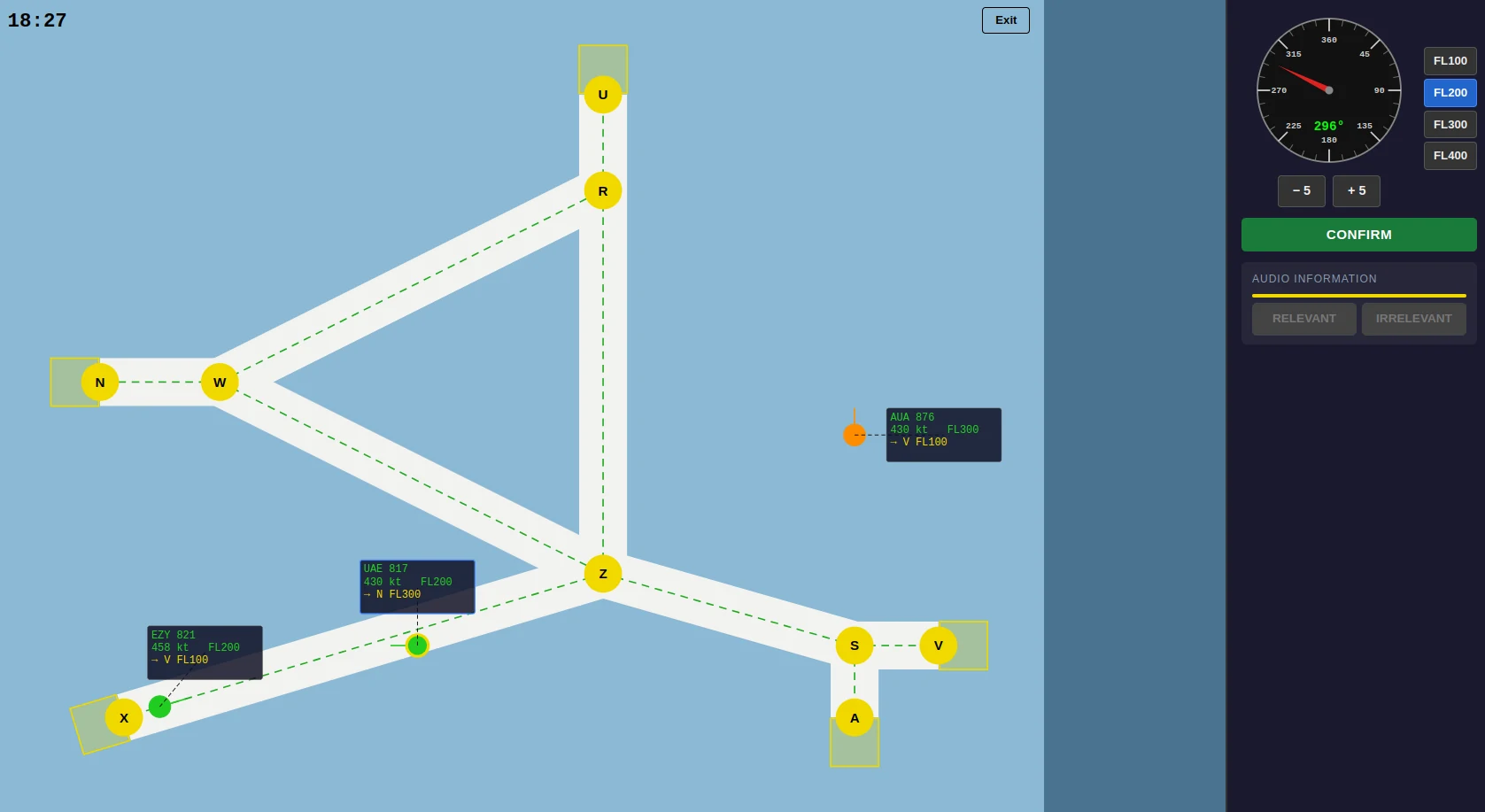
Radar Control in action: prioritize separation first, then optimize flow when workload allows.
DART
DART adds complexity and multitasking pressure. In our training environment, you can already feel the split-attention pattern: guiding traffic while handling a secondary task under time pressure. The full training scope scales this load further, but the core principle is the same. Prioritize calmly, do not freeze, and keep both task streams under control.
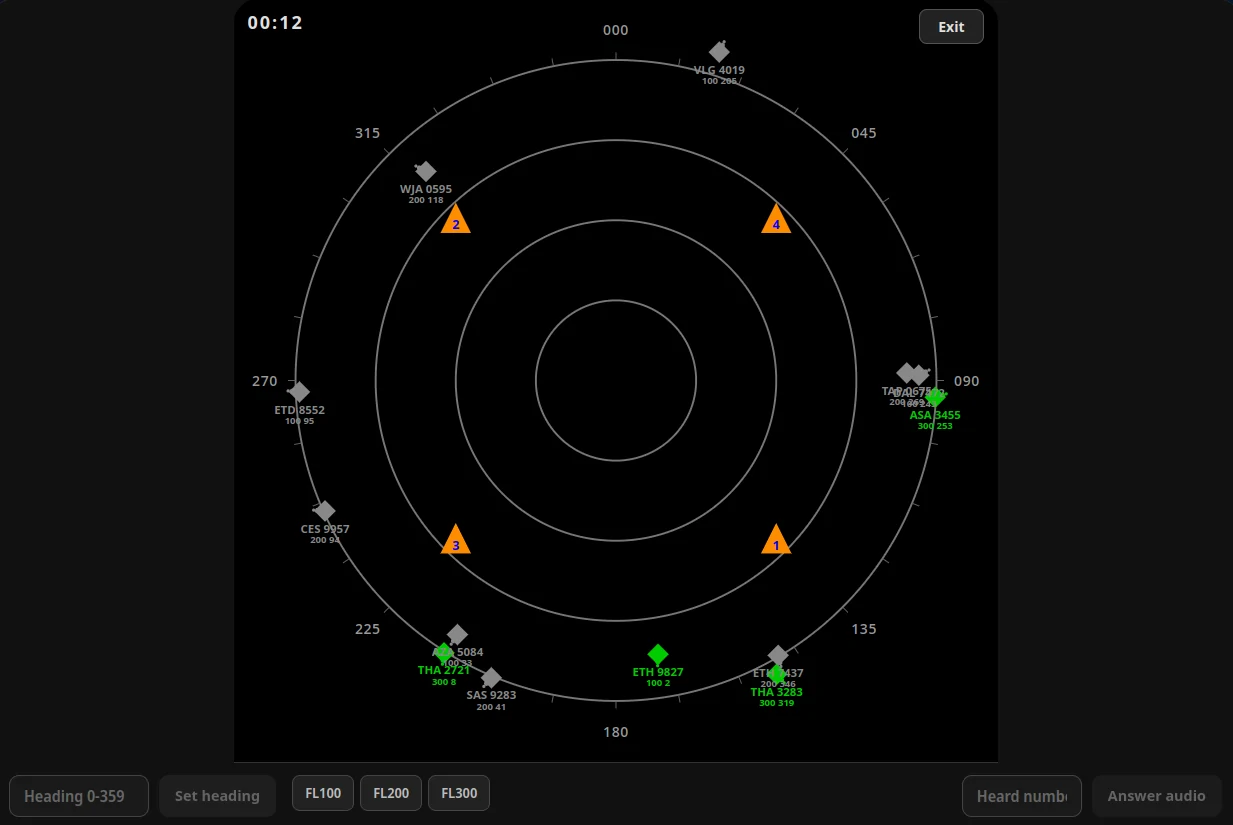
DART in action: manage heading changes while handling additional task load without losing the overall picture.
Multi-Pass
Multi-Pass is high workload by design: strips, waypoints, conflicts, and timing. In our training version, you classify strips by route logic, track aircraft progress, and hand over only at the correct moment. So success depends on two separate things at once: accurate classification and disciplined handover timing. You cannot brute-force this module; you need a clear process.
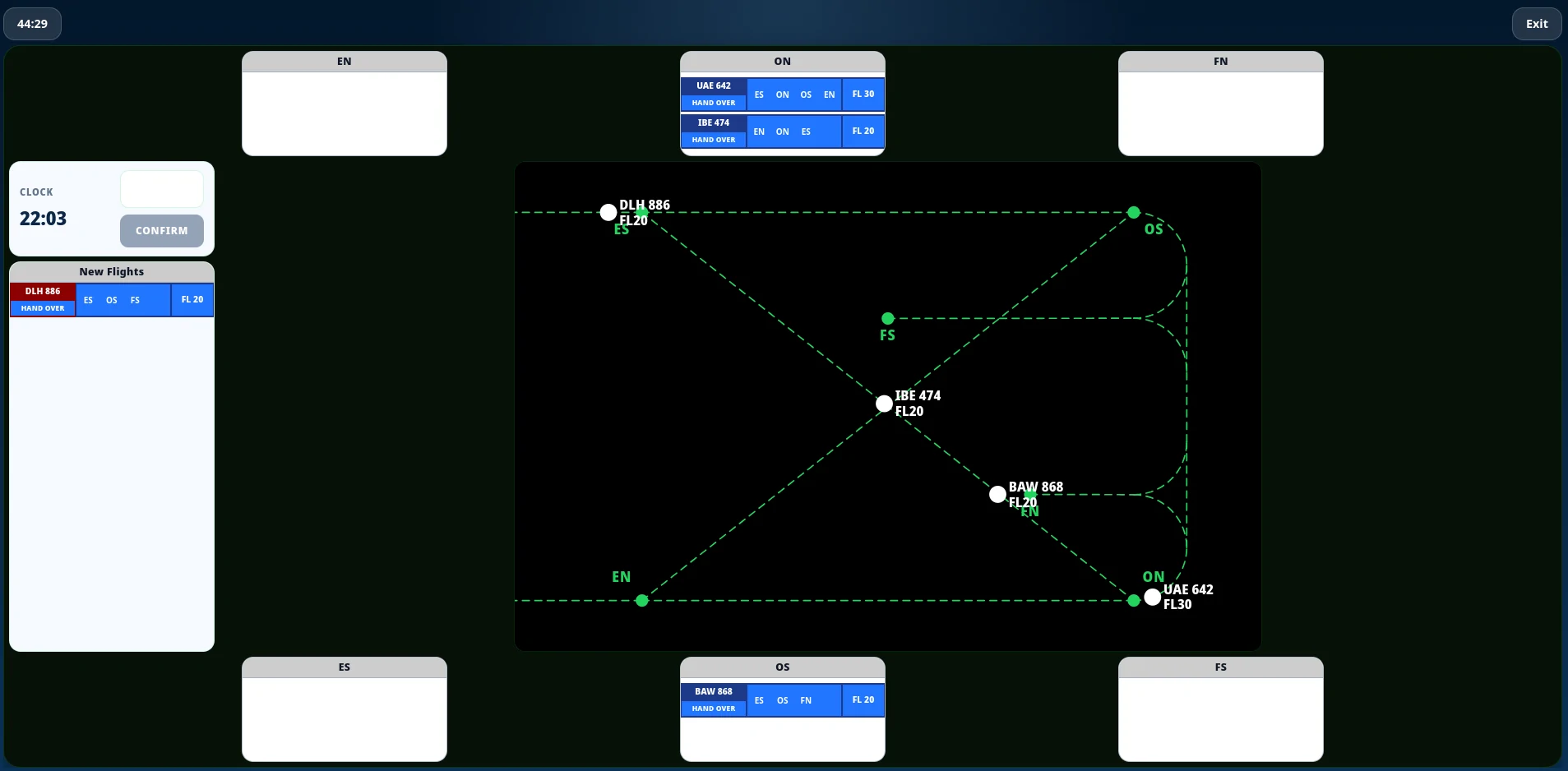
Multi-Pass: route classification and handover timing must both be correct to score well.
Key radar principle: your first job is always to preserve safe separation. Efficiency matters, but once workload rises, safety and traffic stability must come first.
Common FEAST Mistakes
- Practicing randomly without focusing on weak modules
- Prioritizing speed over accuracy too early
- Ignoring module-specific instructions before each round
- Panicking when workload rises instead of applying a simple priority order
How to Train the Modules Effectively
Best prep strategy: first find your weakest area, then train it intentionally. Keep some practice on the other modules too, so your overall performance stays balanced.
A practical weekly setup can be: 2 focused sessions on your weak area, 2 mixed FEAST 1 sessions, and 1 FEAST 2 session. Keep it simple and consistent.
Where to Start
Start in the FEAST Preparation Suite, figure out where you struggle most, and train the full module set with difficulty levels and statistics.
Also, if you want to build a realistic weekly schedule, the article How to Pass the FEAST Test complements this module-by-module guide really well.
Final mindset: do not chase one perfect module score. Build stable performance across all FEAST modules. That is what gives you a real edge on test day.
FEAST FAQ
Is FEAST difficult?
FEAST is challenging because it tests multiple cognitive skills under time pressure. However, with structured preparation and targeted training, most candidates can significantly improve their performance.
Can you prepare for FEAST?
Yes. While FEAST is designed to assess natural abilities, targeted practice can improve reaction speed, attention control, and decision-making under pressure.
How long should I prepare for FEAST?
Most candidates benefit from 2-6 weeks of structured preparation, depending on their starting level and consistency.
What is a good FEAST preparation plan?
A practical plan is to train 4-5 times per week, focus first on your weakest modules, and keep one mixed session that combines multiple task types under time pressure.
Should I focus on speed or accuracy first in FEAST modules?
Accuracy should come first. Once your decisions are consistent and correct, speed improves naturally with repetition.
Ready to start improving?
Open the FEAST Preparation Suite to identify your weak areas and train the full module set.
Start preparing nowRelated Blog Posts

How to Become an Air Traffic Controller (2026 Guide)
How to become an air traffic controller in 2026: eligibility, age limits, selection tests, and train...
Read More
What Skills Do You Need to Be an Air Traffic Controller?
The skills air traffic controller selection actually measures: spatial awareness, working memory, mu...
Read More
SureSelect Preparation Suite (2026): What Each Module Measures and How to Prepare
What each SureSelect Preparation Suite module trains: cognitive ability, ATC skill simulations, and ...
Read More