
What Happens If You Fail the FEAST Test? Retakes, Waiting Periods, and Next Steps

A failed FEAST result is frustrating, but for many candidates it is not the end of the road. The next step depends on the ANSP, the waiting rules, and how you prepare from here.
Last updated: April 15, 2026
Train with Preparation Software for FEAST
Train FEAST I, FEAST II, and FEAST III skills in the FEAST Preparation Suite with all difficulty levels, TEST mode, statistics, and candidate comparison.
Failing the FEAST test can feel final in the moment. At ATC Preparation, we have seen many candidates assume one bad result means the ATC path is over. In many cases, that is simply not true.
What happens next depends on the organisation you applied to, the specific FEAST stage, and the retake policy that applies in your case. Some candidates are allowed to reapply after a waiting period. Others may need to look at a different ANSP, or focus first on improving the exact weak areas that caused the result.
This guide explains what failing FEAST usually means, how retakes and waiting periods can work, what to ask after your result, and what your best next step should be.
Contents
Quick Answer
- Some candidates can reapply after a waiting period.
- Some organisations have stricter rules or campaign-specific limits.
- The smartest first step is to confirm the exact policy with the ANSP instead of relying on forums.
- The smartest second step is to change how you train, not just repeat the same preparation.
What Failing FEAST Actually Means
A failed FEAST result usually means you did not meet the standard required by that selection process at that time. It does not automatically mean you are not capable of becoming an air traffic controller.
FEAST is a high-pressure screening system. It measures performance under time pressure, workload, uncertainty, and fatigue. That means your outcome is influenced not only by raw ability, but also by familiarity with the task style, concentration, pacing, recovery after mistakes, and how well you manage stress.
At ATC Preparation, we often see candidates overinterpret one result. They think one bad day equals permanent unsuitability. In reality, many people underperform because they were underprepared, surprised by the pace, or too focused on one area while neglecting another.
Can You Retake FEAST?
Sometimes yes, but there is no universal answer that fits everyone. FEAST is used by multiple organisations, and each ANSP can apply its own process rules around reapplication, campaign timing, and acceptance of earlier FEAST results.
That is why the most reliable answer is always the same: ask the organisation you applied to directly. If possible, get the answer in writing so you know exactly where you stand.
Good questions to ask include:
- Am I allowed to reapply after this FEAST result?
- If yes, what is the waiting period?
- Does the waiting period start from the test date or from the result date?
- Does the rule apply only to this organisation, or more broadly?
- Will I need to repeat all stages, or only certain ones?
Waiting Periods and Why They Differ
Candidates often search for one fixed FEAST retake rule, but in practice waiting periods can differ. Some differences come from the ANSP itself. Others come from how often recruitment opens, whether previous results are accepted, and whether the current campaign has additional restrictions.
This is also where online advice becomes risky. Forum posts can be outdated, country-specific, or based on a different intake. Even when other candidates are trying to help, their answer may not apply to your exact case.
If you want a broader overview of the FEAST test itself, make sure you separate general background reading from actual policy information. For retake questions, your ANSP remains the only source that matters.
What to Do Immediately After the Result
The first 48 hours after a failed result are usually emotional. That is normal. But after that, your goal should shift from reaction to diagnosis.
- Confirm the retake or reapplication rules with the ANSP.
- Write down what you remember while it is still fresh: pacing, fatigue, confusion, overload, or specific task types that felt weak.
- Check whether you received any feedback and treat it as valuable data, not as criticism.
- Decide whether your problem was knowledge, familiarity, stress control, or multi-tasking under pressure.
- Build a focused prep plan before you even think about your next attempt.
Candidates who improve most are usually the ones who stop saying “I just need to practice more” and start saying “I need to fix this exact failure pattern.”
Why Good Candidates Fail FEAST
Not all failed FEAST results come from low ability. Many come from predictable preparation mistakes.
- They trained too generally: broad aptitude practice is not the same as FEAST-style practice.
- They underestimated FEAST II: the jump in workload and mental pressure catches many candidates off guard.
- They panicked after one mistake: once confidence drops, performance often collapses across later tasks.
- They practiced speed without control: rushing creates avoidable errors and destroys scoring consistency.
- They ignored fatigue and routine: sleep, timing, and focus management matter more than most people think.
- They never trained under realistic pressure: isolated drills help, but test-like sessions are what expose real weaknesses.
If that sounds familiar, do not read it as bad news. Read it as good news: preparation mistakes can be corrected.

Many candidates feel discouraged after a failed result, but the right next step is to turn that frustration into a more focused preparation plan.
A 30-Day Comeback Plan
If you are eligible to reapply later, a simple comeback plan is often more useful than a dramatic one. The goal is not to “grind harder.” The goal is to train more intelligently.
Example 30-day reset plan
Week 1: Review what happened and identify your weakest skill categories. Keep sessions short and diagnostic.
Week 2: Train weak modules in isolation. Focus on routines, scan patterns, and accuracy first.
Week 3: Start mixing tasks and add time pressure. This is where you rebuild composure and pacing.
Week 4: Run realistic combined sessions, review mistakes immediately, and reduce avoidable errors rather than chasing perfect scores.
If you want a structured way to restart, use the FEAST Preparation Suite to rebuild familiarity with FEAST-style tasks and train the modules that need the most work.
When to Reapply
Reapplying makes sense when two things are true: you are actually eligible, and you have changed something meaningful in your preparation.
If you are only waiting for the calendar to move, but your training is still random, your next attempt may feel different emotionally but not perform differently in practice.
A much better sign that you are ready is this: you can clearly explain what went wrong last time, what you changed, and how your performance now differs from before.
Helpful Resources
Final thought from the ATC Preparation team: if you failed FEAST, do not turn one result into an identity. Treat it as a data point. Confirm the rules, understand the failure pattern, and come back with a better plan.
Frequently Asked Questions
Can you retake FEAST after failing?
Sometimes yes, but it depends on the ANSP and the campaign rules. Always confirm the exact policy with the organisation directly.
How long is the waiting period after failing FEAST?
There is no single waiting period that applies everywhere. Different organisations can apply different rules, so use your ANSP as the final source.
Should I prepare differently for a second attempt?
Yes. A second attempt should not be just “more of the same.” It should be based on a clear diagnosis of which task types, stress patterns, or skill areas caused the weak result.
What is the best way to restart after failing FEAST?
Start by rebuilding familiarity and confidence with structured practice in the FEAST Preparation Suite, then focus on the modules that need deeper work.
Where can I read another overview of the FEAST test?
General FEAST background is widely discussed online, but for retake policies and eligibility, always rely on your ANSP rather than third-party sources.
ATC Preparation is an independent training provider. We are not affiliated with, endorsed by, or sponsored by EUROCONTROL or any ANSP.
Related Blog Posts

NATS Test Explained: The Complete Guide (2026)
What NATS is, and the NATS test explained: four selection stages, from eleven online ability tests with Aon to the practical exercise in Whiteley.
Read More
Refreshing the ATC Preparation Logo
The ATC Preparation logo has been refreshed: the same control tower, with more modern colours, a cleaner finish, and a mark that is easier to use in marketing.
Read More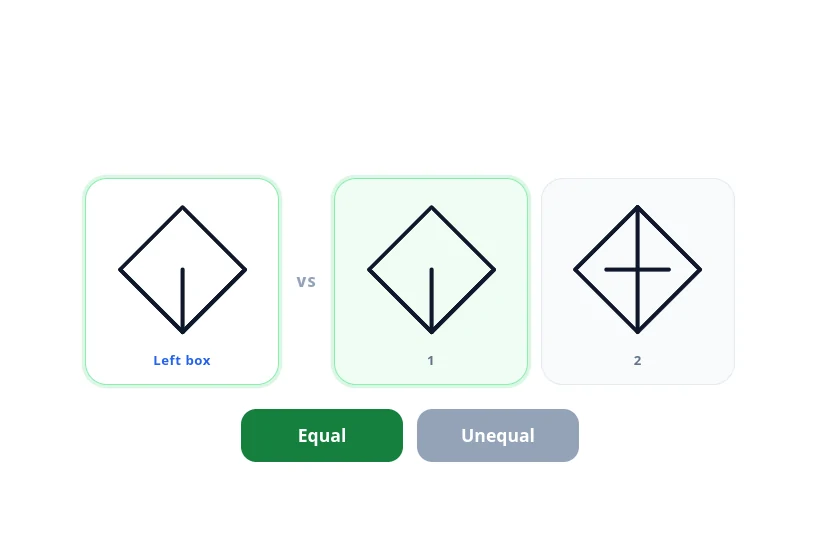
New FEAST Module: Scan And Compare Figures Is Now Available
Scan And Compare Figures is now in the FEAST Preparation Suite. Compare the left figure with the figures on the right and choose Equal or Unequal.
Read More