How to Pass the ATSA Test (2026 Guide): Preparation, Tips & Strategies


Entry-level FAA hiring runs through USAJobs, then the ATSA at a Pearson VUE center.
Last updated: July 31, 2026
Train with Simulator Software for ATSA
Train spatial judgment, memory, multitasking, and reading skills in the ATSA Preparation Suite with all difficulty levels, TEST mode, statistics, and candidate comparison.
The ATSA is the aptitude exam that sits between your USAJobs application and everything that comes after: medical clearance, security, academy, on-the-job training. A lot of candidates treat it like a mystery box. It is not. The FAA and Pearson VUE publish most of what you need to know about timing, outcomes, and logistics. What they do not publish is a study guide, and that gap is where most people either panic or waste time on the wrong things.
This article is about passing in the practical sense: showing up prepared, landing in the right outcome category, and not throwing away an invitation because of fixable mistakes. For format and hiring overview, start with our FAA ATSA Test Guide.
Contents
Start with what the FAA actually says
Pearson VUE runs the ATSA for the FAA. Their page describes it as a multi-subtest aptitude assessment covering decision-making, spatial awareness, multitasking, and working memory. No aviation knowledge required. You apply on USAJobs, get deemed qualified, then get invited. You cannot walk in off the street.
On preparation, Pearson VUE is blunt: the FAA treats this as an aptitude test, does not endorse practice materials, and tells candidates to sleep, eat, dress comfortably, and arrive early. That is the official line, and we are not going to pretend otherwise. Read it yourself on the Pearson VUE FAA page.
Where independent prep still fits: knowing the logistics, staying sharp for nearly three hours at a computer, and getting comfortable with timed tasks in the skill areas Pearson VUE names. That is not cheating the test. It is not showing up cold to a process that filters hard.
Get invited first
None of the prep advice matters if you never reach the testing stage. The FAA qualifications page sets the floor: U.S. citizen, under 31, clear English on the radio, pass medical and security later, pass pre-employment tests including the ATSA, and meet the experience/education threshold (one year of work, a bachelor's, or a combination).
The FAA's hiring page lays out the path: USAJobs application (two-page resume with dates and hours), aptitude exam, medical and security, academy in Oklahoma City, then one to three years of on-the-job work before certification. Announcements often open for only a few days. Set up USAJobs alerts and have your documents ready before one drops.
Well Qualified, Qualified, Not Referred
You do not get a number back. Pearson VUE places you in one of three buckets: Well Qualified, Qualified, or Not Referred (their wording for not obtaining a passing result). Check status roughly two weeks after the testing window closes via "Track this application" in USAJobs, which sends you to AVIATOR.
The FAA's public hiring page says Well-Qualified is required for the streamlined entry-level track. That is the bar most off-the-street applicants are aiming for. E-CTI postings on USAJobs sometimes mention "best and well qualified." Your announcement wins if there is any conflict.
Already tested within the last three years? Pearson VUE lets you reuse valid results instead of sitting again. Retake and your latest score is the one that counts.
A prep plan that is not fantasy
There is no FAA study calendar. Candidates who do well tend to run four to eight weeks of steady work, not one heroic weekend. A pattern that works for most people we talk to:
- Weeks 1-2: One skill per session. Spatial tasks one day, memory the next, number work after that. Short sessions, 30-45 minutes.
- Weeks 3-4: Longer blocks. Two or three skills in one sitting. You are training stamina, not just accuracy.
- Last week: Cut volume. Fix sleep. Confirm ID matches your Pearson account. Map the drive to the test center.
Write down what actually goes wrong during practice: misreading the prompt, freezing when the timer starts, losing track mid-task. Fix the pattern, not the mood.
Pearson VUE's own advice belongs in that last week too: real sleep, real food, buffer time for parking and check-in. No FAA staff will be in the room. Just you, Pearson proctors, and a long stretch at a workstation.
Skills worth training
Pearson VUE names decision-making, spatial awareness, multitasking, and working memory. Our ATSA Preparation Suite targets those areas with independent modules. It is not the official test and the FAA does not endorse it. It is practice for the kind of mental work the selection process is built around. Module breakdown lives in our ATSA modules intro.
Pearson VUE test day
The details that trip people up are almost always administrative:
- Time: About 3.5 hours total on the clock. Up to 2 hours 49 minutes of testing plus up to 30 minutes of breaks.
- Cost (USAJobs invite): Free. The FAA pays. E-CTI candidates use a separate Pearson path and may pay a fee listed on the ECTI page.
- ID: Government photo ID. First and last name must match the system. Mismatch? Email [email protected] before you schedule.
- Cancel/reschedule: 48 hours minimum or you can lose the slot.
- Travel: Not reimbursed. Pick a center early if you care about location.
- Accommodations: Request through [email protected] with documentation before booking.
Mistakes we see often
Waiting to schedule. Pearson VUE warns that popular centers fill up. Do not treat the invite like it has no expiry.
Treating practice scores like a pass mark. There is no published cut score. Category placement is all you get. A third-party app cannot tell you if you are "Well Qualified."
Skipping the announcement. Well-Qualified is the public bar, but your specific USAJobs posting may add conditions. Read it.
Showing up depleted. The official guidance on rest and food is boring because it works. A three-hour cognitive session on bad sleep is a self-inflicted handicap.
Cramming one task type. People who only drill collision sims and ignore memory or reading speed often stall. Spread the work.
FAQ
Does the FAA endorse practice tests?
No. Pearson VUE says so plainly. Anything you use on our site or elsewhere is your call, but it is not official prep.
How long is the test?
About 3.5 hours total: up to 2 hours 49 minutes of testing plus up to 30 minutes of breaks.
Can I reuse an old score?
If it is less than three years old, yes. Pearson VUE applies valid prior results automatically unless you sit again.
Where do I start?
USAJobs for the application. FAA ATC Hiring for the process overview. Pearson VUE once you are invited.
Related Blog Posts
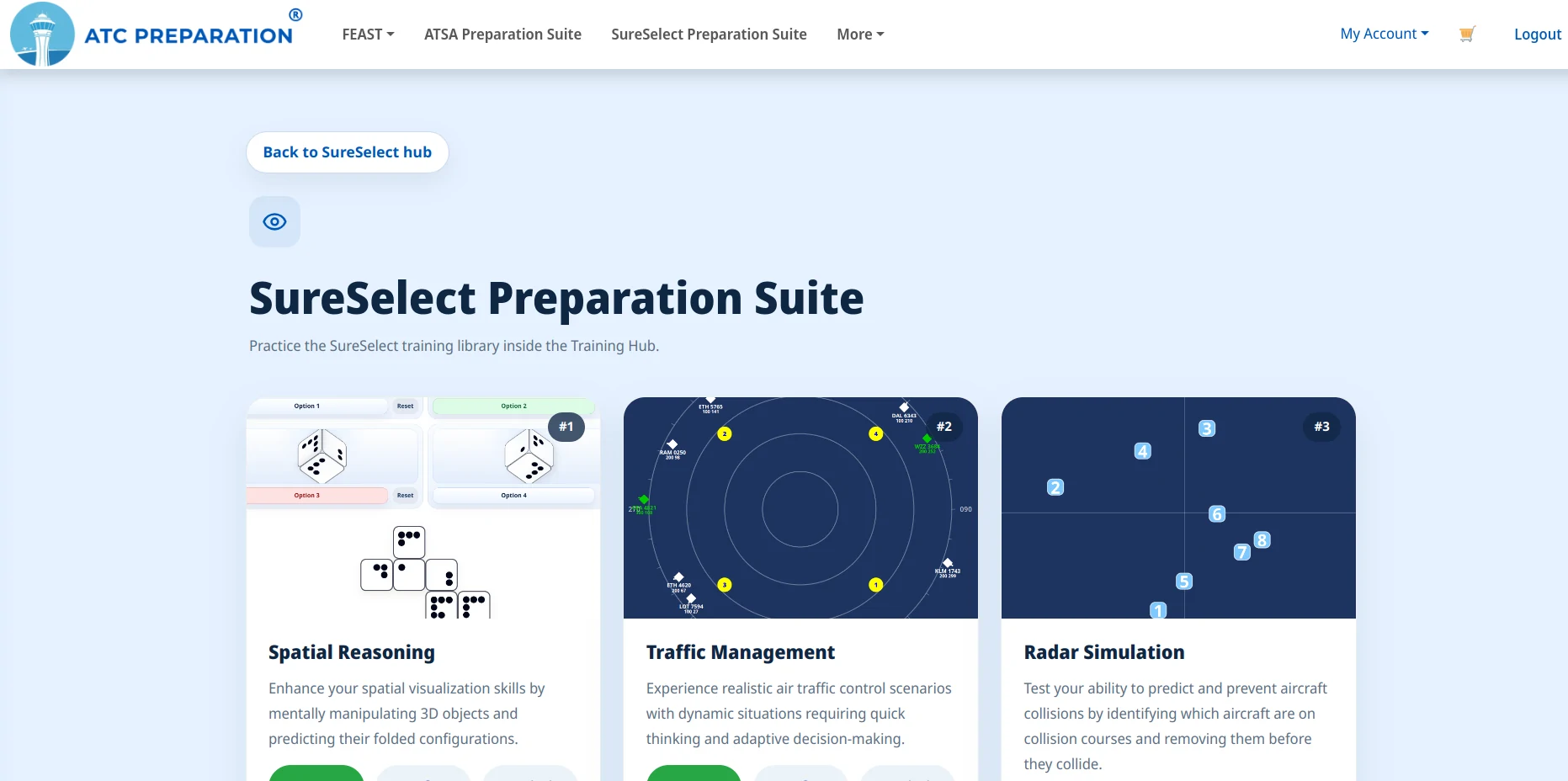
SureSelect Preparation Suite (2026): What Each Module Measures and How to Prepare
What each SureSelect Preparation Suite module trains: cognitive ability, ATC skill simulations, and ...
Read More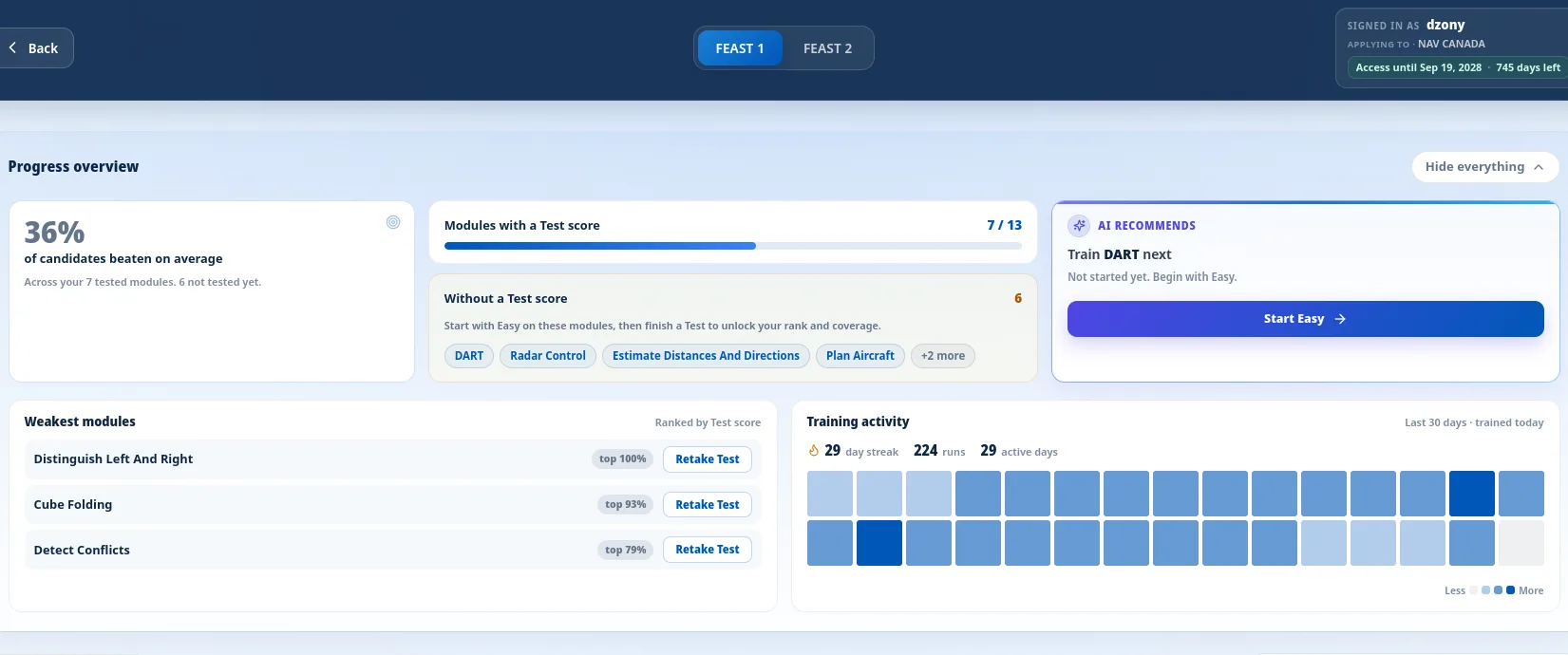
Advanced Statistics and AI Recommendations in the FEAST Preparation Suite: Track Progress, Spot Weak Areas, and Train Smarter
We shipped advanced statistics in the FEAST Preparation Suite: progress overview, per-module score t...
Read More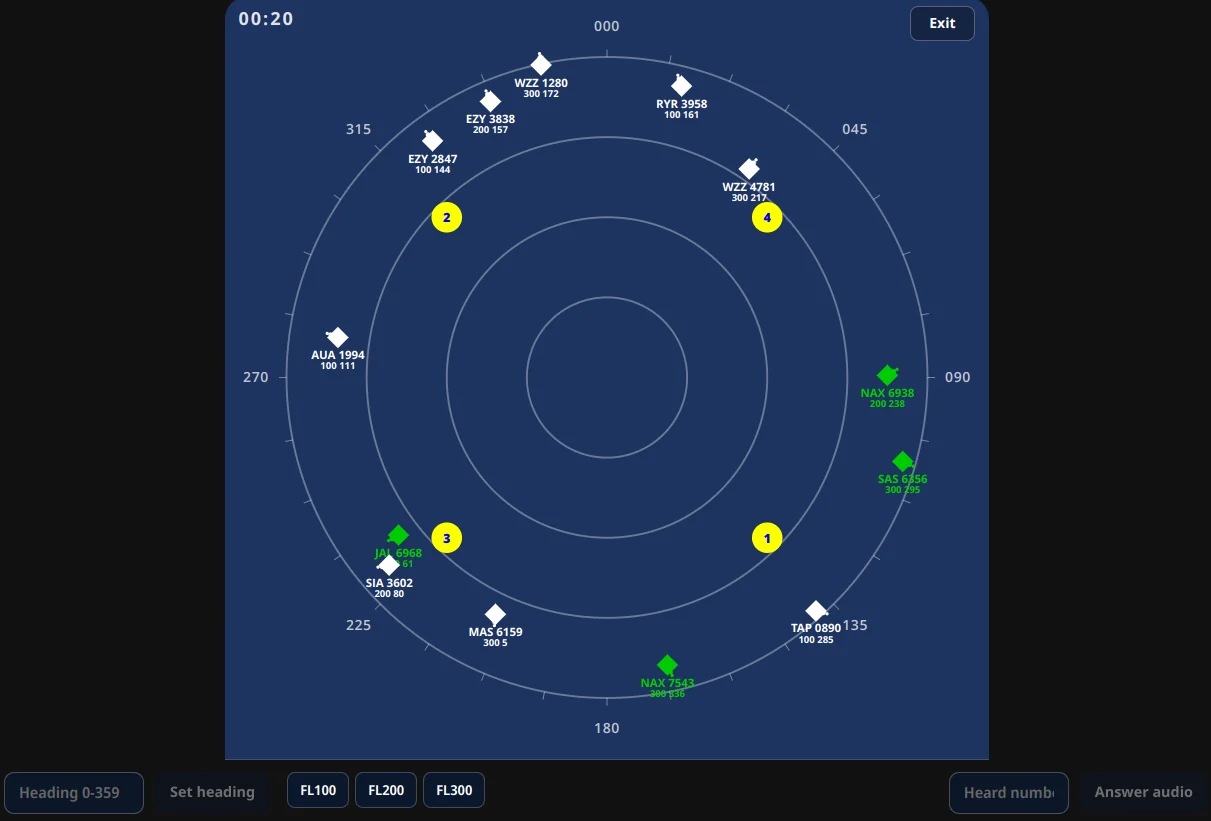
How to Pass the SureSelect Test (2026 Guide): Preparation, Tips & Strategies
Practical 2026 SureSelect prep: what Airways International publishes about the stage-gate process, w...
Read More