How to Pass the SureSelect Test (2026 Guide): Preparation, Tips & Strategies

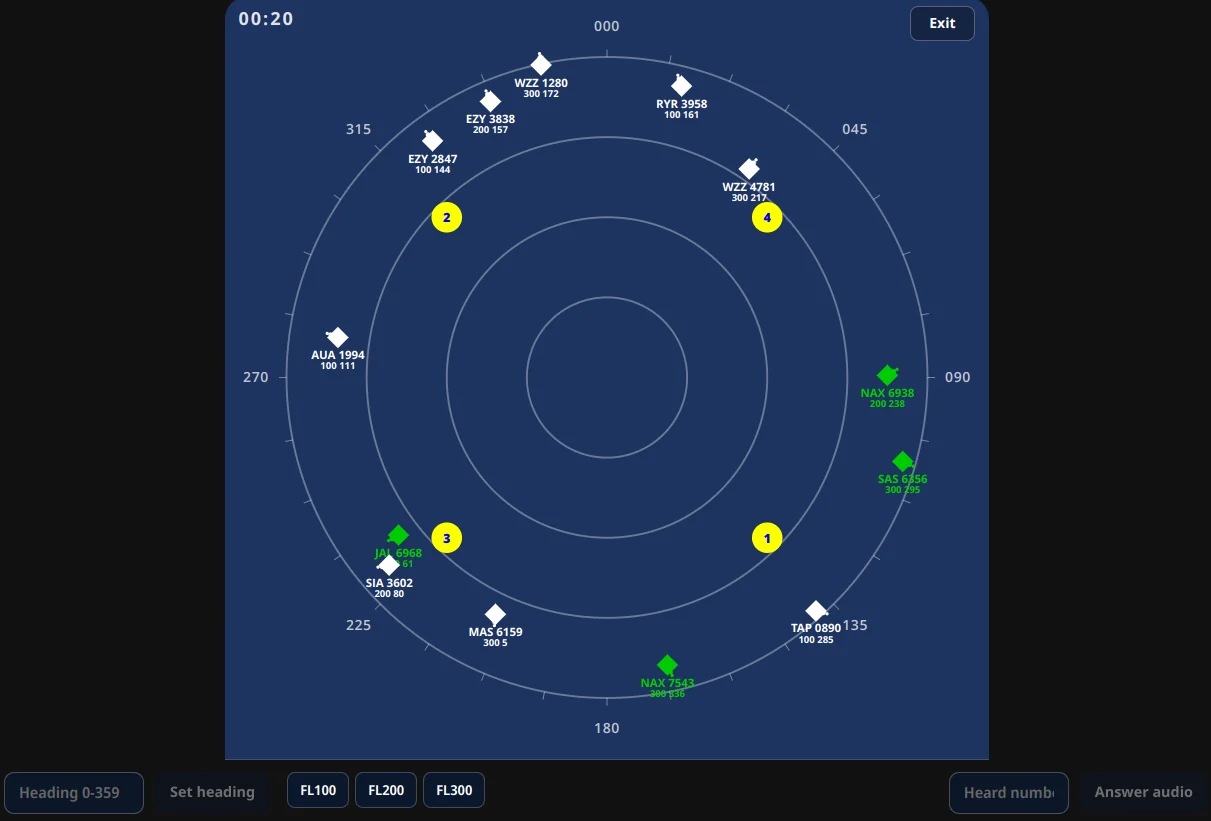
SureSelect skill simulations use aviation-themed tasks to measure controller-relevant cognition. Screenshot from independent practice, not an official test item.
Last updated: August 18, 2026
Train with Simulator Software for SureSelect
Train spatial reasoning, memory, coded reasoning, radar simulation, and more in the SureSelect Preparation Suite with all difficulty levels, TEST mode, statistics, and candidate comparison.
SureSelect sits in the hiring funnel for air navigation service providers from Australia and New Zealand to Ghana, Azerbaijan, and Vietnam. If your invitation names it, this is the battery that decides whether you move on to interviews, an assessment centre, or academy placement. A lot of candidates treat it like a mystery. It is not entirely opaque. Airways International, the developer, publishes how the stage-gate process works, what the online rounds cover, and how ANSPs adopt the tool. What they do not publish is a pass mark you can study toward.
This guide is about passing in the practical sense: understanding the structure, training the right skills, and not wasting your slot on fixable mistakes. For a broader overview, start with our introduction to SureSelect. If you are applying through Airservices Australia, read the SHL guide first. SureSelect comes later in that pipeline.
Contents
What Airways actually publishes
SureSelect is developed by Airways International, the commercial arm of Airways New Zealand. The product grew out of Airways' own controller selection process and has been offered to other ANSPs since 2011. Industrial and organisational psychologists designed and validated the assessments. That matters because this is not a generic IQ test rebranded for aviation. The cognitive and simulation modules target abilities tied to controller work: detail accuracy, coded reasoning, spatial judgment, memory under load, and decision speed.
Airways publishes three broad online components: an ATC Cognitive Ability suite, ATC Skill Simulations (gamified tasks), and a Behavioural Traits questionnaire. Many employers also use an optional Assessment Centre with supervised exercises and interviews. ANSPs pick which pieces to run, whether testing is unsupervised at home or supervised at a centre, and how SureSelect fits alongside other steps such as medical checks or video interviews.
On practice, Airways is direct. Philipp Zeitel, Training Quality Manager at Airways International, told Airports International in January 2026 that SureSelect is built to measure core innate cognitive abilities and behavioural tendencies. At Airways New Zealand, candidates may re-apply without a hard cap, but repeat attempts rarely move scores much. That is Airways' published position, and we are not going to pretend otherwise.
Where independent prep still fits: learning task formats, building stamina for multi-hour sessions, and cutting down avoidable errors when a timer starts. That is not the same as memorising answers. It is showing up able to read instructions quickly and keep two task streams alive at once.
How the online stages work
The clearest public description of the funnel comes from Airways' own stage-gate model, used for Airways New Zealand and cited as a reference pattern for other customers:
- Round 1: Cognitive ability. About 45 minutes. In that model, Airways reports that roughly 20% of candidates are screened out here. Only those who pass receive an invitation to the next round.
- Round 2: ATC skill simulations. Gamified tasks that mirror controller-relevant demands: monitoring traffic, spotting conflicts, sequencing decisions under time pressure. You need a Round 1 pass to reach this stage.
- Round 3: Behavioural traits. A questionnaire on work style, rules, accuracy, composure, and related traits. Airways treats this as predictive of training success and long-term retention, not filler.
Candidates who clear all three online stages may then be invited to an assessment centre. For Airways New Zealand, the same article states those candidates face roughly a 50/50 chance of academy acceptance once they reach that point. Your employer's odds may differ. The invitation letter is the document that counts.
Testing is browser-based. You need a computer and a stable internet connection. Many ANSPs use unsupervised remote completion for the early rounds so they can screen large applicant pools without booking every candidate into a test centre. Airservices Australia moved to the full SureSelect suite after a structured trial in 2021 and has processed more than 1,500 candidates through the system since adopting it, according to Airways' customer story published in 2022.
It depends on your employer
SureSelect is not one fixed exam everywhere. Airways International lists customers including Airways New Zealand, Airservices Australia, Azerbaijan Air Navigation Services, Ghana Civil Aviation Authority, and Vietnam Air Traffic Management Corporation, among others. Each ANSP configures its own pipeline.
Australia: Documented candidate reports and hiring guides describe SHL-style general aptitude tests before SureSelect at Airservices. Treat those as separate homework. Strong SHL results do not remove the need for SureSelect prep, and drilling SureSelect modules will not help if you never receive a Stage 2 invitation.
New Zealand: Airways New Zealand uses the full published stage-gate sequence plus an assessment centre with group and individual exercises. Public Airways articles describe four assessment-centre components mapped to ten core competencies.
Other markets: Some ANSPs adopt only part of the suite at first and expand later. In the same January 2026 feature, Jonny Cooke, Head of Products at Airways International, notes that customers rarely copy the New Zealand setup exactly. Read your vacancy FAQ rather than assuming the Australian or Kiwi sequence.
What passing means
SureSelect does not publish a universal pass score. Results are norm-referenced: your performance is compared against a reference group, and the employer decides who advances. You may see per-module feedback in practice tools, but the hiring decision is theirs.
In its January 2026 Airports International feature, Airways estimates that only about 3 to 5% of the general population possesses the combination of aptitude and traits predictive of controller success. That is not a reason to panic. It is a reason to take each stage seriously and not assume a strong university transcript substitutes for timed cognitive work.
Retake rules are employer-specific. Airways New Zealand allows unlimited re-application, but with minimal score movement on repeats. Airservices candidate reports commonly mention a 12-month wait before reapplying to a trainee intake after an unsuccessful round, though policies change. Check the current Airservices careers page rather than forum posts alone.
A prep plan that respects the limits
There is no official SureSelect study calendar. Candidates who perform well tend to run four to eight weeks of steady work, not one overloaded weekend. A pattern that works for most people we talk to:
- Weeks 1-2: One skill area per session. Spatial work one day, memory the next, detail scanning after that. Keep sessions to 30-45 minutes while you map weak spots.
- Weeks 3-4: Longer blocks. Pair cognitive drills with a simulation module in the same sitting. You are training sustained attention, not just single-task accuracy.
- Weeks 5-6: Add behavioural questionnaire practice if your invitation includes it. Answer consistently, not strategically.
- Last week: Cut volume. Fix sleep. Confirm your test device, browser, and internet. Clear the room of distractions for unsupervised sessions.
Write down what actually goes wrong during practice: misreading a rule, freezing when the timer starts, fixating on one aircraft while another conflict develops. Fix the pattern, not the mood.
If your employer publishes rules on what preparation is allowed, follow those. Do not hunt for leaked items. They waste time and may breach test conditions.
Skills worth training
Airways names cognitive areas including detail accuracy and coded reasoning, plus skill simulations and behavioural assessment. Our SureSelect Preparation Suite maps independent modules to those skill families. It is not the official test and Airways does not endorse third-party products. It is practice for the mental work the selection process is built around:
- Spatial Reasoning: mental rotation and cube folding.
- Traffic Management: priorities, sequencing, and multitasking in a traffic-themed display.
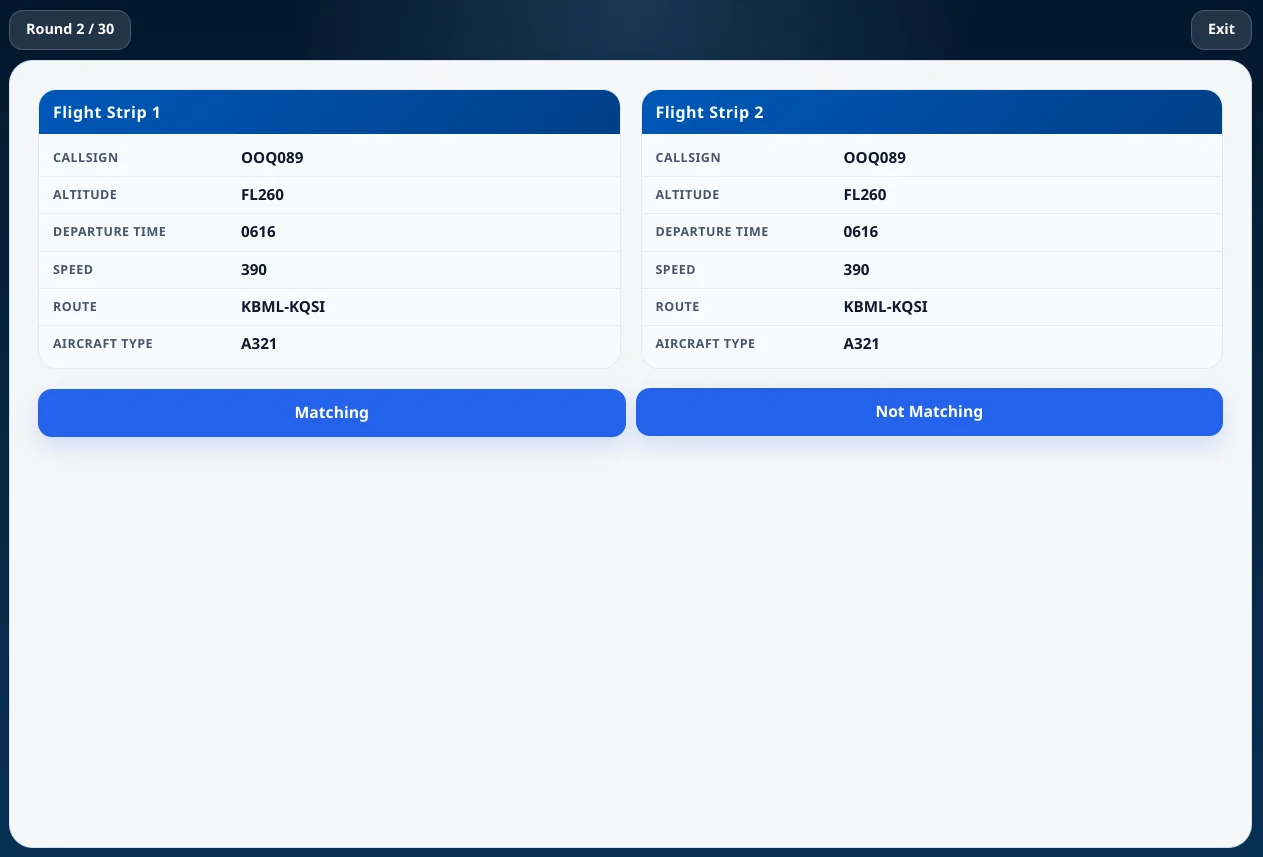
- Detail Accuracy: visual comparison and error detection under time pressure.
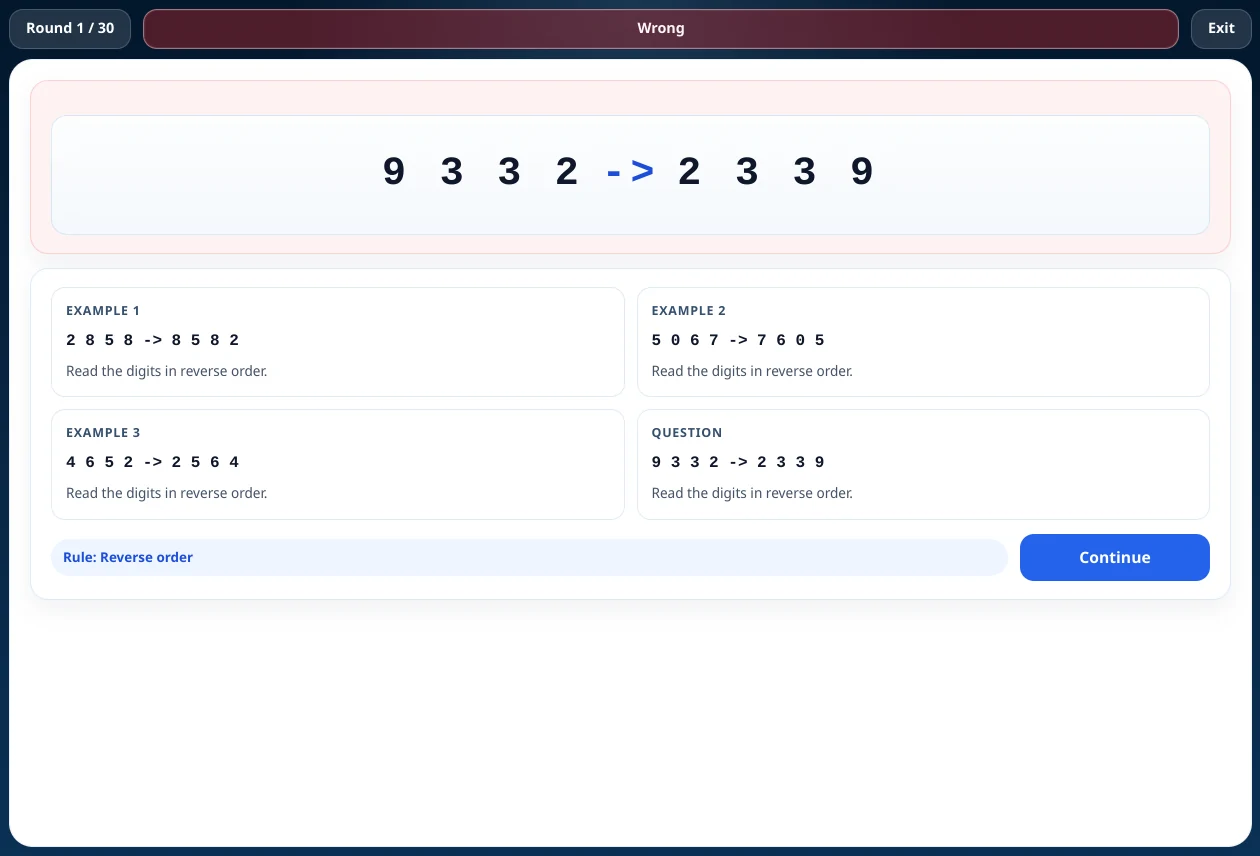
- Coded Reasoning: rules, patterns, and logical transformations.
- Short-term Memory and Remembering Relationships: hold and recall information while new data arrives.
- Radar Simulation: conflict detection on a radar-style screen. Training exercise, not live operations.
- Reading Comprehension: answer strictly from the text provided.
Spread practice across modules. People who only drill spatial puzzles and ignore memory or detail work often stall when the full battery arrives.
The behavioural round
Do not treat the questionnaire as unscored filler. Airways evaluates traits linked to controller work. In the same January 2026 feature, Airways staff describe seven characteristics for their own process: ability to give instructions and take control, adherence to rules, focus on accuracy, organisational skills, emotional regulation, fast decision-making, and openness to feedback.
Practical advice that holds across employers:
- Answer consistently. Contradicting yourself across similar statements is a common failure mode.
- Do not pick what you think they want to hear on every item. Extreme profiles stand out for the wrong reasons.
- Use the behavioural module in our suite to learn the rhythm of forced-choice blocks, not to memorise items that will not appear on test day.
Test day at home
Unsupervised SureSelect rounds are still formal appointments. Treat them that way.
- Environment: Quiet room, closed door, phone on silent. Tell housemates you are unavailable.
- Hardware: Laptop or desktop with a mouse beats a tablet. Charge the device or plug in. Use the same setup you practiced on.
- Internet: Wired connection if you can. If Wi-Fi is your only option, ask others not to stream during your slot.
- Timing: Plan for several hours across all invited stages, not a quick 20-minute quiz. Fatigue shows up as missed peripheral cues.
- Validation: Some employers re-test candidates under supervision at an assessment centre if online results raise concerns. In that same feature, Philipp Zeitel reports that re-sits under supervision usually match home scores when the original attempt was genuine.
Sleep and food matter as much as another hour of drills. A long cognitive session on bad rest is a self-inflicted handicap.
Mistakes we see often
Assuming one strong module saves a weak one. Scoring rules are not public, but banking everything on spatial ability while detail accuracy collapses is a bad bet. Train the full set.
Ignoring the behavioural section. Cognitive scores get most of the attention. Traits matter in Airways' own model and in the retention data from their January 2026 feature.
Practicing only SHL when SureSelect is next. General aptitude and ATC-specific simulation work use different pacing. Mixing both in one evening usually creates confusion, not transfer.
Treating practice scores like a pass mark. No third-party app can tell you if you cleared an employer's bar. Use scores to find weak areas, not to predict an outcome.
Testing in a noisy or shared space. Unsupervised does not mean casual. Interruptions cost items you cannot get back.
Cramming the night before. Zeitel, in that same feature, emphasises getting selection right because failed training is costly for candidates who uproot their lives. Rest is part of preparation.
FAQ
Can you really prepare for SureSelect?
Airways says the battery measures innate abilities and that repeat attempts rarely shift scores much. Independent practice still helps you learn formats, manage time, and reduce careless errors. Think of it as getting comfortable with the type of work, not gaming a published cut score.
How long does SureSelect take?
The cognitive round alone is about 45 minutes in Airways' published stage-gate description. Skill simulations and the behavioural questionnaire add more time. Many candidates spend several hours across all invited stages, sometimes on separate days. Your invitation lists the schedule.
Is SureSelect the same as SHL?
No. SHL-style tests measure general reasoning. SureSelect measures ATC-relevant cognition and behaviour. At Airservices Australia, SHL typically comes first. See our SHL cognitive test guide.
Do I need aviation experience?
No. Tasks may look aviation-themed, but they are psychometric exercises. What matters is accuracy and speed under rules you are given in the session, not operational knowledge.
What happens after I pass?
Usually more hiring steps: video interview, assessment centre, medical checks, security clearance, then training if you keep progressing. Sequence and timing vary by employer. Months between test and academy is normal.
Where do I start?
Introduction to SureSelect for the big picture. SureSelect Preparation Suite for the full module set with statistics.
Related Blog Posts

Refreshing the ATC Preparation Logo
The ATC Preparation logo has been refreshed: the same control tower, with more modern colours, a cle...
Read More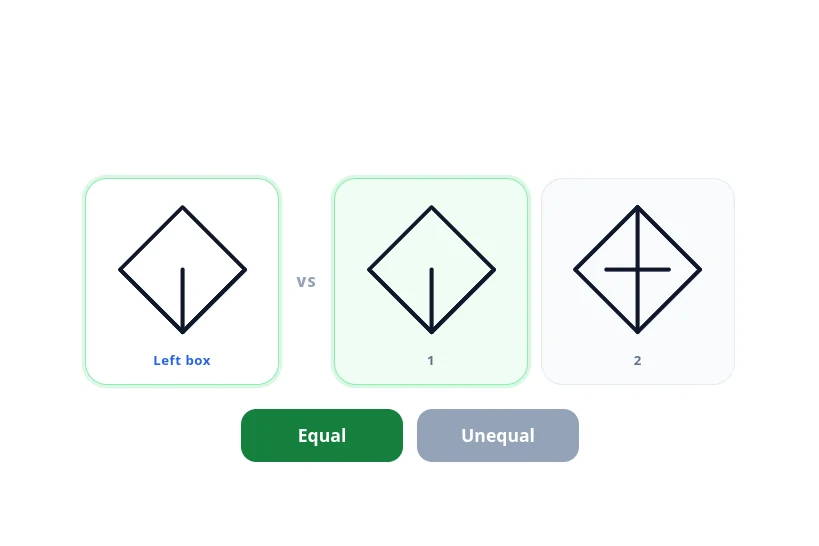
New FEAST Module: Scan And Compare Figures Is Now Available
Scan And Compare Figures is now in the FEAST Preparation Suite. Compare the left figure with the fig...
Read More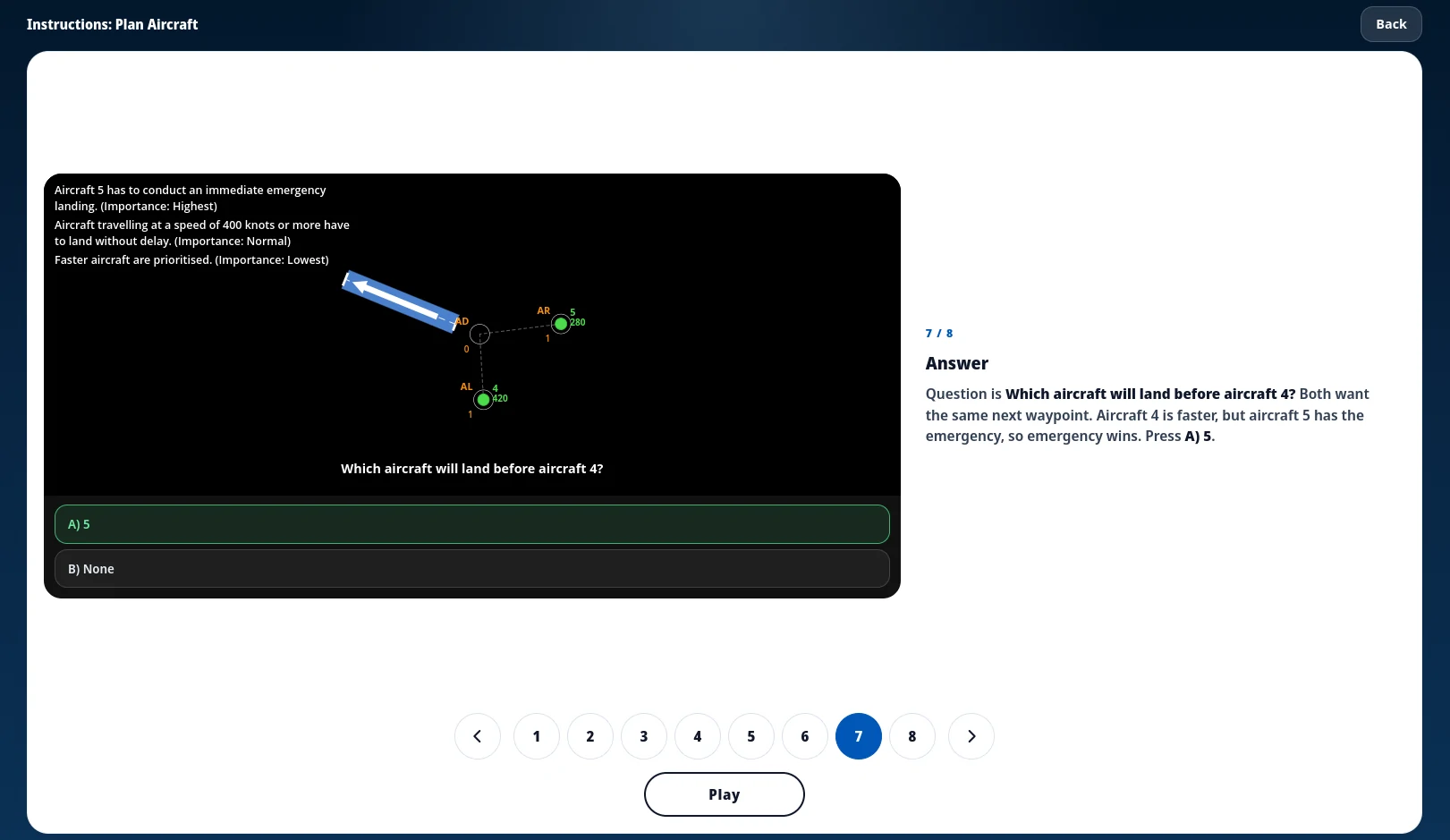
Every FEAST I Game Now Starts With Instructions
FEAST I modules now open with a short walkthrough of the board before the timed round, and the same ...
Read More