FEAST Pass Rate in 2026: What We Actually Know
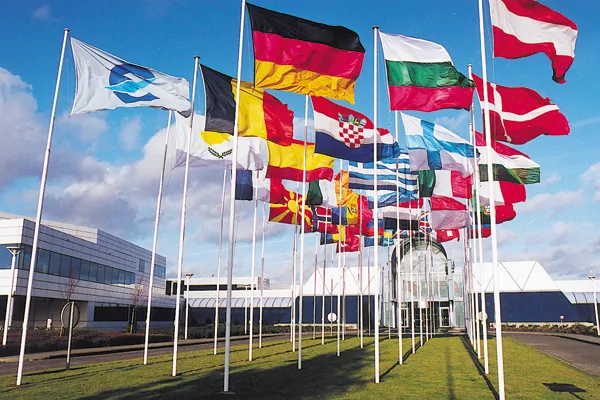
FEAST is standardised by EUROCONTROL, but each air navigation service provider runs its own hiring funnel. The percentage that matters is almost never about one test session alone.
Last updated: August 18, 2026
Train with Simulator Software for FEAST
Train FEAST I, FEAST II, and FEAST III skills in the FEAST Preparation Suite with all difficulty levels, TEST mode, statistics, and candidate comparison.
Search for "FEAST pass rate" and you will find percentages everywhere. Most of them describe the full hiring funnel, not a single cognitive session. EUROCONTROL does not publish an official figure. What you see instead is a community estimate, repeated in forums and candidate debriefs, that roughly 4-10% of applicants eventually reach academy training from first application onward. That band is not a verified statistic; it is a shorthand for how selective end-to-end selection tends to be. The exact figure depends on your ANSP, intake size, and how many stages run after FEAST. Passing the cognitive battery does not mean you are hired. Assessment centre days, personality profiling, interviews, medical checks, and limited academy slots still filter the pool long after FEAST ends.
This guide separates what can be established from what cannot, and shows how to interpret the numbers you encounter. For preparation tactics, pair it with our how to pass FEAST guide. If you already have a result you are unhappy with, read what happens after failing FEAST.
Contents
Is there an official FEAST pass rate?
There is no single published FEAST pass rate. EUROCONTROL publishes what FEAST measures, how modules are structured, and which organisations license the battery. It does not release selection statistics: no global pass rate, no average score, no country ranking. Percentages you encounter online come from candidate reports, forum discussions, and hiring-funnel attrition, not from an EUROCONTROL table.
If someone gives you a single FEAST pass-rate number without telling you which stage, which ANSP, and which outcome it refers to, treat that number with caution. A figure quoted for cognitive modules, for all FEAST stages combined, and for academy placement describe three different realities.
That is how norm-referenced selection works. FEAST compares your performance against a reference population of previous candidates, not against a published cut score you can study toward. Your ANSP then uses those results inside a wider hiring process that may also include interviews, medical checks, background screening, and academy placement. Passing FEAST is often necessary, but it is rarely the only gate.
EUROCONTROL's candidate-facing materials emphasise that FEAST identifies people with cognitive profiles suited to ATC training. The process is selective by design. A low headline pass rate reflects that purpose, not a broken test.
What "passing" actually means
Candidates often treat FEAST as one exam with one outcome. In practice it is a sequence of stages, and a pass-rate number only makes sense once you know which stage it refers to. Did someone fail English screening, cognitive modules, or the personality questionnaire? Those are different skill sets and different failure modes.
A simplified model many European campaigns follow:
- FEAST I: English screening. English proficiency is a hard filter in many pipelines. Candidates who do not meet the language bar stop here regardless of spatial or multitasking potential. See our FEAST English preparation if this stage is in your invitation.
- FEAST II: Cognitive modules. Timed computer tasks covering spatial reasoning, multitasking, working memory, and related domains. This is what most people picture when they say "FEAST." Our FEAST modules explained guide breaks down what each task family measures.
- FEAST III: Personality and assessment centre. Questionnaires and structured exercises evaluate traits linked to training success and operational fit. Not every ANSP runs the full set on the same day or in the same order.
A forum post saying "FEAST pass rate is 6%" rarely specifies whether that means cognitive modules, full FEAST, or academy placement. Always ask which stage and which outcome the number describes before you compare it to your campaign.
What the 4-10% estimate refers to
When candidates talk about a FEAST pass rate, they usually mean a community estimate of 4-10% of applicants eventually reaching academy training, not 4-10% clearing one cognitive session. That range appears repeatedly in forums, prep communities, and candidate debriefs across European campaigns. It is not an official statistic. Use it to understand how selective the full pipeline tends to be, not as a forecast for your cohort.
Why such a wide band? Because "pass rate" gets used for at least three different things:
- Clearing FEAST II cognitive modules alone (higher than the full-funnel figure).
- Clearing all FEAST-branded stages including English and personality (lower).
- Receiving an academy offer after assessment centre, interviews, medicals, and background checks (often where the 4-10% talk points).
The 4-10% bracket makes sense when you read it as end-to-end selection attrition, from first application to training seat, not as a score you receive on test day. Before you compare any single percentage to your situation, confirm which of the three outcomes above it describes.
Passing FEAST is not the same as getting hired
This is the part many candidates underestimate. Clearing FEAST, especially the cognitive modules, feels like the finish line. For most ANSPs it is closer to the halfway mark. You passed a psychometric screen. You have not yet been chosen for training.
What typically still lies ahead:
- Personality profiling. Questionnaires such as the FEAST Personality Questionnaire or tools like OPQ-32. Inconsistent or extreme answers end campaigns here even after strong cognitive scores.
- Assessment centre. Group exercises, role-play scenarios, structured discussions, and individual tasks under observation. Composure, communication, and rule-following matter as much as raw IQ.
- Interviews. Competency-based or behavioural interviews, sometimes multiple rounds across months.
- Medical and security screening. Hard stops that have nothing to do with your radar score.
- Academy placement. Even candidates who pass every stage compete for a limited number of training slots in that intake year.
So when someone says "I passed FEAST but they did not take me," that is usually normal pipeline behaviour, not a scoring error. The ANSP advanced them past one gate and rejected them at a later one. Cognitive pass plus weak assessment centre performance is a common story. Cognitive pass plus strong later stages but no academy seat that year is another.
That is also why the 4-10% estimate describes who completes the full selection path, not who clears FEAST II alone. Candidates who prepare only for cognitive modules and assume later stages are a formality often discover, months into the process, that assessment centre and academy placement still lie ahead.
Why online percentages differ
Not every percentage you read online refers to the same thing. Before you anchor on a number, check which of these applies:
- Which stage? English failures, cognitive failures, and personality screen-outs get lumped into one headline figure.
- Which campaign? Module mixes and hiring volumes change. A 2019 intake at one ANSP is not a 2026 campaign elsewhere.
- Which outcome? Clearing FEAST II, clearing all FEAST stages, and receiving an academy offer are three different bars.
- Forum skew. Failure threads are louder than quiet successes, which makes the test feel harder than aggregate attrition suggests.
Numbers outside the 4-10% band usually mix stages or outcomes. The practical planning answer: confirm with your ANSP what happens after FEAST, not just what FEAST itself requires.
Attrition across FEAST stages
The shape of selection is predictable even when exact percentages vary. Hiring funnels are wide at the top and narrow at the bottom. FEAST is no exception.
English screening removes candidates who cannot operate safely in aviation English, often early. If your reading and listening scores are borderline, cognitive training will not rescue a FEAST I failure. You need language work first.
Cognitive modules are where most preparation effort goes, and where timed multitasking under unfamiliar rules causes the largest performance gap between practiced and unprepared candidates. Weakness in one domain, such as spatial rotation while ignoring a secondary counter, can drag down an otherwise strong session because scoring looks at competency across areas, not one standout result in isolation. See how to prepare for FEAST II for work-sample training tactics.
Personality and assessment centre stages filter on consistency and behavioural fit. Candidates sometimes assume these are formalities after hard cognitive work. They are not. Inconsistent questionnaire answers or poor composure in group exercises end campaigns that looked safe on paper.
Thinking in stages helps you interpret vague pass-rate chatter. A "low FEAST pass rate" might really mean "most applicants never get past the first online screen," or "the assessment centre halved the pool again," or both. Ask your recruiter which stages you face before you anchor on a number from Reddit.
How it differs by ANSP
FEAST is standardised at the test-development level, not at the hiring-policy level. More than 56 organisations have used FEAST-related selection tools worldwide. Each configures:
- which modules run and in what order;
- whether testing is remote, at a centre, or split across both;
- retake and waiting-period rules;
- how FEAST results combine with interviews, medicals, and academy slots.
European ANSPs often follow EUROCONTROL's three-phase framing, but module selection and cut behaviour still vary. A candidate in Germany and a candidate in Portugal may both take FEAST-branded tasks while facing different campaign sizes and local competition.
NAV CANADA licenses FEAST technology but uses its own stage names and timeline: online assessment, in-person cognitive day, assessment centre. Our NAV CANADA FEAST guide maps the Canadian pathway stage by stage.
Outside Europe, FEAST appears in markets from the Caribbean to the Middle East and Asia-Pacific. Local labour markets, intake sizes, and parallel selection tools (such as SureSelect in some Pacific campaigns) change how selective each step feels. A pass rate quoted for "FEAST in Europe" may have zero bearing on your invitation letter.
What actually moves your odds
You cannot control how many people apply to your cohort or where an ANSP draws its internal bar. You can control inputs that consistently show up in candidate debriefs:
- Baseline aptitudes. FEAST measures cognitive abilities that matter in ATC work. Preparation cannot change your underlying aptitude, but it can materially improve how well you perform on test day by removing avoidable errors, unfamiliarity, and poor pacing.
- Format familiarity. Candidates who have never seen multitasking rules, spatial rotation timers, or dual-task layouts often lose points to confusion rather than inability. That gap is fixable.
- English level. Underestimating FEAST I is a common self-inflicted failure. Confirm ICAO-style requirements early.
- Consistency under fatigue. Full sessions run for hours. Performance in module six reflects sleep, hydration, and mental stamina, not just raw skill.
- Error patterns. Rushing after one missed item, fixating on a single aircraft, misreading instructions: these are trainable habits. Our FEAST overview helps you know what to expect before you build those habits.
- Personality honesty. Strategic answering on questionnaires often backfires when similar items cross-check your responses.
Retake rules matter too. Some ANSPs allow another attempt after six to twelve months; others cap total tries. A failed attempt is a data point about weak modules and test-day conditions, not necessarily a permanent verdict. Policy details belong in your recruitment email, not in a generic pass-rate article.
What preparation can and cannot do
EUROCONTROL states that FEAST measures aptitudes relevant to ATC and provides its own free applicant training platform. Structured preparation is about performing at your actual level on test day, not about beating a published pass-rate percentage.
What structured preparation can do:
- reduce time lost decoding instructions and interface layouts;
- build stamina for long multitasking blocks;
- surface weak modules early enough to train them deliberately;
- lower careless errors under timers.
What it cannot do:
- tell you whether you cleared an undisclosed employer threshold;
- replicate exact official items or scoring weights;
- substitute for English proficiency or medical eligibility.
A sensible path: use the FEAST Preparation Suite for broader module coverage and performance history. Train across domains, not only the modules you enjoy.
FAQ
What is the FEAST pass rate in 2026?
EUROCONTROL does not publish an official figure. Community estimates, repeated in forums and candidate debriefs, often cite roughly 4-10% of applicants eventually reaching academy training through the full selection funnel. That range varies by ANSP, intake size, and how many stages run after FEAST. Clearing FEAST cognitive tests alone is a separate, higher-throughput step than ending up in an academy seat.
If I pass FEAST, am I in?
No. Passing FEAST usually means you move on to later stages: personality profiling, assessment centre exercises, interviews, medical and security checks, and finally competition for limited academy places. Many candidates pass FEAST and still receive a rejection months later. Plan for the full pipeline, not just test day.
Is FEAST harder than other ATC selection tests?
"Harder" depends on your strengths and the comparison test. FEAST is demanding because it combines timed cognitive work with language and personality screening in a selective funnel, not because one magic difficulty score exists. Candidates applying in Australia or New Zealand may face SureSelect or SHL batteries instead of or in addition to FEAST-style steps.
Can you fail one module and still pass overall?
Scoring requires meeting expectations across cognitive domains. Exceptional performance in one module may not fully offset a very weak result in another. Exact weighting is set by your ANSP. Train across all domains rather than hoping one strong module will carry the rest.
Does a low pass rate mean FEAST is unfair?
Selective screening is the point. Aviation authorities need to identify people who can complete demanding training and work safely under pressure. A selective test will always remove more candidates than it advances. That is not the same as arbitrary or unfair, though a bad test-day performance can feel that way when you care deeply about the outcome.
Where should I go next?
How to pass FEAST for a full preparation plan. FEAST modules explained for task-by-task detail. FEAST Preparation Suite to train the full module set.
Related Blog Posts

Refreshing the ATC Preparation Logo
The ATC Preparation logo has been refreshed: the same control tower, with more modern colours, a cle...
Read More
New FEAST Module: Scan And Compare Figures Is Now Available
Scan And Compare Figures is now in the FEAST Preparation Suite. Compare the left figure with the fig...
Read More
Every FEAST I Game Now Starts With Instructions
FEAST I modules now open with a short walkthrough of the board before the timed round, and the same ...
Read More