
ICNA Exam: How France Selects Air Traffic Controllers Through the CCINP Concours

The ICNA exam is the external concours for the corps of ingénieurs du contrôle de la navigation aérienne, the civil servants who control air traffic for France's civil aviation authority, the DGAC. The published programme has no aptitude battery such as FEAST. Candidates sit written and oral exams from the CCINP engineering-school exam bank, plus a jury interview, and the best ranked enter paid training at ENAC in Toulouse. CCINP registration for the 2027 session, which ICNA candidates use, opens on 7 December 2026. This guide uses the 2026 rules published by the French ministry and ENAC, read on 25 November 2026.
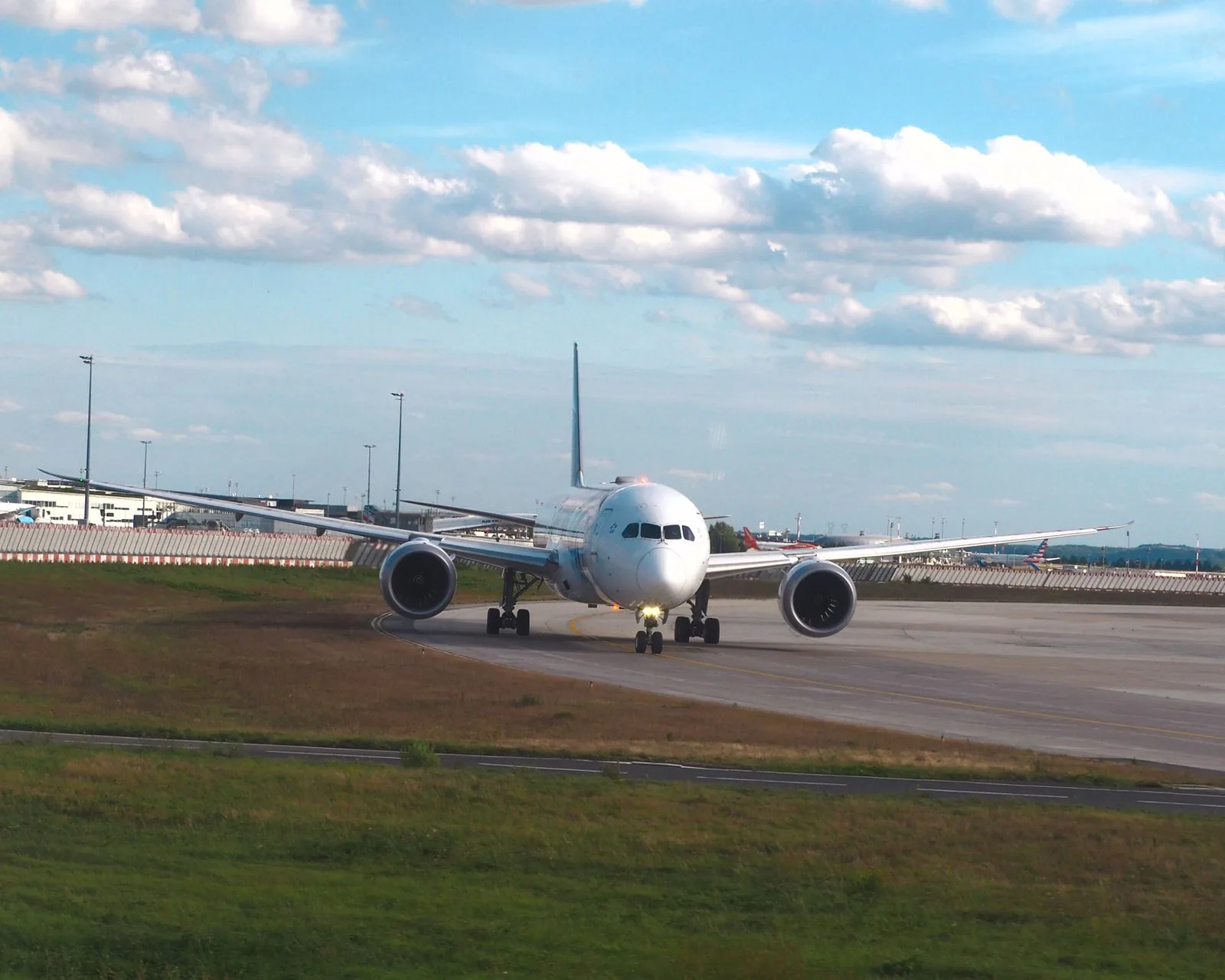
Photo: IC ZF / Pexels
Who can sit the ICNA concours
The ministry's ICNA page and ENAC's admissions page list these conditions:
- citizenship of an EU member state or another state in the European Economic Area;
- a second year of scientific preparatory classes, or 120 ECTS credits; ENAC also lists an L2, a BUT, a scientific or technological BTS, or another qualification at level III or above in mathematics, science or a technical field, held by 1 November of the exam year;
- aged 26 or under on 1 January of the exam year, with extensions for cases such as national service, children or high-level sport;
- full civic rights and no entry on bulletin no. 2 of the criminal record that is incompatible with the role.
The medical step comes early. ENAC asks for a Class 2 medical certificate, or an ophthalmology or orthoptic visit form available on its site, before you are allowed to compete, and final admission as a student controller needs a Class 3 medical from an aeromedical centre. The ministry's page words this differently and refers to a Class 3 certificate for registration, so follow the medical notice you download when you register. Our guide to the Class 3 medical for controllers explains that certificate.
How the ICNA exam works
You register through the Concours Commun INP (CCINP) in one of four streams: MP (mathematics and physics), PC (physics and chemistry), PSI (physics and engineering science) or MPI (mathematics, physics and computing). Written papers decide who is admissible. Orals and the interview then decide the final ranking. Every paper has an eliminatory mark, so one weak subject can end the attempt regardless of the total.
The written papers, with their 2026 coefficients and eliminatory marks out of 20, from ENAC's ICNA notice:
| Written paper | Coefficient | Eliminated if |
|---|---|---|
| French and philosophy | 4 | below 5 |
| English (compulsory) | 5 | below 8 |
| Mathematics | 4 | below 5 |
| Physics, or physics and chemistry, depending on the stream | 4 | below 5 |
| Stream-specific paper (computing, engineering science or physical systems modelling) | 5 | below 5 |
| Second foreign language (optional) | Bonus | Only marks above 10 count |
The admission stage:
| Oral test | Coefficient | Eliminated if |
|---|---|---|
| Mathematics | 4 | below 5 |
| Physics and chemistry (computing for MPI) | 4 | below 5 |
| English | 5 | below 12 |
| Interview with the jury | 7 | below 8 |
English and the interview carry the most weight
English has the highest written coefficient, alongside the stream-specific paper, and the oral English test has the strictest eliminatory mark in the whole concours: anything below 12 out of 20 ends the attempt. A candidate who is strong in mathematics but average in spoken English is at real risk here.
The interview has the largest single coefficient, 7. According to ENAC's notice it lasts 30 minutes, takes place by video call with the jury, and has no preparation time. The first part, ten minutes at most, is a discussion of an open question linked to aviation, used to judge how you adapt and analyse. In the second part the jury asks about your background, your motivation and what you know about the duties of the ICNA corps.
Places, competition and the 2027 calendar
For 2026 the ministry lists 145 places: 52 in MP, 38 in PC, 52 in PSI and 3 in MPI. ENAC's printed notice for the same year forecast 150, with 54, 39, 54 and 3, so the final number can differ from the early estimate. The ministry published 1,183 admissible candidates for 2026, roughly eight for every place.
The CCINP calendar for the 2027 session gives these dates:
- registration from 7 December 2026 to 11 January 2027 at 17:00, with fees paid by 19 January;
- written exams from 19 to 22 April 2027;
- admissibility results on 2 June 2027;
- orals between 21 June and 17 July 2027, depending on the stream;
- admission results on 21 July 2027.
These are CCINP's general dates. On 25 November 2026 the ministry's ICNA page still showed the 2026 session, so check it for any ICNA-specific deadline, such as the date for the medical certificate.
Paid training at ENAC and the seven-year commitment
Successful candidates join ENAC's three-year MCTA programme, which leads to a master's-level degree. ENAC says the first 24 months are at the school, where students work towards the European student air traffic controller licence for aerodrome, approach and en-route control on simulators. Students are then posted, according to their ranking and DGAC needs, to one of five en-route centres (Athis-Mons, Aix-en-Provence, Bordeaux, Brest and Reims) or to one of 39 major airports, where the longest placement lasts 12 months. The programme also includes a five-week language course in an English-speaking country, training for a light aircraft pilot licence and a placement with an airline.
After those three years, ENAC says practical training for the local rating lasts about two years on average, depending on the unit. Training is free and paid. ENAC's notice gives gross monthly pay of about €1,800 in the first year, €2,000 in the second and €2,500 in the third, subject to changes in the civil service pay index. In return you commit to seven years in public service after training. Leaving voluntarily more than three months after training starts means repaying all the net salary received and some or all of ENAC's training costs.
For how the French route compares with other countries, see our guide to air traffic controller initial training in Europe and our overview of air traffic controller age limits.
How to prepare for the ICNA concours
Most of the written exam is the normal CCINP programme for your stream, so the preparatory class syllabus is the core of the work. What sets ICNA apart is the weighting. Treat English as a main subject rather than an extra, with timed written practice and regular speaking practice, because the oral threshold of 12 is higher than any other in the concours.
For the interview, practise talking for a few minutes on an open aviation question with no notes, and be ready to explain what an ICNA does, where they work and why you want the job. ENAC's and the ministry's pages describe the role, the training and the postings, and they are a better starting point than forum summaries. The ministry page also links the jury report, which sets out what the jury expected from candidates.
Official sources
- French ministry: ICNA external concours (French)
- ENAC: MCTA, air traffic controller (French)
- ENAC: ICNA 2026 notice (PDF, French)
- CCINP: 2027 session calendar (French)
All pages checked on 25 November 2026.
Related Blog Posts
Cathay Pacific Cadet Pilot Programme Selection: Requirements, English Scores and the Six Stages
Cathay Pacific's Cadet Pilot Programme takes applicants with no flying hours through six selection stages, from an ICAO English test and a computer-based assessment to interviews in Hong Kong and a medical. Requirements, English score thresholds and timelines as Cathay publishes them.
ENAV Air Traffic Controller Selection: Requirements, FEAST 1 and FEAST 2
ENAV, Italy's civil air navigation service provider, selects air traffic controllers with EUROCONTROL's FEAST: FEAST 1 cognitive and English tests, then FEAST 2 simulations, both in Rome. Requirements, screening and training as ENAV published them for its January 2025 selection.
Air Astana Ab Initio Pilot Selection: English, SHL Tests, COMPASS and the Final Stage
Air Astana Group selects ab initio pilot cadets in five stages: an English test, SHL numerical and verbal reasoning, the COMPASS aptitude battery, a Class 1 medical and a final simulator, group and interview stage. Eligibility, attempts and funding terms as Air Astana publishes them.