AirNav Ireland Student Controller Programme: Aptitude Tests and Selection Stages

The Student Controller Programme is how AirNav Ireland, the company that runs air traffic control in Irish-controlled airspace and at Dublin, Shannon and Cork airports, trains people with no controller licence. A place depends on passing a selection with up to five stages, and the second of them is a battery of computer-based aptitude tests.
This guide is based on AirNav Ireland's own selection process page and careers FAQ, its December 2025 announcement of the 2026 training plan, and a written parliamentary answer from February 2026. AirNav Ireland says it can change the process and add or remove stages, so treat the invitation you receive as the final word. Pages were checked on 20 November 2026.
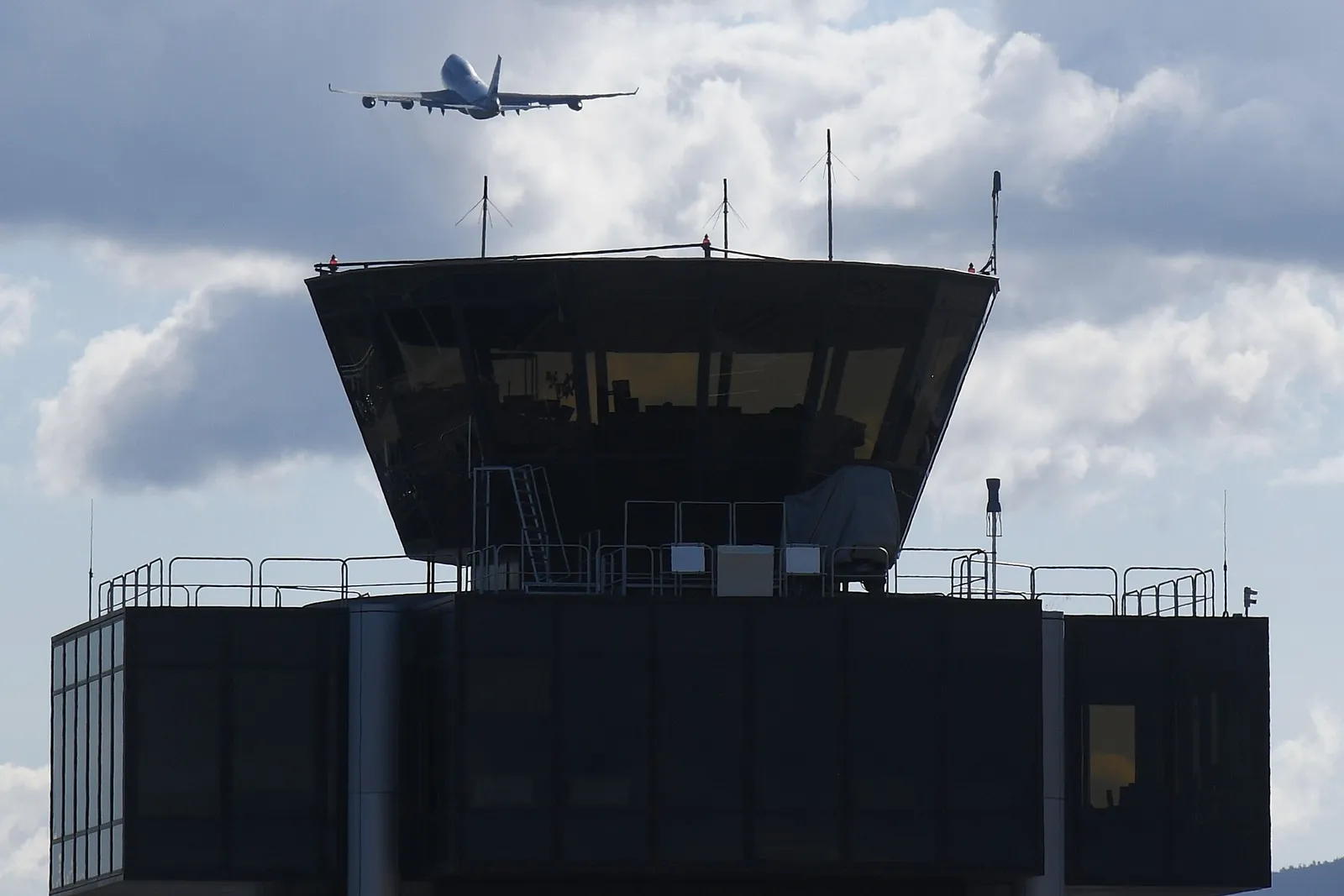
Photo: Planespotter Geneva / Pexels. The control tower at Geneva Airport, used here as an illustration.
Who can apply to the Student Controller Programme
AirNav Ireland asks for a Leaving Certificate with two H5 grades. The minimum is Level 5 on Ireland's National Framework of Qualifications, and an equivalent second-level qualification may be accepted if it includes mathematically based subjects.
The FAQ sets the upper age at 35 or under when you apply. AirNav Ireland says this limit is under review but still applies. The lower limit comes from the licence: AirNav Ireland states that a controller must be 21 to be licensed and that training takes up to two years, so applicants should be at least 19.
Three groups cannot join the programme:
- people who already hold a student or full air traffic controller licence, who are pointed to AirNav Ireland's direct-entry controller vacancies instead;
- people who previously started AirNav Ireland's student training and did not complete it;
- people who reached the in-person assessment centre and failed it.
That last rule matters for planning. You may go through the selection up to twice if you are unsuccessful, but you get only one attempt at the assessment centre.
When AirNav Ireland recruits
There is no single deadline. AirNav Ireland accepts applications at any time, runs up to two selection processes a year, and contacts every applicant when a screening round begins. It advertises on its website and social media accounts, and occasionally in national media.
The intake size has grown during 2026. In December 2025 AirNav Ireland said it planned to train up to 64 student controllers in 2026. In a written answer to the Dáil on 24 February 2026, the Minister for Transport put the figure at 76, and said AirNav Ireland employed 324 controllers against a plan to reach 364 by the end of 2029.
Stage 1: application screening
Applications are checked against the minimum entry requirements. AirNav Ireland says an online assessment may form part of this screening, and that progression always depends on verifying the entry requirements. AirNav Ireland says most correspondence for a campaign is sent by email, so check your inbox regularly.
Stage 2: computer-based aptitude tests
The second stage is a computer-based test battery, which AirNav Ireland says may be taken online or in person. Its selection page lists the areas it assesses:
- Numerical, verbal and deductive logical thinking
- Multi-tasking
- English listening, language and comprehension
- Planning ability
- Memory
- Alertness in simple and multi-tasking situations
- Visualisation and spatial orientation
AirNav Ireland does not name the test provider on that page, publish pass marks, or say how the areas are weighted. It only says that applicants who reach a sufficiently high standard may be invited onwards, and that no test materials are provided during selection.
Without a named battery, the useful approach is to prepare for the abilities on the list rather than for one product. Mental arithmetic and reading under time pressure cover the numerical and verbal items. Short memory drills and tasks that make you track two things at once cover memory and multi-tasking. Rotating and comparing shapes covers spatial orientation. The English part is listening as well as reading, so practise with spoken aviation English, not only written texts.
Stage 3: screening interview on Microsoft Teams
Candidates who pass the tests are invited to a remote screening interview on Microsoft Teams. Before it, you submit your CV, proof of education and a valid photo ID, so have those documents ready when the aptitude results arrive.
Stage 4: assessment centre in Ballycasey
The assessment centre takes place at AirNav Ireland's Training Centre in Ballycasey, County Clare, and is built around simulator-based exercises. AirNav Ireland says this stage serves to validate the online assessments from stage 2, so a strong result there has to hold up on the simulator. A competency-based interview may also be part of the day.
If AirNav Ireland decides a final interview is needed, it is competency-based too. You are expected to know the basics about AirNav Ireland, the air traffic control services it provides and its wider activities, and to bring a valid driving licence or other accepted ID. Travel and other costs of attending any stage are not reimbursed.
After selection: medical, security and references
Successful candidates must pass a Class 3 medical with doctors designated by AirNav Ireland, which pays for the initial examination. A training place is only offered once the medical requirements are met. Security clearance and reference checks follow for everyone offered a place. Our guide to the air traffic controller Class 3 medical explains what the European exam checks.
Training location, length and allowance
Initial training runs at the Ballycasey training centre near Shannon. Students are then assigned to Dublin, Shannon or Cork for practical training according to operational needs and skill levels, and can apply for a transfer later once working as controllers.
AirNav Ireland's figures for the length differ slightly. Its December 2025 announcement describes an 18-month programme, while the FAQ says training takes up to two years. Graduates are offered controller positions, according to that announcement.
Since 1 January 2026, students receive an allowance of €515 a week until on-the-job training begins. From that point the allowance is €43,026 a year, pro rata.
Official sources and related guides
For the wider picture, read how to become an air traffic controller and our comparison of air traffic controller age limits. English also stays with you after selection: a controller licence needs a language proficiency endorsement, and our guide to the ELPAC test explains one way European controllers get it. If you want timed practice before stage 2, our free ATC assessment training is original practice, not AirNav Ireland's tests.
- AirNav Ireland: Student Controller Programme selection process
- AirNav Ireland: careers FAQ
- AirNav Ireland: 2026 training plan announcement (2 December 2025)
- Houses of the Oireachtas: written answer on AirNav Ireland staffing (24 February 2026)
All pages checked on 20 November 2026.
Related Blog Posts
Qantas Group Pilot Academy Selection: Moodle Exam, Aon Cut-e Test and Interview
Flight Training Adelaide selects Qantas Group Pilot Academy students with a theory exam, a nine-module Aon cut-e assessment and a 90-minute interview in Toowoomba. Pass marks, fees and wait times from the 2026 guide.
IndiGo Cadet Pilot Program Selection: ADAPT Test, Group Task and Interview
IndiGo selects cadets through partner flight schools, starting with the Symbiotics ADAPT aptitude test and ending with an IndiGo group task and interview. Eligibility, the eight ADAPT tests and the attempt rules, by source.
Emirates Flight Training Academy Assessment: HireVue, Compass Test and Dubai Selection Days
Emirates Flight Training Academy screens international cadets online, then tests maths, physics and the Compass pilot aptitude battery in Dubai. Requirements, steps and fees as the academy published them.