

How to Become an Air Traffic Controller (2026 Guide)

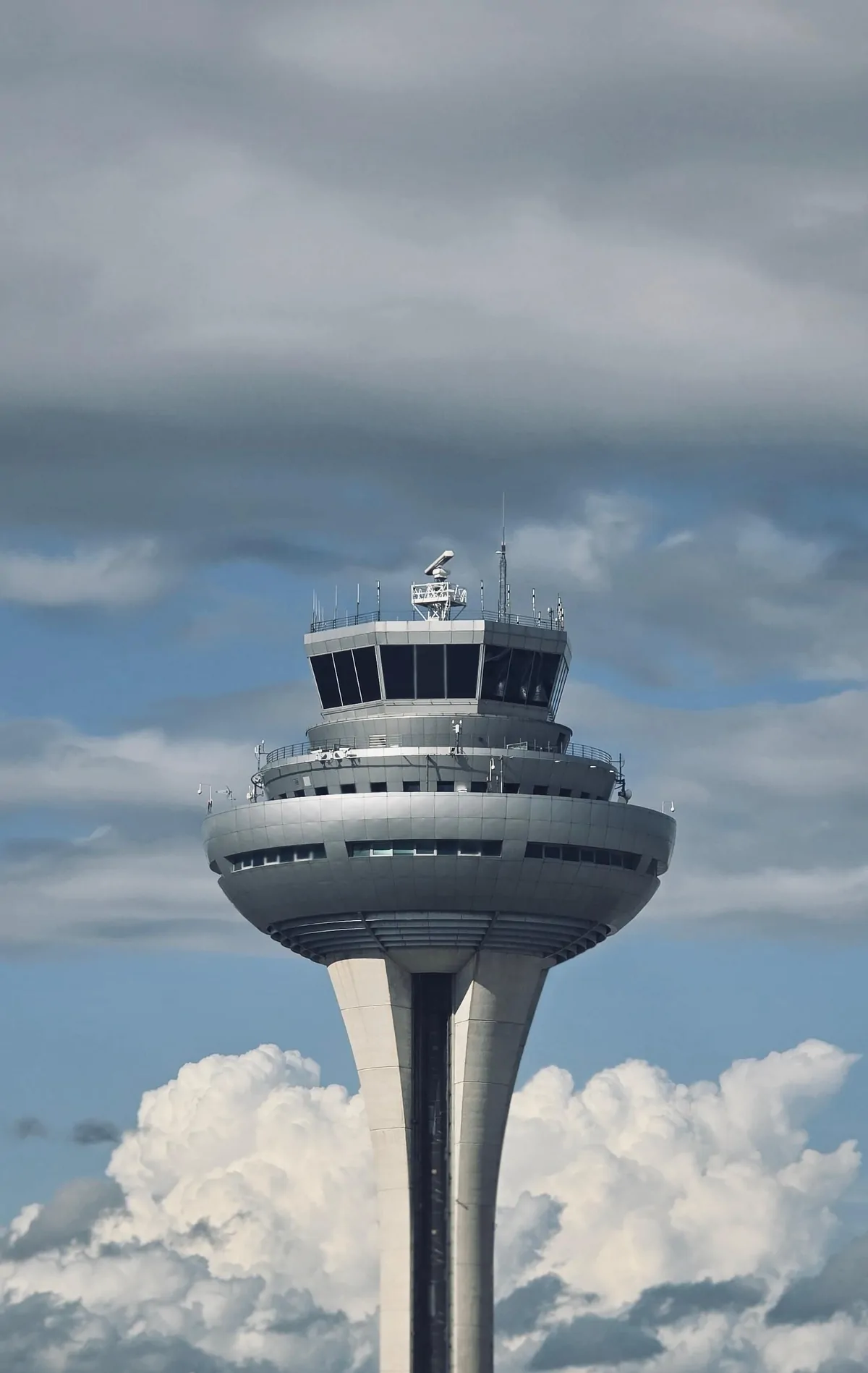
Frankfurt Airport control tower. You apply to one air navigation service provider, not to a generic ATC job. Eligibility, tests, and training length are set by that employer.
Last updated: September 12, 2026
You do not apply to air traffic control as a profession. You apply to one employer that hires controllers, usually an air navigation service provider (ANSP). That organisation checks eligibility, runs its own aptitude tests, then pays you while you train. You become a licensed controller only after you validate at an operational unit. The computer test is one filter. Unit training is another.
This guide covers the common path in 2026: who can apply, which tests you are likely to sit, how long training takes, and how the United States, Europe, the UK, and Canada differ. For pay, use the ATC salary article. For the work itself, see a day in the life. For the abilities employers measure, read what skills you need.
Contents
The actual path
Almost every civilian route looks like this, even when the brand names change:
- Meet the employer's eligibility rules (citizenship or work rights, age, education, language, medical, security).
- Apply in the published window, or year-round if that ANSP accepts ongoing applications.
- Sit computer-based aptitude tests. Some organisations add English, a personality questionnaire, an assessment centre, and an interview.
- Pass a medical and a background check. In Europe this is a Class 3 medical under Commission Regulation (EU) 2015/340. In the United States, FAA controllers are cleared under the Air Traffic Control Specialist Health Program, not a student pilot medical.
- Enter paid initial training (academy, college, or approved training organisation).
- Obtain a student controller licence or equivalent, then train on a live unit until you validate.
EASA law is explicit about the last two steps. A student air traffic controller licence requires the applicant to be at least 18, to have completed initial training in the previous 12 months, to hold a valid medical certificate, and to hold a language proficiency endorsement at least at ICAO operational level 4. The full controller licence is issued only after unit training and a unit endorsement. Passing FEAST, ATSA, or any other screen does not skip that.
FAA wording is similar in spirit. The qualifications page says less than 10% of applicants meet the requirements and are accepted into the training program. Academy graduation is not certification. After Oklahoma City, the agency describes two to three more years of classroom, simulation, and on-the-job training before Certified Professional Controller status.
Eligibility by region (2026)
Treat this table as a map, not as your application form. Age, school results, and language rules change by vacancy. If the job advert conflicts with anything here, follow the advert.
| Employer | Who can apply | Age | Education | Typical test |
|---|---|---|---|---|
| FAA (United States) | U.S. citizen; English clear enough for communications equipment | Under 31 at application on the current hiring page. Some experienced controllers have a higher ceiling. | Bachelor's degree, or one year of progressively responsible work, or a mix that totals one year | ATSA, about 3.5 hours |
| EUROCONTROL Maastricht | National of a EUROCONTROL member state | Younger than 27 when training starts. No published exceptions. | Advanced secondary / university-entrance certificate including Mathematics and English | FEAST, then interview |
| DFS (Germany) | Applicants of any nationality; non-EU applicants need permanent residence and a work permit | At least 18 at training start. No maximum age on the current careers pages. | Abitur or equivalent, grade average 2.7 or better | FEAST. A failed ATC aptitude test at another organisation bars a DFS application. |
| NATS (United Kingdom) | Indefinite, unrestricted right to work in the UK. No sponsorship. | 18 or older at application. No maximum age stated on the trainee page. | Five GCSEs at grade 4, or Scottish National 5s at A-C, including English and Maths | NATS' own staged tests (11 online ability tests, then SJT and listening, then assessment centre) |
| NAV CANADA | Canadian citizen or permanent resident | 18 or older. No maximum age stated. | High school diploma or equivalency | Multi-stage process including FEAST |
Three rules show up almost everywhere, even when the paperwork differs:
- Language. English at operational level is mandatory for radio work. EASA requires at least ICAO level 4 in English, and often in the local language used at the unit. DFS currently asks for English and German at C1. NAV CANADA requires English everywhere and English plus French in the Montreal Flight Information Region, including the National Capital Region.
- Medical. In EASA states, controllers use a Class 3 medical certificate. Validity is 24 months, reduced to 12 months from age 40. Glasses are often acceptable within published limits. DFS currently cites a correction limit of +5/-6 dioptres, including astigmatism, plus colour vision and hearing standards. Do not self-diagnose from a forum post. An aero-medical examiner decides.
- Security and location. Background checks are standard. So is being sent where the employer has a seat. NATS describes the grade as mobile. NAV CANADA requires willingness to relocate and availability to start full-time training within 18 months of application.
United States (FAA)
The FAA hires through USAJobs when a vacancy is open. The current hiring page, last updated 21 April 2026, lists three gates before anything else: U.S. citizenship, under 31 at application, and fluent English. The qualifications page adds a medical examination, a security investigation, the ATSA, and the education-or-experience rule above.
The ATSA is a computer-based aptitude exam, about 3.5 hours. It is not an ATC procedures test. Format, scoring bands, and preparation are covered in the FAA ATSA test guide and how to pass the ATSA.
If you get through, you train at the FAA Academy in Oklahoma City, paid. Then you are assigned to a facility. The FAA describes 2-3 further years before you are a Certified Professional Controller. The hiring page states that average certified earnings exceed $155,000 a year within three years of Academy graduation, and that controllers are eligible to retire at 50 with 20 years of service. Under 5 U.S.C. § 8335, controllers are generally separated at 56, with a possible exemption to 61 for exceptional skills and experience. That retirement structure is why the entry-age cap exists. It is not a claim that older people cannot learn the work.
Prior military or FAA contract-tower experience is a different vacancy, with its own age and experience rules. Do not mix that path with the trainee advert.
Europe and the UK
In EASA states, the licence is European. The employer is national. You apply to DFS, LVNL, Austro Control, NAVIAIR, or whoever is hiring, not to "Europe ATC." Many of those organisations use EUROCONTROL's FEAST battery. NATS does not. Always read the vacancy.
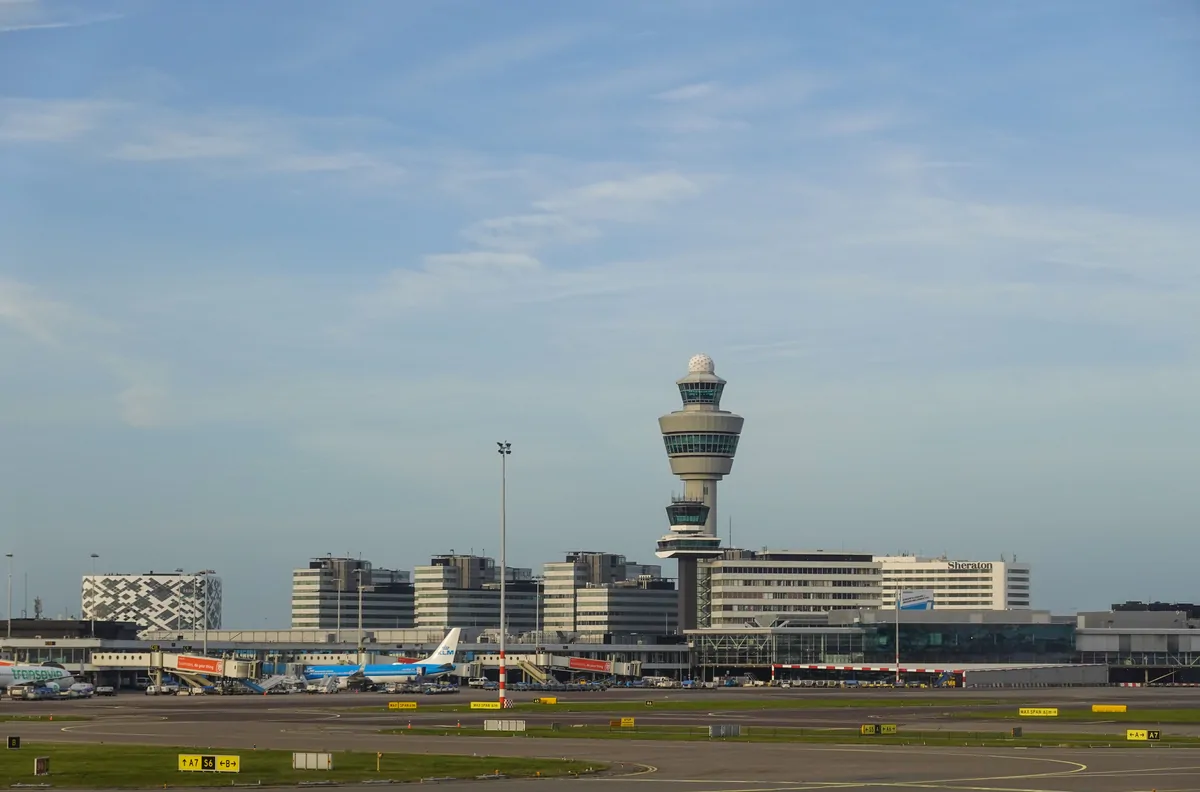
Amsterdam Schiphol, operated by LVNL. In Europe you apply to one national provider, not to a single European ATC employer.
EUROCONTROL Maastricht (MUAC)
This is one of the few direct EUROCONTROL student-controller intakes. Posts are for the Upper Area Control Centre at Maastricht. The apply page currently requires a member-state nationality, a university-entrance school certificate with Mathematics and English, good spoken and written English, age under 27 when training starts, freedom from military service at that date, and no previous failed ATC training elsewhere. EUROCONTROL states there are no age exceptions.
Initial training is at GATE Aviation Training in Copenhagen. Unit training is at Maastricht. The published minimum to obtain controller qualifications is 2 years and 9 months. Students who fail can be dismissed at any stage. Established controllers under the Agency rules cease active service at 57.
DFS (Germany)
DFS currently has no maximum age. You must be at least 18 when training starts. The school bar is an Abitur (or recognised equivalent) with a grade average of 2.7 or better, plus English and German at C1. Applications are accepted year-round. If you have already failed an ATC aptitude test at another organisation, DFS says you can no longer apply. That is stricter than many ANSPs, so do not treat a practice score as harmless.
NATS (United Kingdom)
NATS runs a Level 5 apprenticeship. The trainee page requires age 18+, unrestricted UK work rights, five GCSEs including English and Maths, SC security clearance, and a UK CAA Class 3 medical. There is no aviation-experience requirement.
Selection is staged. Stage 1 is eleven online ability tests (spatial awareness, logical thinking, numerical ability, sense of direction, reaction speed). Stage 2 is a situational judgement test and a listening test. Stage 3 is a virtual assessment centre with an interview, an ATC knowledge test, and a retest under observation. Stage 4 is a practical exercise. For the 2026 campaign, NATS has published Stage 3 from September 2026, Stage 4 from December 2026, and first training starts from late 2027. Fail a stage and you wait for the next campaign.
College training is mostly 12 to 18 months at Whiteley or Gloucestershire, then a posting to a tower or to Swanwick or Prestwick. At 2026 rates, NATS publishes a trainee package of £34,611.60 during basic training (basic salary plus accommodation allowance), then roughly £37,490-£42,786 once unit training starts, then £50,468-£56,247 after successful completion, depending on unit. That last band is newly validated pay, not the top of the NATS scale. See the salary article for wider ranges.
Canada (NAV CANADA)
NAV CANADA hires tower and area controllers. Published 2026 union ranges on the careers page are $104,258-$207,450 for licensed tower controllers and $143,513-$207,450 for licensed area control centre controllers, plus premiums. Training pay starts at $58,606 and rises to $61,337 after one year.
Eligibility is comparatively open: 18 or older, high school or equivalency, citizen or permanent resident, the language rule above, willingness to relocate, and availability to start training within 18 months. Transport Canada medical standards, a security check, and drug screening (including cannabis) apply. There are seven area control centres and 42 towers. You do not pick a city and stay there by default.
For the Canadian selection sequence, use the NAV CANADA FEAST selection guide.
Selection tests
Aptitude tests exist because training is expensive and washout is real. They try to measure abilities the job uses, not aviation trivia. EUROCONTROL states that FEAST does not require an ATC background. The FAA describes ATSA the same way.
| Where you apply | What you are likely to sit | Where to start |
|---|---|---|
| Many European ANSPs, plus NAV CANADA | FEAST I (cognitive + English), often FEAST II (RADAR / MULTI-PASS), often a personality questionnaire | What to expect on FEAST |
| United States (FAA) | ATSA | ATSA format and scoring |
| United Kingdom (NATS) | Eleven ability tests, then SJT, listening, assessment centre, practical | NATS trainee page for the live campaign |
| Some ANSPs in Australasia and elsewhere | SureSelect toolkit, sometimes with SHL in front | Introduction to SureSelect |
Passing the test is not a job offer. EUROCONTROL is blunt about that: each organisation may add interviews and other tests, and there is no universal FEAST pass mark. The user organisation sets the cut-off. Medical, security, and academy capacity still sit downstream.
Training and how long it takes
Count two clocks. The first is selection, which can take months (NATS is currently pointing successful 2026 applicants at a late-2027 start). The second is training itself.
- FAA: several months at the Academy, then generally 2-3 years at the facility.
- NATS: about 12-18 months in college for a student licence, then unit training until full validation. Length depends on the rating and on how you progress.
- EUROCONTROL Maastricht: minimum 2 years 9 months from student to qualified controller, with dismissal possible throughout.
- NAV CANADA: paid classroom, simulator, and on-the-job training. Tower trainees start at an area control centre, then move to a tower in the FIR based on operational need.
A realistic planning number for most civilian paths is two to four years from the first training day to unsupervised work, longer if you wait for a course date or if you change rating. Trainees are paid. Licensed pay is higher. Training failure is not rare, especially during unit conversion. That is why employers screen so hard at the front.
If you are still deciding whether the work fits: read the skills article before you pay for anything. If you already have an application date, train the battery that employer actually uses.
Independent practice: free training · FEAST suite · ATSA suite · SureSelect suite
FAQ
Do you need a university degree?
Usually no. The FAA accepts a degree or work experience. NATS is GCSE-level. NAV CANADA is high school. DFS and EUROCONTROL Maastricht want a university-entrance school certificate, which is not the same as a finished bachelor's degree. A degree does not compensate for a failed aptitude test.
What is the age limit?
Employer-specific. FAA trainee hiring currently says under 31 at application. EUROCONTROL Maastricht says under 27 when training starts, with no exceptions. NATS, DFS, and NAV CANADA publish 18 as the floor and no maximum on the current trainee pages. Do not import the FAA cap into a European application.
How long does it take?
Selection can take a year by itself. Training to a full validation is typically a few years. Published anchors: FAA Academy plus 2-3 years at the facility; NATS college about 12-18 months then unit training; Maastricht at least 2 years 9 months.
Do you need aviation experience?
No. EUROCONTROL, NATS, NAV CANADA, and the FAA all hire people with no ATC background. Simulators and VATSIM can teach phraseology. They are not a substitute for the aptitude tests, and EUROCONTROL says they are not required for FEAST.
What test will I take?
FAA: ATSA. Much of Europe and NAV CANADA: FEAST. NATS: its own battery. Some other ANSPs: SureSelect, sometimes after SHL. The invitation email beats any blog post.
Related Blog Posts
Transavia Pilot Aptitude Test: Compass and CPP Guide
Transavia uses Compass, the EPST aptitude battery, and CPP, the Checklist Professional Profile. Direct-entry first officers and Airline Pilot Program applicants then follow different selection stages.

Ryanair Pilot Aptitude Test: A Guide to Aon and cut-e
Ryanair asks applicants to complete an online Aon aptitude test, still called cut-e, before the simulator. The process depends on whether you apply direct with a Ryanair Group airline or through the Future Flyer Academy.
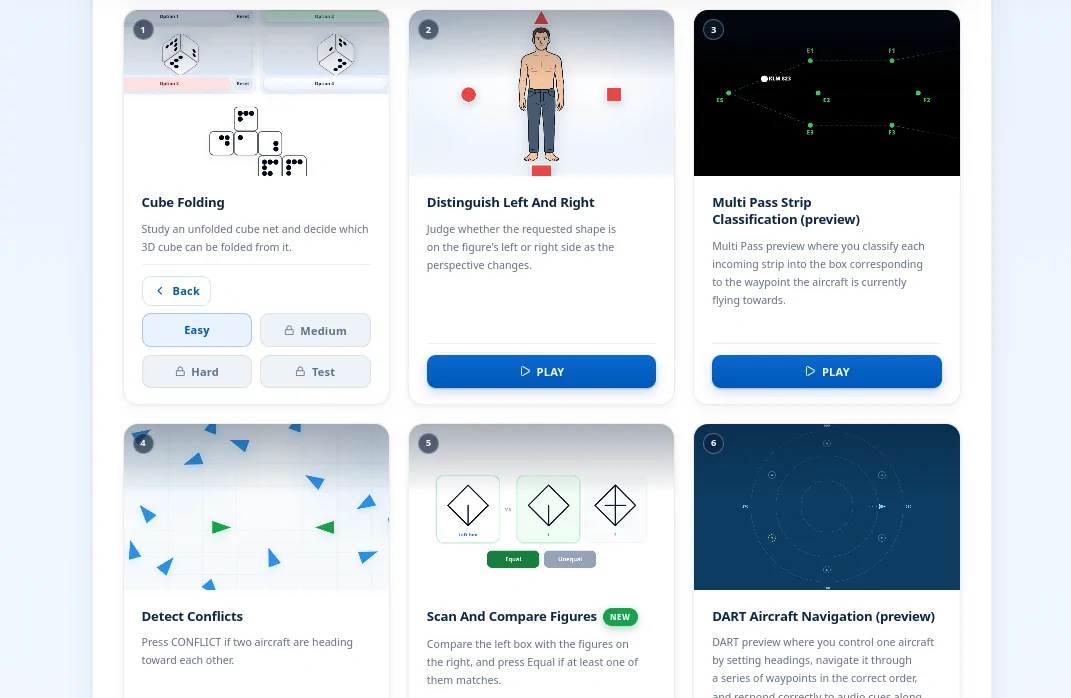
Free FEAST Training: How to Prepare for FEAST I and FEAST II
Free FEAST training for FEAST I and a first look at FEAST II: which modules are included, how to start, and when the Easy level stops being enough.